
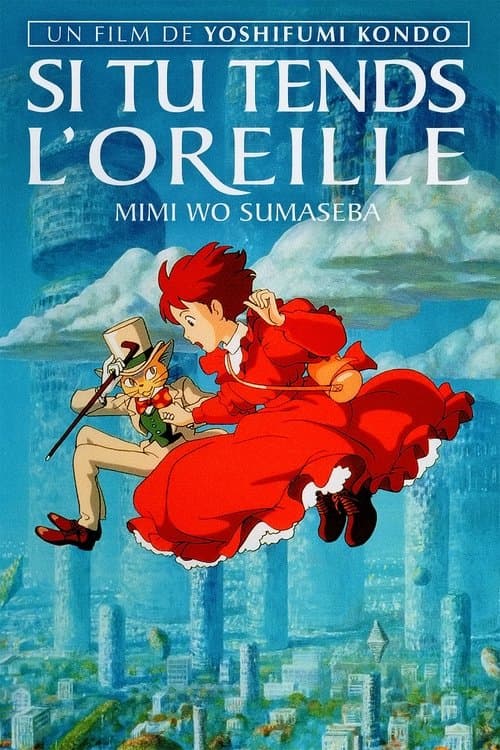
Whisper of the Heart
耳をすませば
Does this age rating seem accurate to you?
Detailed parental analysis
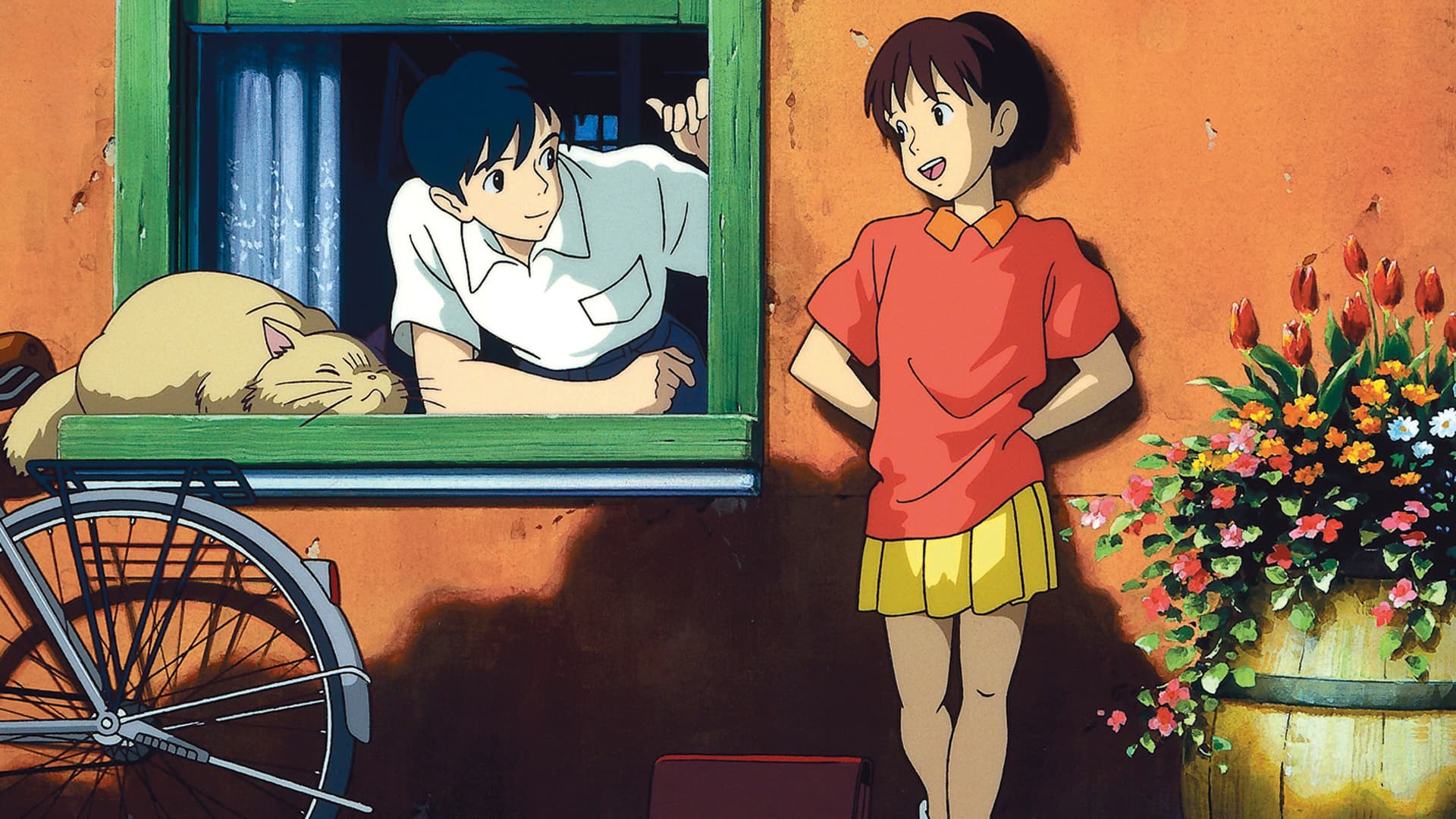
If You Listen Closely is a contemplative and luminous animated film, carried along by a soft and melancholic atmosphere typical of Studio Ghibli productions. The story follows Shizuku, a 14-year-old schoolgirl who discovers her passion for writing whilst crossing paths with a boy driven by the same creative desire. The film is primarily aimed at pre-adolescents and teenagers, with a sensibility that will resonate more strongly with young people from around 10-11 years old than with younger children.
Underlying Values
This is the heart of the film and its main subject. The narrative affirms with conviction the value of work, effort and perseverance: Shizuku throws herself into writing her first novel with an intensity that leads her to neglect her sleep, her meals and her studies. This portrait of creative passion is sincere and enthusiastic, but it also conveys a form of romanticism about exhaustion that deserves to be discussed. The film nevertheless takes care to show that this intensity has a real cost, and that the heroine must accept its limits. The relationship between the two protagonists is founded upon mutual admiration and mutual support in their respective ambitions, which offers a rare and just model of how adolescents can relate to one another. The value of craftsmanship, of long and patient work on a creation, runs throughout the film through several characters.
Parental and Family Portrayals
Shizuku's parents are present, caring and depicted with real refinement. Her father, a librarian with a passion for reading, actively supports his daughter's ambitions and speaks to her with mature and nuanced encouragement, recognising her right to make her own choices whilst inviting her to think clearly. The mother, an active woman preparing a thesis, is less available but never absent or neglectful. This balanced family portrait, free from major conflict or dysfunction, is a genuine asset of the film for families wishing to discuss it afterwards.
Substances
The father lights a cigarette during a family discussion and takes a long drag before the mother asks him to put it out. The scene is brief and without any particular glamour: the gesture is interrupted and not valorised. It is an incidental presence, but visible enough to be mentioned to parents of very young children.
Sex and Nudity
Shizuku's older sister, presented as being around 18 years old, appears briefly from behind as she removes her top to wash. The scene is entirely devoid of erotic intent and contextualised within the shared everyday life of the family flat. There is nothing else sexual or suggestive in the film.
Language
Shizuku uses the expression 'Idiot!' or an equivalent mild insult several times when she is annoyed. This is consistent with the character's age and without excess. The general register of the film is refined and accessible.
Strengths
If You Listen Closely is a remarkably well-constructed work on the question of creative calling in adolescence. The film takes seriously the doubt, the drive and the vulnerability of a young girl attempting for the first time to write something that truly belongs to her. The figure of the elderly antiques dealer, a keeper of stories and patient craftsman, offers one of the most touching and least condescending portraits of a mentor in the genre. The narrative carefully avoids easy triumph: Shizuku does not succeed with her novel, she begins to understand what it would demand of her. This is a lesson in artistic humility that is rare in a film made for young people, and precious precisely because it is not preachy. The atmosphere of Tokyo, rendered in its details of ordinary life, gives the film a geographical and cultural depth that makes it also an object of discovery.
Age recommendation and discussion points
The film is suitable from around 10-11 years old for relaxed viewing, and will be appreciated all the more as the child approaches adolescence. Two points are worth discussing after viewing: does devoting oneself entirely to a passion justify neglecting everything else, and how does one recognise whether one is truly suited for something, or whether one is deceiving oneself?
Synopsis
Shizuku lives a simple life, dominated by her love for stories and writing. One day she notices that all the library books she has have been previously checked out by the same person: "Seiji Amasawa."
About this title
- Format
- Feature film
- Year
- 1995
- Runtime
- 1h 50m
- Countries
- Japan
- Original language
- JA
- Directed by
- Yoshifumi Kondo
- Main cast
- Yoko Honna, Issey Takahashi, Takashi Tachibana, Shigeru Muroi, Minami Takayama, Mayumi Izuka, Yorie Yamashita, Keiju Kobayashi, Naohisa Inoue, Shigeru Tsuyuguchi
- Studios
- Studio Ghibli, Nippon Television Network Corporation, Tokuma Shoten, Hakuhodo
Content barometer
- Violence0/5None
- Fear0/5None
- Sexuality1/5Allusions
- Language1/5Mild
- Narrative complexity3/5Complex
- Adult themes1/5Mild
Values conveyed
- Perseverance
- Autonomy
- creativity
- friendship
- kindness
- purpose