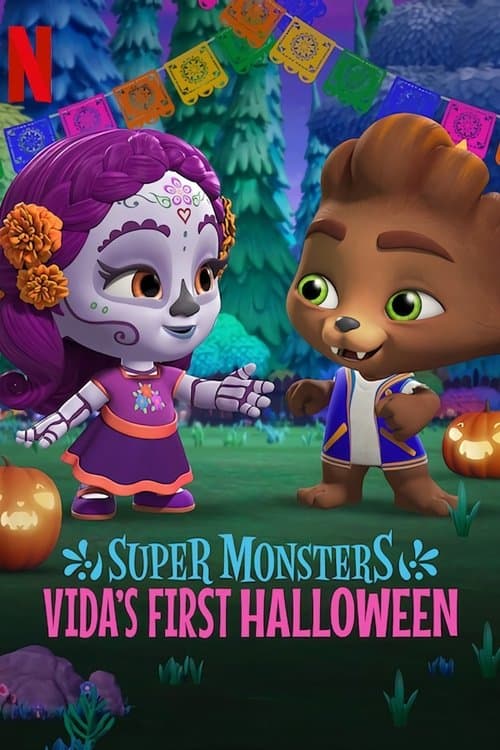
Super Monsters: Vida's First Halloween
Does this age rating seem accurate to you?
Detailed parental analysis
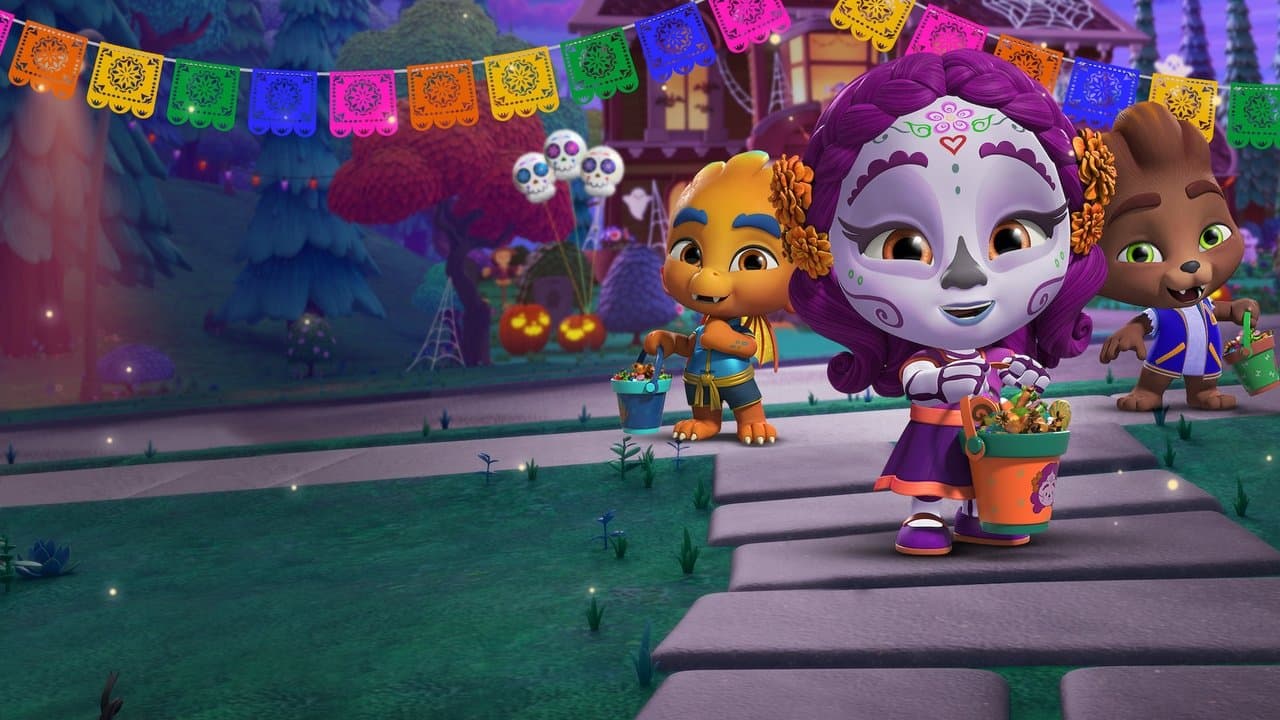
Super Mini Monstres: Vida's First Halloween is a preschool animation short film with a joyful, warm and entirely benevolent tone. The story follows Vida, a new girl in a group of young monster friends, as she discovers Halloween whilst sharing with them the Día de los Muertos tradition inherited from her family. The film explicitly targets very young children, roughly two to five years old, and positions itself as a tool for socialisation and cultural awakening at this age.
Underlying Values
The film builds its narrative around two complementary moral pillars: welcoming difference and family transmission. Vida is not simply shy; she carries a cultural tradition distinct from that of her peers, and the narrative gives her reason to defend it rather than conform to it. The grandmother figure plays a structuring role: it is she who transmits the memory of ancestors and legitimises the bond between the living and the dead as something joyful rather than frightening. Children also learn, concretely, good manners during the candy hunt, which makes this a film without surface moral ambiguity. The whole remains very prescriptive and univocal, which is coherent with a nursery-school audience, but there is no narrative tension to unravel nor nuance to explore.
Social Themes
The distinction between Halloween and Día de los Muertos lies at the heart of the film and constitutes its main educational contribution. The treatment is simplified but accurate in its broad strokes: the Mexican celebration is presented as a joyful family celebration dedicated to the memory of the deceased, not as an exotic equivalent of Halloween. Phrases in Spanish appear with their translation, introducing a mini-dimension of linguistic awakening without ever losing the very young viewer. For a nursery-school child, this content constitutes a first concrete and non-abstract opening to the plurality of cultures and ways of honouring memory.
Parental and Family Portrayals
Vida's grandmother, a central figure of transmission, is presented with great affection and natural authority. She embodies the link between generations without authoritarianism. The group's teachers also play the role of benevolent guides, clearly exemplary. The emotional environment described is stable and reassuring, which fully meets the needs of an audience aged two to five.
Strengths
The film achieves what it sets out to do with honesty: introduce a complex cultural concept (death as a family celebration) at an age when children are beginning to formulate their first questions about loss. By anchoring this conversation in joy and memory rather than fear, it offers parents a natural entry point for addressing grief without dramatisation. The narration is short, well-paced and carefully calibrated for the attention span of very young children. The inclusion of Spanish, even in minimal doses, opens a linguistic curiosity that can extend the exchange after viewing.
Age recommendation and discussion points
The film is suitable from age two and can be shown without reservation to nursery-school children. Two conversations are worth having after viewing: asking the child what they retained about Vida's celebration and why it is different from Halloween, and, if the child has already lost a loved one or a pet, inviting them to talk about it in light of what the grandmother explains in the film.
Synopsis
The Super Monsters share their Halloween traditions with Vida, then get invited to a Día de los Muertos party in the Howlers' backyard.
About this title
- Format
- Short film
- Year
- 2019
- Runtime
- 24m
- Original language
- EN
Content barometer
- Violence0/5None
- Fear0/5None
- Sexuality0/5None
- Language0/5None
- Narrative complexity0/5Simple
- Adult themes0/5None
Watch-outs
- Grief
- Death / grief
Values conveyed
- Friendship
- Acceptance of difference
- Compassion
- traditions
- family
- cultural openness