
Sesame Street
Does this age rating seem accurate to you?
Detailed parental analysis
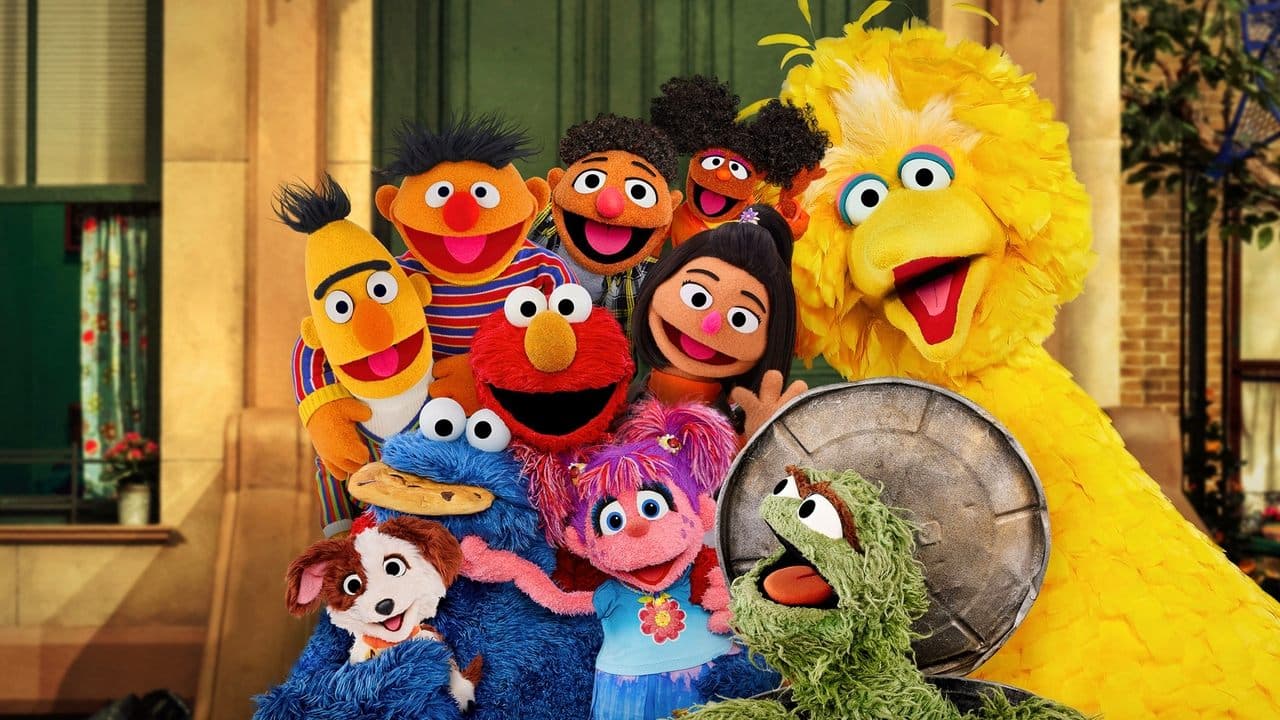
Sesame Street is an American educational television programme with a warm and colourful atmosphere, designed to prepare young children for school by teaching them letters, numbers and social skills through sketches, songs and puppets. Each episode is a succession of short independent sequences mixing human characters and Muppets in a fictional urban neighbourhood. The target audience is explicitly preschool-age children, roughly between two and six years old.
Substances
In the very earliest episodes broadcast in the late 1960s, the character of the Cookie Monster appears smoking a pipe, an image that has since been withdrawn from circulation and no longer appears in standard reruns. This detail, a product of its time, carries no narrative weight in the programme as it is accessible today, but it is worth mentioning should the child access archives or old unrestored episodes.
Underlying Values
The programme rests on values of intellectual curiosity, cooperation and mutual aid between neighbours from different backgrounds. Sesame Street functions as a model community where conflicts are resolved through dialogue and where each character, including the most eccentric, is accepted as they are. These values are conveyed directly and repeatedly, which is consistent with the cognitive development of very young children but may seem simplistic to an adult eye.
Social Themes
The programme was designed from the outset to reach children in disadvantaged neighbourhoods and reduce educational inequalities at the start of nursery school. The urban setting, characters from varied backgrounds and everyday situations reflect an explicit intention to represent a popular and diverse America. These initial choices constitute a strong social anchor, discreet yet real, which can nourish a conversation with an older child about what it means to grow up in different environments.
Strengths
Sesame Street remains one of the most rigorously designed educational creations in the history of children's television: each episode was developed in collaboration with child development researchers, and the effectiveness of learning was measured and continuously adjusted from the earliest seasons. The characterisation, notably of Big Bird, Oscar and the Cookie Monster, achieves a psychological coherence rare for the genre: each embodies a recognisable facet of childhood, from naivety to frustration to obsession. The humour works simultaneously for children and for adults watching with them, which is a genuine feat. The programme has also managed to address difficult subjects, such as grief or disability, with a precision that far exceeds the usual educational framework.
Age recommendation and discussion points
The programme is suitable from age two and constitutes an ideal entry point for very young children. Should the child access older episodes, particularly those from the 1960s or 1970s, it may be useful to point out that certain images or situations no longer correspond to current standards, such as the Cookie Monster's pipe. A simple and fruitful angle of discussion with a slightly older child: why are some characters like Oscar the Grouch grumpy, and can we still love them?
Synopsis
On a special inner city street, the inhabitants—human and muppet—teach preschoolers basic educational and social concepts using comedy, cartoons, games, and songs.
Where to watch
Availability checked on May 11, 2026
About this title
- Format
- TV series
- Year
- 1969
- Runtime
- 54m
- Countries
- United States of America
- Original language
- EN
- Directed by
- Lloyd Morrisett, Joan Ganz Cooney, Jim Henson
- Main cast
- Frank Oz, Sonia Manzano, Roscoe Orman, Martin P. Robinson, Suki Lopez, Violet Tinnirello, Jennifer Barnhart, Ryan Dillon, Alan Muraoka
- Studios
- Sesame Workshop, Children's Television Workshop
Content barometer
- Violence0/5None
- Fear1/5Mild
- Sexuality0/5None
- Language0/5None
- Narrative complexity1/5Accessible
- Adult themes1/5Mild