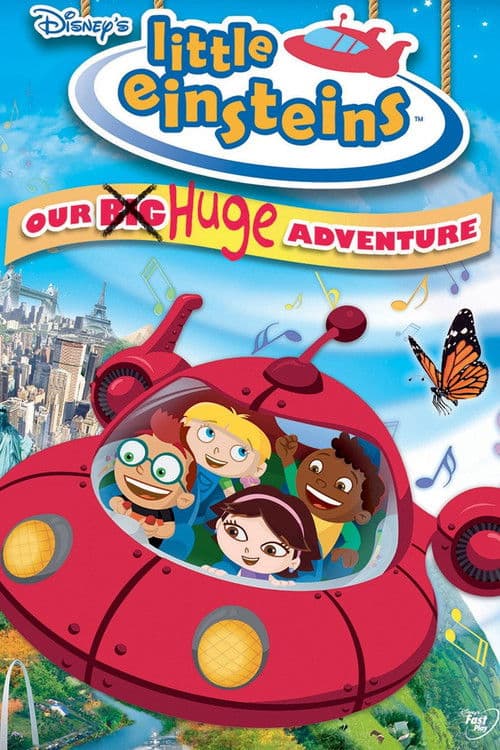
Little Einsteins: Our Big Huge Adventure
Does this age rating seem accurate to you?
Detailed parental analysis
Little Einsteins: Our Big Adventure is an educational animated film with a joyful and kind-hearted tone, designed as an extension of the television series of the same name. The plot takes a group of children on a series of missions to help a lost caterpillar reunite with its family, whilst travelling through varied and colourful environments. The target audience is very clearly very young children, between one and six years old.
Underlying Values
The entire narrative is built around cooperation, curiosity and empathy towards creatures in difficulty. Each child draws on a specific talent to overcome the obstacles they encounter, which concretely illustrates that individual contribution finds its meaning within a collective effort. The film also incorporates a mechanism of direct spectator participation: the characters ask questions aloud and wait for an answer, placing the child in an active rather than passive position. These values are not imposed as a final moral but run through the entire narrative structure.
Violence
A large spider catches butterflies in its web to eat them, which constitutes the main tension in one of the sequences. The butterflies are released unharmed and the resolution remains gentle, without confrontation or direct conflict. A cave scene populated with bats and spiders may surprise very sensitive children, although no creature explicitly threatens the protagonists. The intensity remains low and a reassuring tone quickly dominates.
Strengths
The film distinguishes itself above all through its organic integration of classical music: identifiable excerpts are scattered throughout the narrative and several young children manage to retain the titles and recognise the pieces after repeated viewings, which is a tangible educational result. Italian musical terminology is introduced naturally within situations, without any sense of imposed instruction. The interactive structure, inherited from the television format, sustains the attention of very young viewers and invites them to engage physically with the story. These qualities make this film an accessible and effective tool for cultural awakening for young children, even though the film makes no artistic claims beyond its format.
Age recommendation and discussion points
The film is fully appropriate from the age of two and proves particularly valuable between two and five years old. After viewing, two angles are worth exploring with the child: asking them what they would have done to help the caterpillar, in order to nurture their empathy through role play, and listening together to one of the pieces heard in the film to extend the musical discovery beyond the screen.
Synopsis
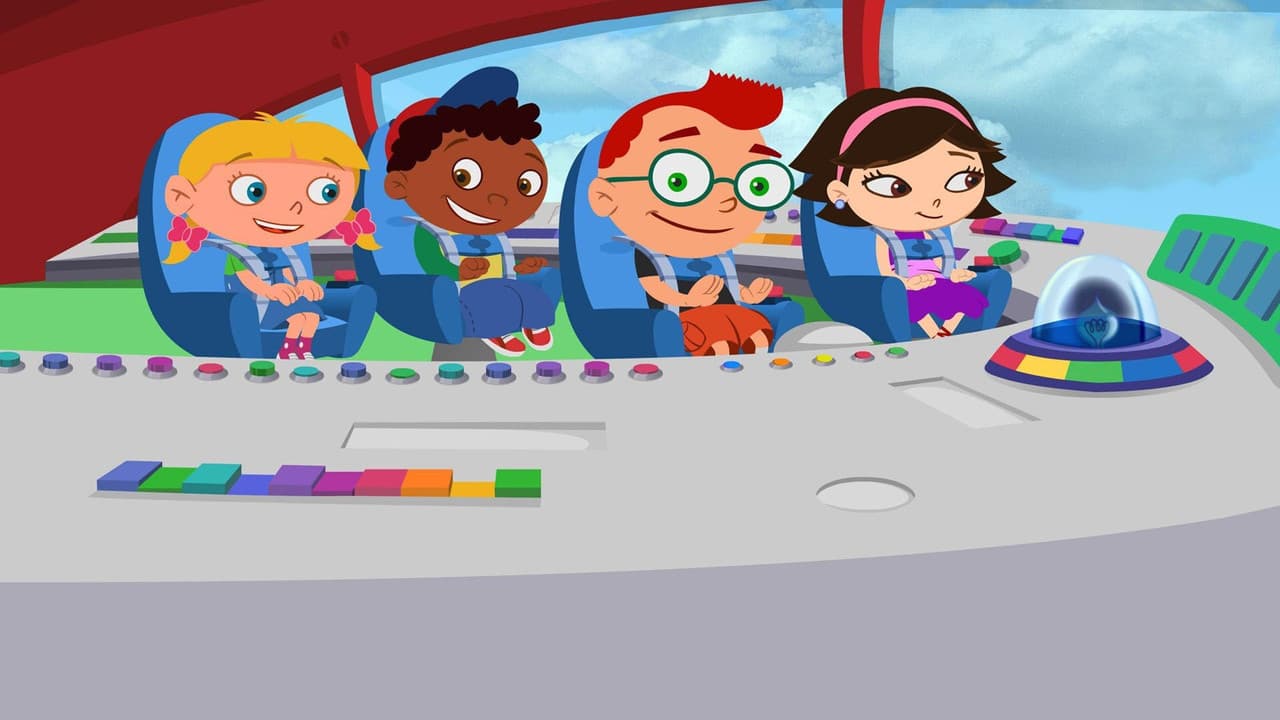
This educational program for children invites the viewer to interact with the characters on screen through singing, clapping, and dancing. Animated hosts Leo, June, Quincy, Annie, and Rocket explore a Mexican butterfly garden, Niagara Falls, and an Oklahoman cave.
About this title
- Format
- Feature film
- Year
- 2005
- Runtime
- 1h 1m
- Original language
- EN
- Studios
- Curious Pictures, The Baby Einstein Company
Content barometer
- Violence1/5Mild
- Fear1/5Mild
- Sexuality0/5None
- Language0/5None
- Narrative complexity0/5Simple
- Adult themes0/5None