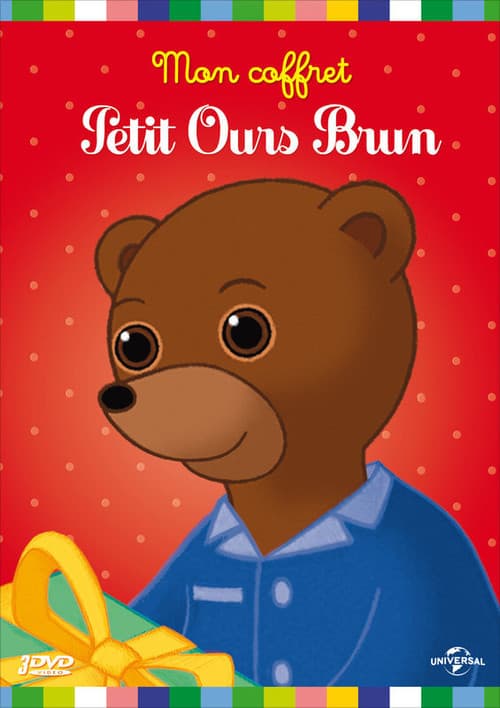
Les aventures de petit ours brun
Does this age rating seem accurate to you?
Detailed parental analysis
The Adventures of Little Brown Bear is an animated series with a warm and reassuring atmosphere, adapted from the illustrated albums well known to French families. Each short episode follows Little Brown Bear in an everyday situation, from fear of the dark to refusal to obey, and concludes with an accessible lesson. The intended audience is very young children, between 2 and 6 years old.
Underlying Values
The series rests on solid and coherent values: unconditional parental love, respect for everyday life rules, and progressive learning of independence. What sets it apart is its narrative device: Little Brown Bear is presented as a mirror of the child, spontaneously self-centred, and the series systematically shows him what his parents feel and think. This shift in perspective is rare in programming for very young children and constitutes a genuine educational tool. Each episode contains an explicit moral, formulated without heaviness, which allows the child to understand the meaning of what he has just seen without feeling lectured.
Parental and Family Portrayals
The parental figures are present, caring and consistent. The father and mother play symmetrical roles in supporting Little Brown Bear, with no hierarchy between them. They set limits, explain their reasons and remain affectionate even when disagreeing with their child. This positive and balanced parental model is one of the series' strengths for young children.
Social Themes
Some episodes address childhood fears, notably fear of the dark and fear of the wolf, in a direct way but always with a reassuring resolution. One scene shows a nocturnal shadow resembling a wolf, in total darkness. These contents are treated in a pedagogical manner and do not aim to frighten but to name the fear in order to overcome it better. For more sensitive or younger children, an adult present during viewing will help accompany this moment.
Strengths
The series draws its strength from its faithfulness to the world of the original albums, recognisable from the opening scene for parents who have leafed through them with their children. The slow and repetitive pace of the episodes is not a flaw: it corresponds precisely to the cognitive needs of very young children, who learn through repetition and recognition. The hero-as-mirror device is narratively intelligent and rare for this age group. The series also provides a good starting point for addressing concrete everyday situations with the child, from meals to bedtime, without ever resorting to condescending instruction.
Age recommendation and discussion points
The series is suitable from age 2 onwards, and particularly well pitched for ages 3 to 6, when the child is able to grasp the morals and the situations of disobedience presented. After viewing, there are two simple angles to explore with the child: ask him why Little Brown Bear did what he should not have done, and what his parents felt, in order to reinforce the shift in perspective that the series demonstrates.
About this title
- Format
- Feature film
- Year
- 2003
- Original language
- FR
Content barometer
- Violence0/5None
- Fear1/5Mild
- Sexuality0/5None
- Language0/5None
- Narrative complexity0/5Simple
- Adult themes0/5None