
Spirited Away
千と千尋の神隠し
Spirited Away
千と千尋の神隠し
Your feedback improves this guide
Your feedback highlights guides that need a second look and keeps the rating trustworthy.
Does this age rating seem accurate to you?
Sign in to vote
Watch-outs
What this film brings
Content barometer
Violence
2/5
Moderate
Fear
3/5
Notable tension
Sexuality
0/5
None
Language
0/5
None
Narrative complexity
2/5
Moderate
Adult themes
0/5
None
Expert review
Spirited Away is a family fantasy with extraordinary imagination, but it is also distinctly darker and more unsettling than many animated films for children. The main sensitive elements come from the strange spirit world atmosphere, eerie creatures, disturbing transformations, threats directed at the young heroine, and several tense scenes where she appears trapped, frightened, or physically at risk. The violence is mostly stylized and not graphic, with no meaningful sexual content and very mild language, however fear and unease are present throughout the story and are the main concern for younger viewers. Some sequences can strongly affect sensitive children because of the surreal visuals, the separation from parents, and the recurring sense that the heroine is alone in a hostile place. For a first viewing, I would suggest parental support from about age 9, or slightly younger for a child already comfortable with darker fairy tales, with reassurance that the film uses fantasy symbolism and that the heroine gradually becomes more capable and calm.
Synopsis
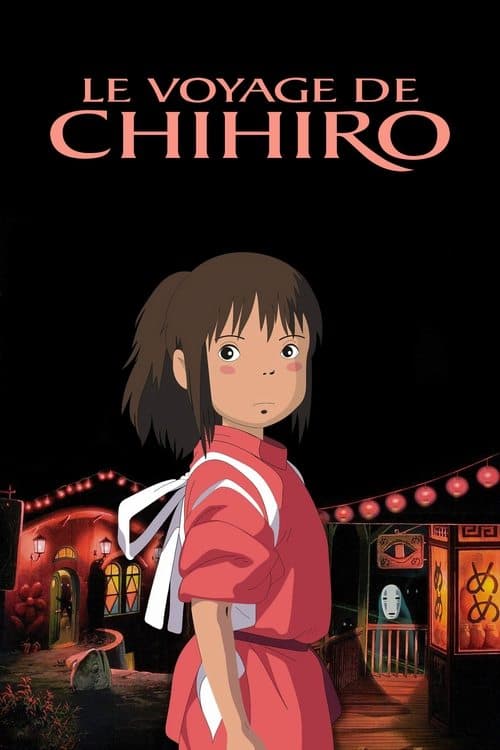
A young girl, Chihiro, becomes trapped in a strange new world of spirits. When her parents undergo a mysterious transformation, she must call upon the courage she never knew she had to free her family.
Difficult scenes
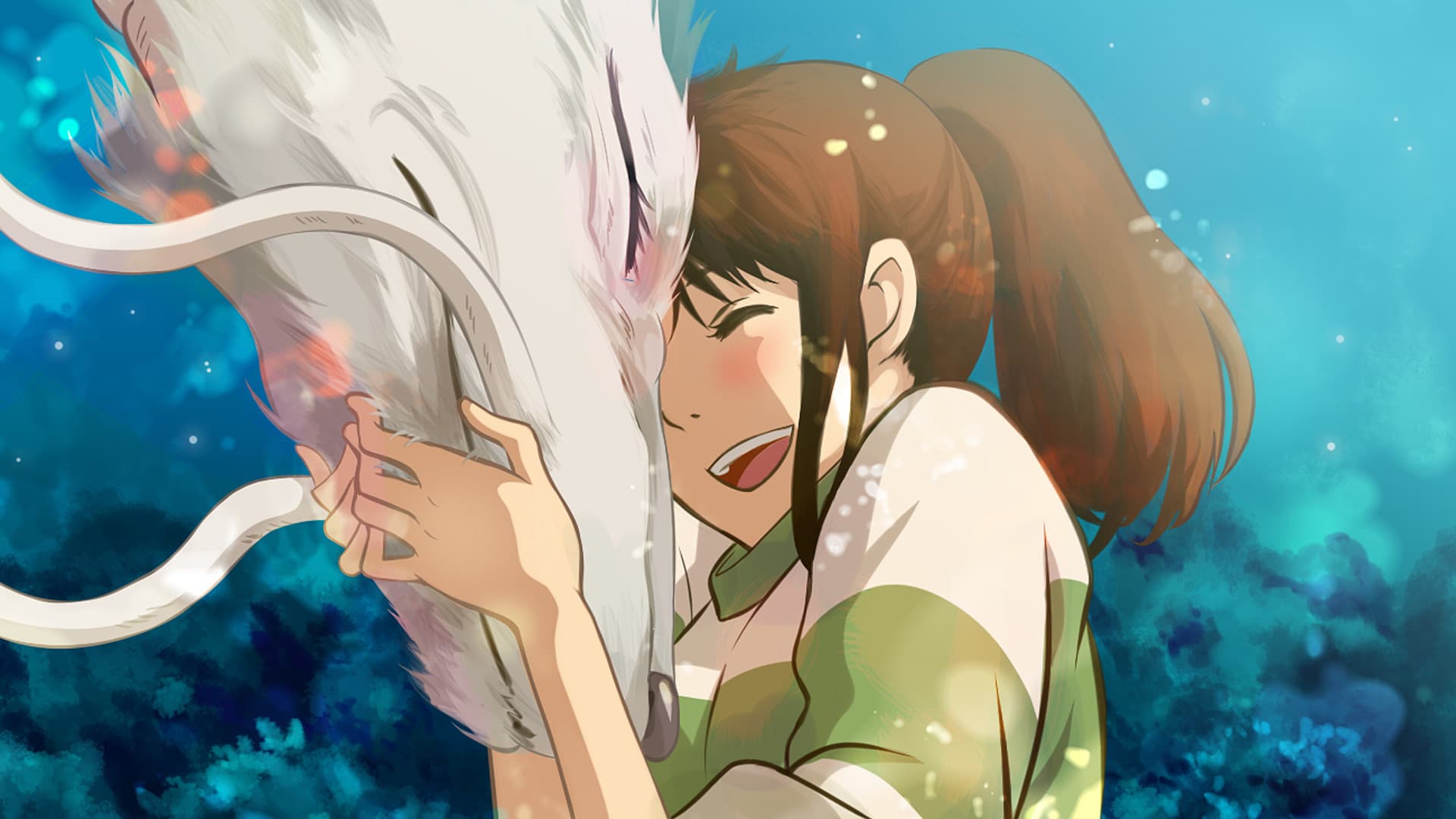
The opening contains one of the most intense moments for young children. Chihiro suddenly finds herself in a deserted and uncanny place, then discovers that her parents have been turned into pigs, which can feel deeply upsetting for a child who is strongly attached to parental safety. The arrival in the spirit world is filled with anxiety, shadows, strange beings, a sense of entrapment, and the fear of disappearing. Nothing is shown in a graphic way, but the sequence can still be very unsettling because Chihiro panics, cries, and seems completely lost. Several scenes inside the bathhouse rely on intimidation and threat. Yubaba has a very forceful presence, with exaggerated but frightening features, and the idea that a child could lose her name, be controlled, or be turned into an animal may linger with sensitive viewers. No Face becomes especially disturbing during his escalation. He swallows workers, grows into a monstrous shape, and later expels what he consumed in a slimy sequence, which is not realistic but can still disgust or frighten younger audiences. In the middle section of the story, Haku appears badly injured in dragon form while being chased and attacked by paper spirits. The scene combines pursuit, wounds, transformation, and emotional urgency, which makes it quite tense even though the presentation remains poetic rather than graphic.
Where to watch
No verified platform for the US market yet. We keep this section updated as availability changes.
Availability checked on Apr 01, 2026
About this title
- Format
- Feature film
- Year
- 2001
- Runtime
- 2h 6m
- Countries
- Japan
- Original language
- JA
- Studios
- Studio Ghibli, Tokuma Shoten, Nippon Television Network Corporation, Mitsubishi, dentsu, TFC
Content barometer
Violence
2/5
Moderate
Fear
3/5
Notable tension
Sexuality
0/5
None
Language
0/5
None
Narrative complexity
2/5
Moderate
Adult themes
0/5
None
Expert review
Spirited Away is a family fantasy with extraordinary imagination, but it is also distinctly darker and more unsettling than many animated films for children. The main sensitive elements come from the strange spirit world atmosphere, eerie creatures, disturbing transformations, threats directed at the young heroine, and several tense scenes where she appears trapped, frightened, or physically at risk. The violence is mostly stylized and not graphic, with no meaningful sexual content and very mild language, however fear and unease are present throughout the story and are the main concern for younger viewers. Some sequences can strongly affect sensitive children because of the surreal visuals, the separation from parents, and the recurring sense that the heroine is alone in a hostile place. For a first viewing, I would suggest parental support from about age 9, or slightly younger for a child already comfortable with darker fairy tales, with reassurance that the film uses fantasy symbolism and that the heroine gradually becomes more capable and calm.
Synopsis
A young girl, Chihiro, becomes trapped in a strange new world of spirits. When her parents undergo a mysterious transformation, she must call upon the courage she never knew she had to free her family.
Difficult scenes
The opening contains one of the most intense moments for young children. Chihiro suddenly finds herself in a deserted and uncanny place, then discovers that her parents have been turned into pigs, which can feel deeply upsetting for a child who is strongly attached to parental safety. The arrival in the spirit world is filled with anxiety, shadows, strange beings, a sense of entrapment, and the fear of disappearing. Nothing is shown in a graphic way, but the sequence can still be very unsettling because Chihiro panics, cries, and seems completely lost. Several scenes inside the bathhouse rely on intimidation and threat. Yubaba has a very forceful presence, with exaggerated but frightening features, and the idea that a child could lose her name, be controlled, or be turned into an animal may linger with sensitive viewers. No Face becomes especially disturbing during his escalation. He swallows workers, grows into a monstrous shape, and later expels what he consumed in a slimy sequence, which is not realistic but can still disgust or frighten younger audiences. In the middle section of the story, Haku appears badly injured in dragon form while being chased and attacked by paper spirits. The scene combines pursuit, wounds, transformation, and emotional urgency, which makes it quite tense even though the presentation remains poetic rather than graphic.