The Rabbi's Cat
Le Chat du rabbin
The Rabbi's Cat
Le Chat du rabbin
Your feedback improves this guide
Your feedback highlights guides that need a second look and keeps the rating trustworthy.
Does this age rating seem accurate to you?
Sign in to vote
Watch-outs
What this film brings
Content barometer
Violence
2/5
Moderate
Fear
2/5
A few scenes
Sexuality
1/5
Allusions
Language
1/5
Mild
Narrative complexity
2/5
Moderate
Adult themes
1/5
Mild
Expert review
An animated adaptation of Joann Sfar's graphic novel, this film is set in 1930s Algiers and follows a witty, philosophically-minded talking cat alongside his rabbi owner, weaving humor, spiritual reflection and adventure across Africa. Sensitive content is primarily thematic in nature, encompassing theological debates, colonialism, interfaith tensions, and a journey fraught with dangers including a life-threatening scorpion sting and a tense confrontation with an intolerant religious group. There is no graphic violence or explicit sexuality, but the film's layered irony, dense cultural references and adult treatment of faith and identity make it largely inaccessible to young children, even if the overall tone remains warm and gently satirical. Parents watching with younger teens or preteens can use the film as a springboard to discuss religious tolerance, cultural diversity and the French colonial era in North Africa. It is also worth noting that the work carries dated gender stereotypes, especially in the way some female characters are presented or placed in distress. This does not automatically make the series unsuitable, but it is worth flagging and can be discussed with children. Some characters or groups may also rely on dated ethnic or racial stereotypes, with portrayals that can feel caricatural or reductive today. That aspect is worth flagging and, when relevant, discussing with children.
Synopsis
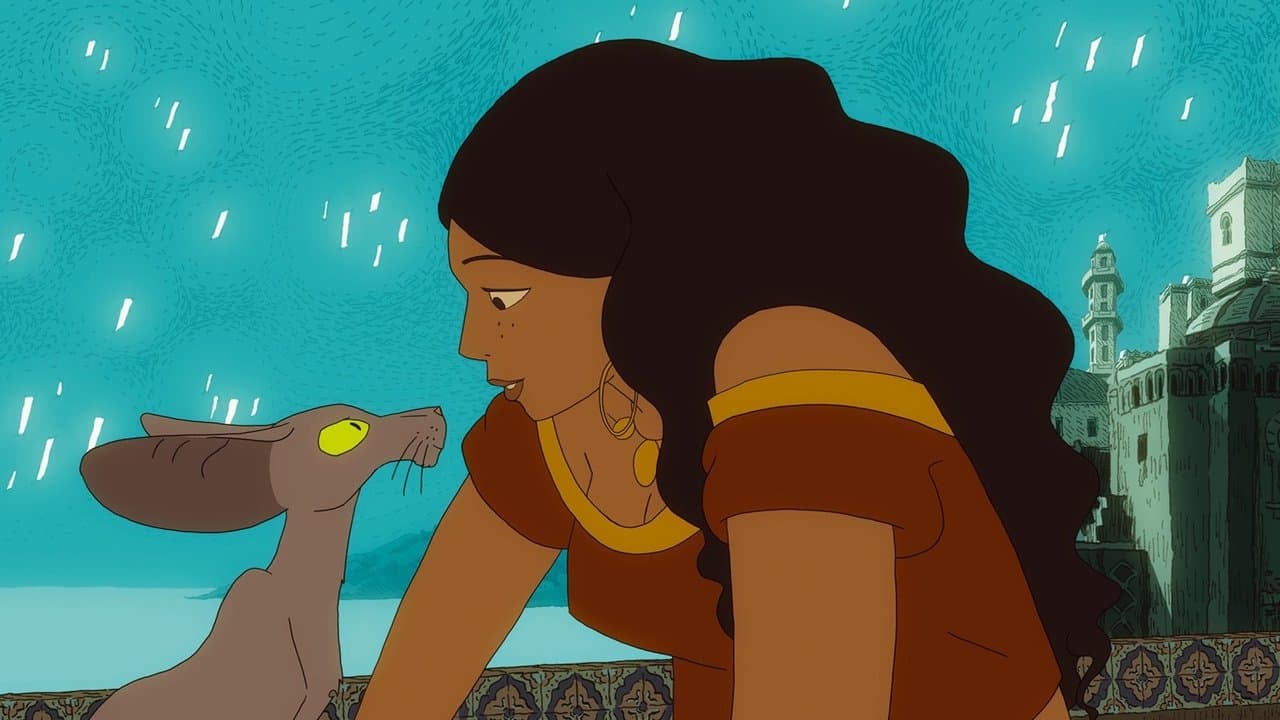
The story of a rabbi and his talking cat, a sharp-tongued feline philosopher brimming with scathing humor and a less than pure love for the rabbi's teenage daughter.
Difficult scenes
The cat is stung by a scorpion in the middle of the African desert and falls into a critical, life-threatening condition. The scene is played with genuine narrative tension and may worry sensitive younger viewers who have grown attached to the character throughout the film. The group of travellers is forced to stop at a tribe portrayed as intolerant and easily offended. An altercation breaks out over religious matters, creating an atmosphere of threat and ideological confrontation that may confuse younger viewers who lack the historical context to understand it. The film features numerous theological debates between the cat, the rabbi and other characters, addressing faith, Jewish identity, conversion and the nature of God through adult irony. These exchanges, while sharp and intelligent, may feel opaque or unsettling for children who do not yet have the cultural and religious framework to appreciate them. The French colonial context in Algeria runs throughout the film as a backdrop, most notably when the rabbi is summoned to take an administrative test imposed by the colonial authorities. This historical dimension is handled with subtlety but requires a degree of maturity to grasp its full implications.
Where to watch
No verified platform for the US market yet. We keep this section updated as availability changes.
About this title
- Format
- Feature film
- Year
- 2011
- Runtime
- 1h 40m
- Countries
- France
- Original language
- FR
- Directed by
- Joann Sfar, Antoine Delesvaux
- Main cast
- François Morel, Hafsia Herzi, Maurice Bénichou, Jean-Pierre Kalfon, Daniel Cohen, François Damiens, Mohamed Fellag, Mathieu Amalric, Éric Elmosnino, Marguerite Abouet
- Studios
- TF1 Droits Audiovisuels, CinéCinéma, PROCIREP, Canal+, France Télévisions, Autochenille Production
Content barometer
Violence
2/5
Moderate
Fear
2/5
A few scenes
Sexuality
1/5
Allusions
Language
1/5
Mild
Narrative complexity
2/5
Moderate
Adult themes
1/5
Mild
Expert review
An animated adaptation of Joann Sfar's graphic novel, this film is set in 1930s Algiers and follows a witty, philosophically-minded talking cat alongside his rabbi owner, weaving humor, spiritual reflection and adventure across Africa. Sensitive content is primarily thematic in nature, encompassing theological debates, colonialism, interfaith tensions, and a journey fraught with dangers including a life-threatening scorpion sting and a tense confrontation with an intolerant religious group. There is no graphic violence or explicit sexuality, but the film's layered irony, dense cultural references and adult treatment of faith and identity make it largely inaccessible to young children, even if the overall tone remains warm and gently satirical. Parents watching with younger teens or preteens can use the film as a springboard to discuss religious tolerance, cultural diversity and the French colonial era in North Africa. It is also worth noting that the work carries dated gender stereotypes, especially in the way some female characters are presented or placed in distress. This does not automatically make the series unsuitable, but it is worth flagging and can be discussed with children. Some characters or groups may also rely on dated ethnic or racial stereotypes, with portrayals that can feel caricatural or reductive today. That aspect is worth flagging and, when relevant, discussing with children.
Synopsis
The story of a rabbi and his talking cat, a sharp-tongued feline philosopher brimming with scathing humor and a less than pure love for the rabbi's teenage daughter.
Difficult scenes
The cat is stung by a scorpion in the middle of the African desert and falls into a critical, life-threatening condition. The scene is played with genuine narrative tension and may worry sensitive younger viewers who have grown attached to the character throughout the film. The group of travellers is forced to stop at a tribe portrayed as intolerant and easily offended. An altercation breaks out over religious matters, creating an atmosphere of threat and ideological confrontation that may confuse younger viewers who lack the historical context to understand it. The film features numerous theological debates between the cat, the rabbi and other characters, addressing faith, Jewish identity, conversion and the nature of God through adult irony. These exchanges, while sharp and intelligent, may feel opaque or unsettling for children who do not yet have the cultural and religious framework to appreciate them. The French colonial context in Algeria runs throughout the film as a backdrop, most notably when the rabbi is summoned to take an administrative test imposed by the colonial authorities. This historical dimension is handled with subtlety but requires a degree of maturity to grasp its full implications.