
Grave of the Fireflies
火垂るの墓
Does this age rating seem accurate to you?
Detailed parental analysis
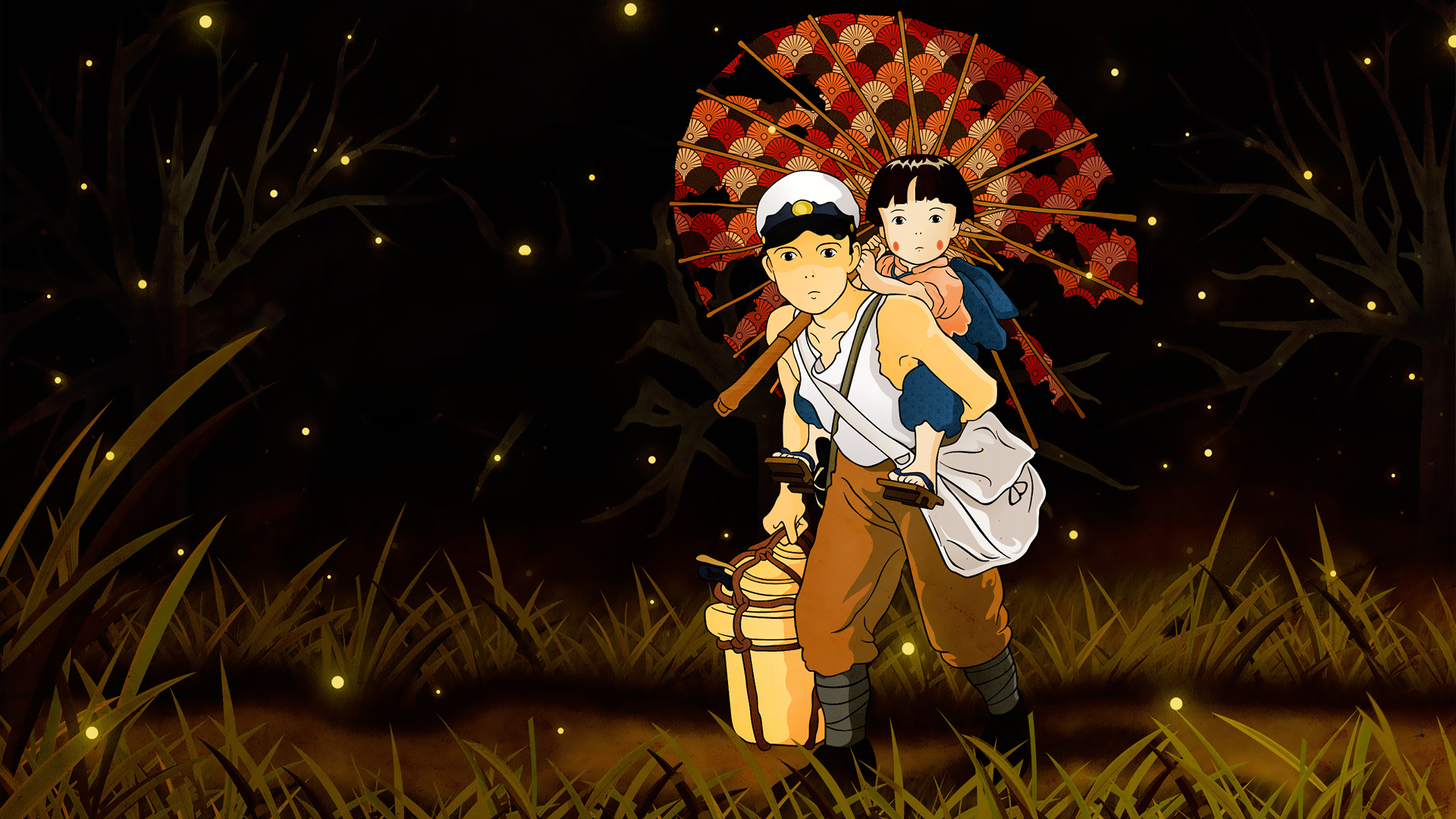
Grave of the Fireflies is an animated film with a profoundly dark and painful tone, without equal in its capacity to depict the suffering of civilians in wartime. The story follows two Japanese children, a teenager and his four-year-old sister, as they attempt to survive alone in Japan in 1945, devastated by American bombing campaigns. The film is addressed to an adult or older teenage audience, and is nothing like a work intended for children despite its animated format.
Violence
The violence of war is shown without filter or complacent aestheticisation. The firebombing raids are depicted with brutal visual precision: charred bodies, corpses piled up, massive destruction. The death of the children's mother is presented with intense physical detail, including decomposing wounds with visible flies and maggots. A teenager who steals food is struck and wounded by a farmer, without the scene being softened. This violence is never gratuitous: it serves a rigorous anti-militarist purpose and reveals the real human cost of war on the most vulnerable. But its intensity is real and lasting, and it can provoke profound emotional shock in an unprepared viewer.
Social Themes
War is the central and absolute subject of the film, treated not as adventure or heroism but as a humanitarian catastrophe experienced from within by children. The film documents with precision the consequences of Allied bombing on the Japanese civilian population, the disintegration of the social fabric, famine and institutional indifference. This perspective is rare and valuable: it glorifies no side, offers no national redemption, and refuses all consoling discourse. It is powerful pedagogical material on what war does to the invisible, provided the viewer is able to receive it.
Parental and Family Portrayals
Adult figures are almost systematically failing or absent. The mother dies early on. The father, a naval officer, is absent and will probably die at sea without the film explicitly confirming it. The aunt who takes in the children gradually reveals herself to be selfish and indifferent to their survival, reducing their rations and pushing them out. The doctor consulted about the little girl's illness proves cold and perfunctory. This gallery of failing adults is not a narrative accident: it illustrates how social and family structures collapse under the pressure of war and scarcity. This is an important angle of discussion to prepare with a teenager, to avoid too univocal a reading of these characters as mere villains.
Underlying Values
Unconditional brotherly love is the central value of the narrative: the older brother devotes all his energy, all his resources and ultimately his life to protecting his little sister. This devotion is represented with complete sincerity, without idealisation. In counterpoint, the film questions the tension between individual survival and collective solidarity: the brother's choice to isolate himself with his sister rather than integrate into a community, even a hostile one, contributes to their downfall. This is not a moral judgment by the film on this choice, but a narrative reality that the film leaves open and which deserves to be discussed.
Language
Coarse language is present in the English dubbed version, with a few instances of common vulgar terms. The original Japanese subtitled version is considerably more restrained in this regard. This point is minor in relation to the film as a whole, but is worth noting for parents sensitive to this criterion.
Strengths
Grave of the Fireflies is a work of exceptional emotional and narrative power, unanimously recognised as one of the most important animated films ever made. Its refusal of all manichaeism, all happy endings and all easy consolation makes it an artistic testimony on war of rare honesty. The relationship between the two children is written and animated with a psychological finesse that far exceeds the conventions of the genre. The film has real pedagogical value regarding the history of the Second World War as seen from the perspective of Japanese civilian victims, an angle poorly represented in Western popular culture. It also develops remarkable emotional intelligence about grief, solitude and human dignity in the face of abandonment.
Age recommendation and discussion points
The film is absolutely not recommended before the age of 12, and a serene viewing is better situated around 14 to 16 years old, depending on the teenager's emotional maturity. Two angles of discussion are essential after viewing: why do the adults in the film fail to protect these children, and what does this tell us about what war does to human bonds? And to what extent did the brother's choice to isolate himself rather than come to terms with a hostile community contribute to the tragedy?
Synopsis
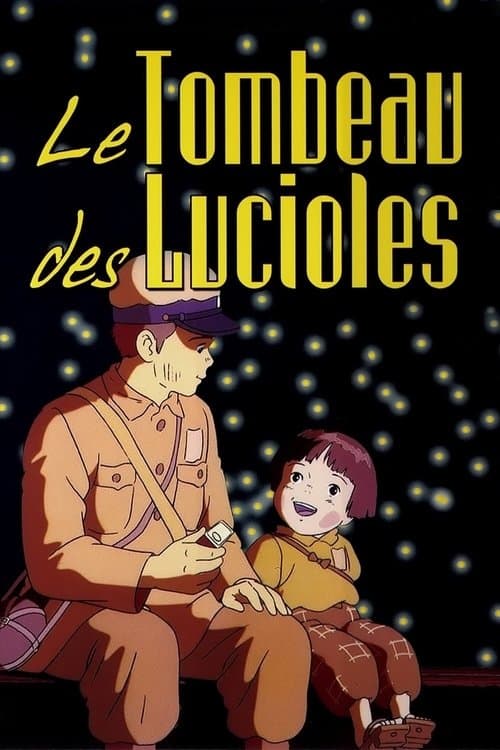
In the final months of World War II, 14-year-old Seita and his sister Setsuko are orphaned when their mother is killed during an air raid in Kobe, Japan. After a falling out with their aunt, they move into an abandoned bomb shelter. With no surviving relatives and their emergency rations depleted, Seita and Setsuko struggle to survive.
Where to watch
Availability checked on May 04, 2026
About this title
- Format
- Feature film
- Year
- 1988
- Runtime
- 1h 28m
- Countries
- Japan
- Original language
- JA
- Directed by
- Isao Takahata
- Main cast
- Tsutomu Tatsumi, Ayano Shiraishi, Yoshiko Shinohara, Akemi Yamaguchi, Masayo Sakai, Kozo Hashida, Kazumi Nozaki, Yoshio Matsuoka, Masahiro Kanetake, Kiyoshi Yanagawa
- Studios
- Studio Ghibli
Content barometer
- Violence4/5Strong
- Fear5/5Very intense
- Sexuality0/5None
- Language1/5Mild
- Narrative complexity2/5Moderate
- Adult themes0/5None