
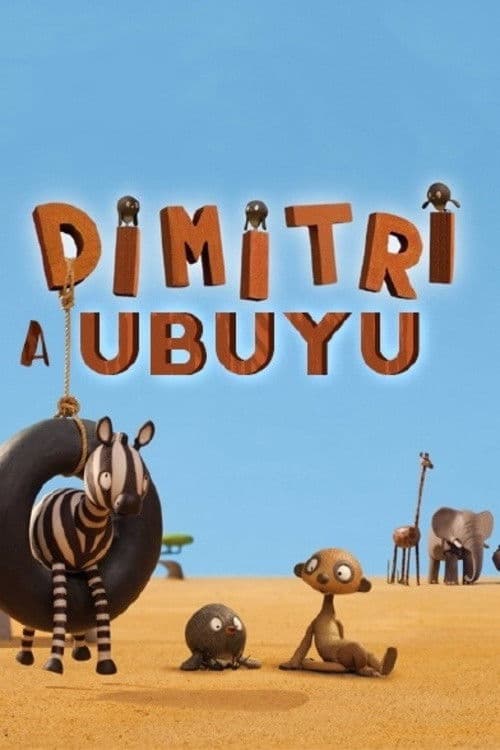
Dimitri in Ubuyu
Does this age rating seem accurate to you?
Detailed parental analysis
Dimitri in Ubuyu is a children's animated film with a warm and slightly adventurous atmosphere, touched by a few moments of emotional tension accessible to very young children. The story follows a little bird separated from its parents by a storm, forced to find his way through a lively and bustling African village. The film is clearly aimed at preschool children and the early years of primary school.
Underlying Values
The film puts forward several defining messages, one of which deserves attention: at the end, Dimitri chooses to stay with his new friends rather than return to his parents. This is a strong narrative choice that explicitly values chosen friendship over family ties, which may surprise in a film intended for very young children. Furthermore, the story constructs a beautiful vision of community solidarity, where an entire village mobilises to help a stranger in difficulty. Dimitri's quiet courage in the face of the unknown is valued convincingly and without overacting. Lastly, the film enjoys demystifying charlatanism: the monkey claims to communicate with spirits in order to obtain peanuts, and the narrative unmasks him clearly, offering a fine introduction to the notion of manipulation and credulity.
Parental and Family Portrayals
Dimitri's parents are absent for much of the film, separated from him by the initial storm. A scene suggests the possibility that they have forgotten him, which introduces a diffuse anxiety about parental abandonment. For a child aged 3 to 5 years old, still building their attachment, this emotional mechanism can be unsettling, even if the film does not dramatise it excessively. Parental guidance during viewing is helpful for addressing the questions this situation may raise.
Violence
The monkey, a recurring secondary character, shouts at the little bird and adopts an intimidating posture. The most emotionally charged threat remains that of burning Dimitri's mother's feather, a transitional object with strong symbolic value for the character. A nocturnal scene with fire and evocations of spirits constitutes the film's most intense moment of tension. Nothing visually violent or graphic, but the accumulation of these elements can weigh on children most sensitive to dynamics of threat and intimidation.
Strengths
The film is situated within a representation of rural Africa that stands out from the usual exoticising imagery: village life, relationships between inhabitants, the humour of everyday existence give the narrative an authentic and vibrant texture. The figure of the charlatan monkey is treated with rare sophistication for this audience: the film explains the mechanism of manipulation without demonising, which opens genuine conversation about trust and critical judgment. The emotional writing of Dimitri, who dare not say he feels alone, is just and recognisable for young children navigating emotions they cannot yet name.
Age recommendation and discussion points
The film is suitable from age 3, though parental guidance is advised for children aged 3 to 5 who are sensitive to separation and the figure of a threatening adult. Two angles of discussion naturally present themselves after viewing: how to recognise someone who tells us stories to get what they want, and what we feel when we are far from those we love without being able to say so.
Synopsis
Dimitri, the little bird from northern Europe, has landed on the plain of Ubuyu in Africa. Every day he learns to overcome his fears and discover a world full of surprises. In Ubuyu being different is an asset that he will share with Makeba the giraffe, Oko the zebra and Pili the meerkat.
About this title
- Format
- Short film
- Year
- 2014
- Runtime
- 26m
- Countries
- France
- Original language
- FR
- Studios
- Beast Productions, Vivement lundi !, Nadasdy Film
Content barometer
- Violence1/5Mild
- Fear2/5A few scenes
- Sexuality0/5None
- Language0/5None
- Narrative complexity0/5Simple
- Adult themes0/5None
Values conveyed
- Courage
- Friendship
- Acceptance of difference
- Autonomy
- kindness
- curiosity
- adaptability