
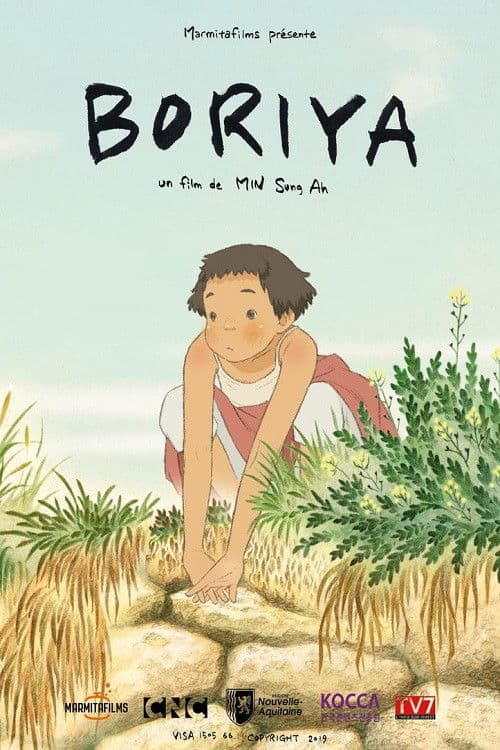
Boriya
Does this age rating seem accurate to you?
Detailed parental analysis
Boriya is a contemplative film with a poetic and melancholic atmosphere, carried by a slow pace and a sensitive attention to the rural world. A young girl charged with minding the family cow ventures out alone into nature and experiences a day of adventure, discovery and emotion. The film is suitable for young children from around two or three years old, but works best for children capable of appreciating a quiet narrative, without spectacular plot twists. Underlying Values The film constructs its narrative around responsibility, autonomy and learning through direct experience. Boriya discovers for herself that nature is beautiful but not without danger, that caring for an animal involves genuine emotional weight, and that failing at a task hurts, even without punishment. This message is balanced by the mother's reaction, who welcomes her daughter with food rather than a reprimand, placing compassion above performance. The film also values silent contemplation of the natural world, leaves, birds, wind, sun, as a form of sensible intelligence rarely celebrated in children's cinema. The theme of longing, with Boriya bored at the farm while a friend goes to the city, offers an additional angle on the desire for elsewhere and the way each child projects their own aspirations. Parental and Family Portrayals The maternal figure is brief but decisive: faced with the loss of the cow and her daughter's distress, she chooses tenderness over punishment. This narrative choice is not insignificant and carries a clear message about compassionate parenting. It is a sober and positive representation that can serve as a starting point for talking with a child about what they feel when they make a mistake and what they expect from their parents in those moments. Social Themes The film sketches out a subtle reflection on rural life, the boredom it can create in a child, and the feeling of being set apart from an urban world perceived as more stimulating. Without didacticism, it asks the question of what it means to grow up in an environment without technology, in direct contact with nature and animals. These questions can fuel a rich conversation with a child about their own desires, what they value in their surroundings, and how we live differently depending on where we are. Strengths Boriya distinguishes itself through its capacity to film the inner life of childhood with great honesty, without underlining emotions or resolving them too quickly. The slow pace is not a flaw but a coherent artistic choice: it allows emotion to settle and invites the young viewer to inhabit the film rather than consume it. The way the film treats boredom as a real and valid experience of childhood, rather than as a problem to be solved, is particularly subtle. For children sensitive to the natural world or to solitude, the film can be an experience of genuine emotional recognition. Age recommendation and discussion points The film is suitable from around three years old, with adult presence for younger children, particularly because of the drowning scene which may worry young viewers. Two angles for discussion open naturally after viewing: how one feels when carrying a responsibility and fails to fulfil it, and what Boriya's mother could have done differently and why she chose gentleness.
Synopsis
Little Boriya is bored. She would love to play with someone, but it's harvest time and everyone is busy. Alone, under the river's bridge, she will realise that life isn't always how she imagined it to be.
About this title
- Format
- Short film
- Year
- 2019
- Runtime
- 17m
- Countries
- South Korea, France
- Original language
- FR
Content barometer
- Violence0/5None
- Fear1/5Mild
- Sexuality0/5None
- Language0/5None
- Narrative complexity0/5Simple
- Adult themes0/5None