A Tiny Voyage
Does this age rating seem accurate to you?
Detailed parental analysis
The Tiny Journey is an animated short film with a soft and contemplative atmosphere, driven by a visual sensibility close to that of an illustrated book. The story follows a child who overcomes his fear of leaving his familiar surroundings by befriending a caged bird, whose release becomes the heart of the narrative. The film is unequivocally aimed at very young children, from nursery school onwards, and can also support first conversations about change and separation.
Underlying Values
The film constructs two messages that reinforce each other: freedom is the natural right of all living beings, and the departure of a loved one does not mean their disappearance. The cage functions as a metaphor readable for a very young child, without didactic heaviness. The courage to face the unknown is celebrated without diminishing the legitimacy of initial fear, which gives real emotional honesty to the film's message. It is a film that treats the melancholy of change with kindness, without resolving too quickly the tension between attachment and the necessity of letting go.
Social Themes
The ecological dimension is present in the celebration of the natural world and in the conviction that wild animals belong to their environment, not to domestic spaces. This is not a militant film, but the cage as central narrative object anchors a concrete environmental sensibility accessible to a three-year-old child. The film invites, without forcing, a reflection on respect for living things.
Parental and Family Portrayals
The relationship between the child and his familiar surroundings is at the heart of the narrative, with a theme of separation treated with delicacy. Parental figures are secondary or absent from the foreground, which places the child character in the position of an autonomous agent of his choices, supported by friendship with the bird rather than by reassuring adult authority. This narrative choice strengthens the message of autonomy without ever creating anxiety.
Strengths
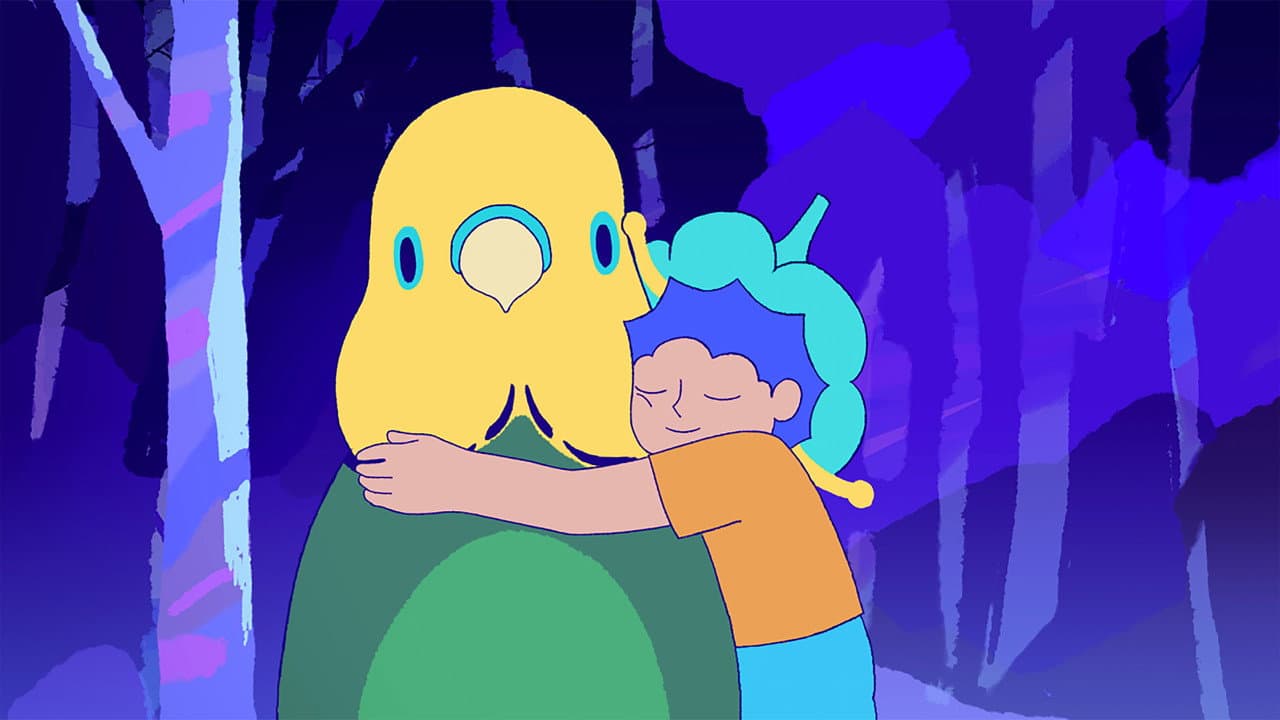
The film possesses a remarkable narrative economy for its short format: it says much with little, relying on image and suggestion rather than explanation. The sequence in which the child becomes tiny and takes flight on the bird's back is treated as a poetic experience, close to the finest traditions of animated picture books. The film's emotional intelligence lies in its ability not to console too quickly: the fear and sadness of separation are shown as legitimate before being transcended, which gives it a rare depth for this age group.
Age recommendation and discussion points
The film is fully suitable from age three onwards, and viewing is entirely serene from this age. Two natural angles for discussion open up after the film: ask the child what he thinks happened to the bird after its release, to explore together the idea that leaving is not disappearing, and ask him whether he has ever been afraid of going somewhere new, to connect the character's courage with his own experiences.
Synopsis
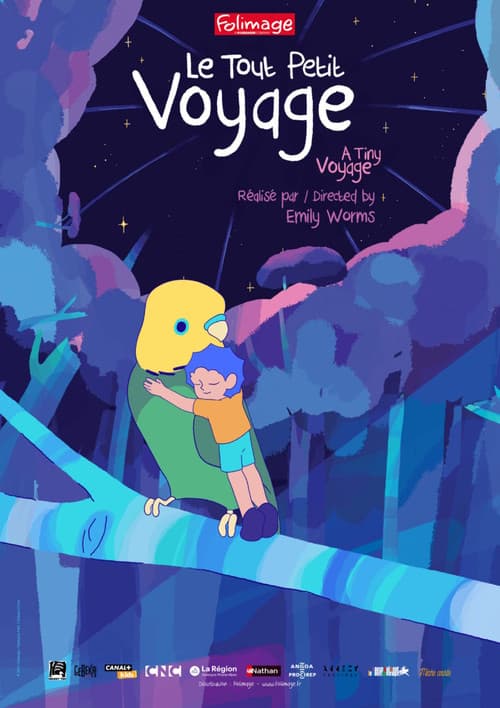
John sees an extraordinary sight: Titi his parakeet opening the door to own his cage, all by himself! Yet the bird doesn’t fly away. While John tries to understand why, he is swept away into a magical world where Titi can reveal his weaknesses and fears, and John can help him overcome them. As they travel together across breathtaking landscapes, their friendship grows, and they learn that saying goodbye is not a final farewell.
About this title
- Format
- Short film
- Year
- 2023
- Runtime
- 8m
- Countries
- France, Switzerland
- Original language
- FR
- Studios
- Folimage, Nadasdy Film
Content barometer
- Violence0/5None
- Fear1/5Mild
- Sexuality0/5None
- Language0/5None
- Narrative complexity0/5Simple
- Adult themes0/5None
Values conveyed
- Courage
- Acceptance of difference
- Compassion
- Autonomy
- friendship
- empathy
- mutual help