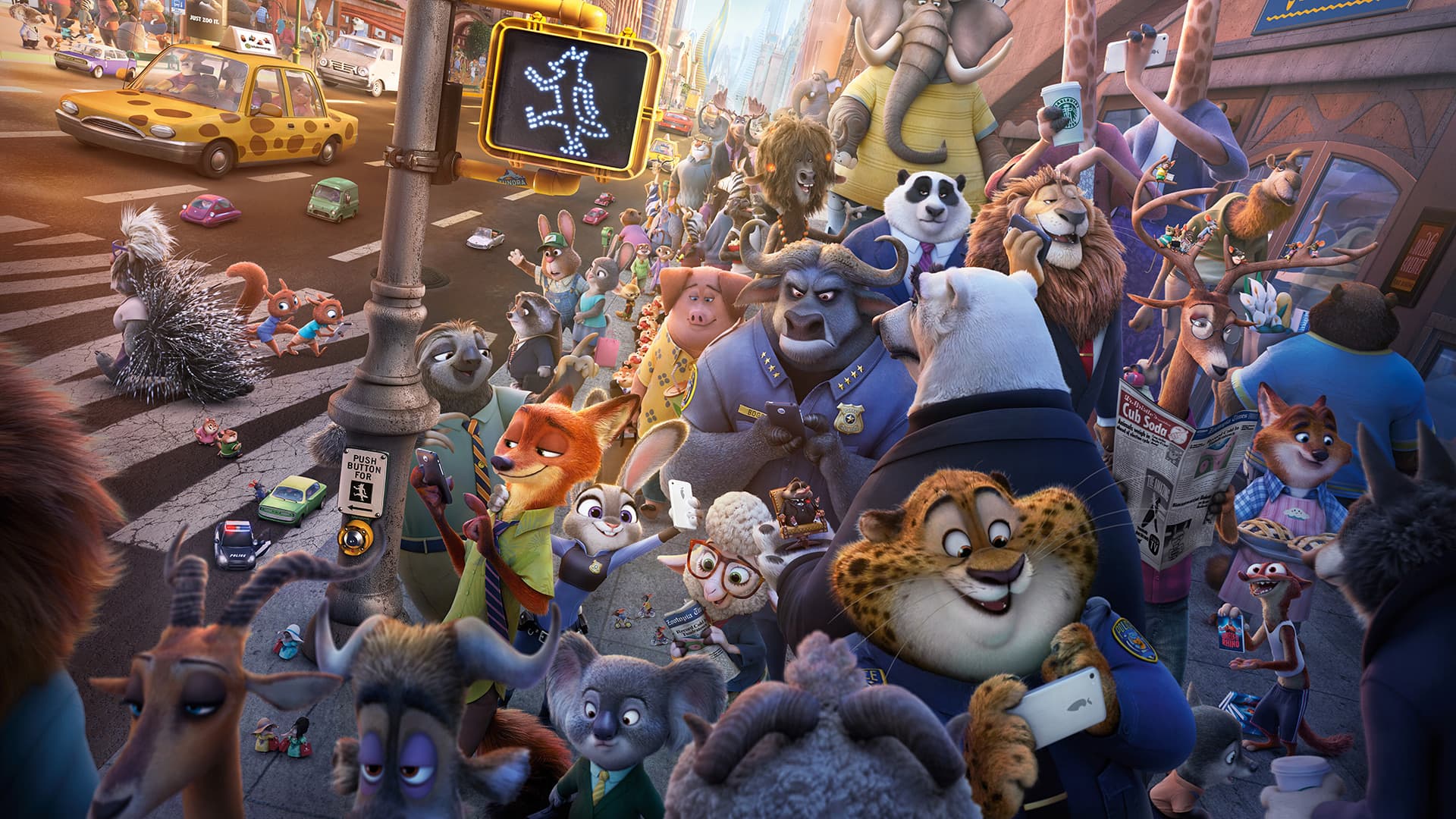

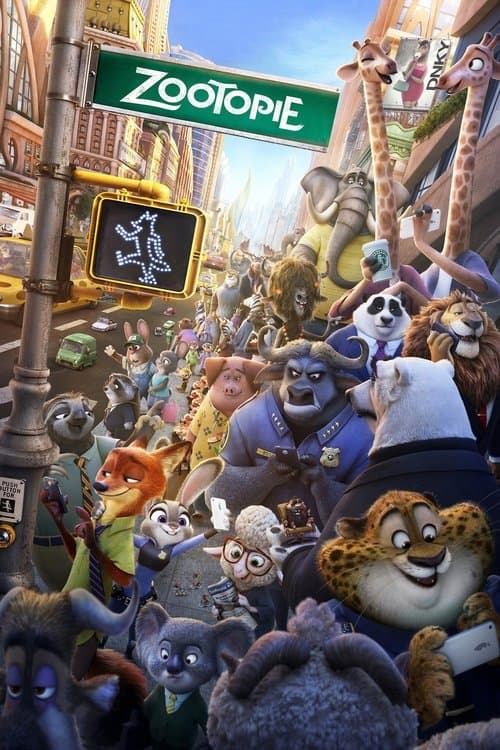
Zootopia
Does this age rating seem accurate to you?
Detailed parental analysis
Zootopia is an animated adventure comedy driven by lively energy and an overall engaging atmosphere, with some sequences that are frankly unsettling. The plot follows a rabbit who joins the police force of a large city populated exclusively by civilized animals and finds herself caught up in an investigation into mysterious disappearances. The film is produced by Disney Studios and primarily targets children from eight years old onwards, with an additional layer of meaning intended for adults.
Violence
The film contains several sequences of notable intensity for a mainstream animated feature. Predatory animals suddenly become savage and attack other characters, with frightening facial expressions and blood-red eyes. A chase involving a jaguar in a state of animal regression is particularly tense and sustained. One character loses an eye during an attack, and a young rabbit is clawed across the face and pinned to the ground by a fox. These scenes are not gratuitous in the strict sense: they fit the logic of the police narrative and serve the film's point about fear of the other. However, their visual and sonic intensity is real, and several children aged four to seven have reported nightmares following viewing. The violence remains consistently consequential and never aestheticized for the sake of pure spectacle, which mitigates its narrative toxicity.
Discrimination
Discrimination is the central and explicitly deliberate theme of the film, which gives it a thematic coherence rare for the genre. The narrative presents prejudices tied to animal species as a direct metaphor for racial, social and gender discrimination: the rabbit is reduced to her supposed fragility, the fox to his alleged innate dishonesty. The film shows that these stereotypes concern not only those in power towards minorities, but also the most progressive characters, who discover their own blind spots. This treatment is sincere and effective. In parallel, the film perpetuates a few caricatures it does not question: the overweight police officer constantly nibbling on snacks, the sloths presented as professionally incompetent and objects of comedy, and the black jaguar rendered savage as the primary figure of threat. These internal contradictions deserve to be pointed out to the child rather than left uncommented upon.
Underlying Values
The film strongly valorizes individual perseverance in the face of adversity, through a heroine who achieves her ambition by overcoming her family's opposition and institutional discrimination. This message is positive but rests on fairly pure meritocratic logic: effort and talent are sufficient to overturn structural obstacles. The narrative never questions the institutions themselves, only the individuals who inhabit them. The unlikely friendship between the fox and the rabbit, natural enemies reconciled, is treated with enough emotional depth not to ring hollow.
Sex and Nudity
The film includes a scene in a nudist club where the animals wear no clothing. The sequence is comedic, devoid of any sexual undertone and treated with a lightness that poses no particular problem. It may nevertheless surprise young children and calls for a brief parental explanation about natural nudity versus nudity in human society.
Language
The film regularly uses mild insults in the original English version, notably 'dumb', 'jerk', 'stupid', 'moron' and 'loser'. French language versions generally soften these expressions, but the register remains that of an action comedy which normalizes insult as a comedic tool. Nothing serious, but sufficient to be mentioned to a child who might reproduce these formulas.
Parental and Family Portrayals
The protagonist's parents are depicted as loving but profoundly limiting, convinced that their daughter would do better to remain in her family and social position. The film treats them with benevolence rather than hostility, acknowledging that their fear stems from a desire to protect her. The narrative arc demonstrates, however, that their caution was unfounded, which clearly positions the film on the side of individual emancipation against family authority.
Strengths
Zootopia is a remarkably well-constructed animated film that succeeds in integrating an adult political message about unconscious bias and the manufacture of fear into a dynamic and accessible police narrative. The investigation actually works, with solid narrative mechanics and some well-crafted reversals. The portrayal of the city, divided into districts with distinct microclimates, reveals coherent and inventive world-building work. What distinguishes the film is its ability to make the anti-discriminatory message uncomfortable rather than reassuring: even the protagonist, the moral character of the narrative, finds herself caught out in prejudice, which avoids the usual manichaeism of the genre.
Age recommendation and discussion points
The film is not recommended before age seven due to sequences of animal violence and frankly frightening chase scenes. From eight years old onwards, viewing is straightforward for the vast majority of children, with individual sensitivity to monitor in more anxious children. Two angles of discussion are warranted after viewing: ask the child whether he or she thinks the film itself avoids all the stereotypes it condemns, and explore with them whether personal effort really suffices to overcome inequality, or whether certain obstacles require a collective response.
Synopsis
Determined to prove herself, Officer Judy Hopps, the first bunny on Zootopia's police force, jumps at the chance to crack her first case - even if it means partnering with scam-artist fox Nick Wilde to solve the mystery.
About this title
- Format
- Feature film
- Year
- 2016
- Runtime
- 1h 49m
- Countries
- United States of America
- Original language
- EN
- Studios
- Walt Disney Animation Studios
Content barometer
- Violence3/5Notable
- Fear4/5Intense
- Sexuality1/5Allusions
- Language2/5Moderate
- Narrative complexity2/5Moderate
- Adult themes0/5None
Watch-outs
- Ethnic or racial stereotypes
- Gender stereotypes
Values conveyed
- Courage
- Friendship
- Acceptance of difference
- Perseverance
- empathy
- justice