
Your Name.
君の名は。
Does this age rating seem accurate to you?
Detailed parental analysis
Your Name is a Japanese animated film with a contemplative and melancholic atmosphere, oscillating between light comedy and intense emotional drama. The plot follows two teenagers who, without having ever met, mysteriously find themselves exchanging bodies during their sleep and attempt to understand the bond that unites them. The film is primarily aimed at an adolescent and adult audience, despite its animated format which may mislead viewers about the level of maturity required.
Sex and Nudity
The body is at the heart of the narrative device, and several scenes exploit the body exchange for humour targeted at discovering the other's anatomy. Taki, in Mitsuha's body, repeatedly touches her breasts, presented as a comedic gag. Mitsuha, in Taki's body, reacts with surprise at discovering male anatomy. One scene shows Mitsuha's bare back and visible underwear. These elements are treated in a light rather than explicit manner, but their recurrence and humorous framing normalise an exploration of the other's body without their consent, which merits discussion with a teenager rather than being left without comment.
Violence
The natural disaster that forms the dramatic pivot of the narrative kills several hundred people and represents the emotionally heaviest moment of the film. Violence is neither graphic nor bloody, but its narrative scale is considerable: collective death, the destruction of an entire community and confrontation with irreversible loss occupy a central place in the final act. The emotional impact is strong and may surprise children expecting a light film.
Underlying Values
The film constructs a vision of romantic love founded on intimate knowledge of the other, extending to their deepest identity. This representation is touching and values empathy, understanding and self-sacrifice for another. In parallel, the film addresses the themes of memory, loss and grief with sincerity, giving them a universal dimension. The romanticisation of the bond between the two protagonists remains compatible with a healthy reading of relationships, without excessive possessiveness or relations of domination.
Substances
An adult smokes a cigarette, without the act being valorised. Adult characters consume sake in a social manner. Taki drinks sake within the context of a traditional spiritual ritual, a scene which fits within a specific cultural and symbolic logic rather than valorising alcohol consumption among young people.
Parental and Family Portrayals
Mitsuha maintains a distant relationship with her father, the mayor of the town, a figure of authority perceived as cold and emotionally absent since her mother's death. Her grandmother, by contrast, plays a strong role in cultural and spiritual transmission, rooted in local traditions. These family representations contribute to the emotional depth of the character without falling into caricature.
Language
The language is broadly soft-spoken. A few mild terms such as 'pervert' or exclamations of surprise are present, without outright vulgarity or sustained insults.
Strengths
Your Name is a narrative work of great mastery, which interweaves comedy, romance and tragedy with rare fluidity. The complex temporal structure rewards viewer attention and offers genuine intellectual satisfaction to those who follow its threads. The film addresses memory, identity and human connection with sincere emotional depth, far from easy devices. It also serves as a gateway to contemporary Japanese culture, its Shinto traditions, its relationship to rural landscape and urbanity, viewed with respect and vitality. For a teenager, it is a film that can open serious conversations about grief, transmission and what it truly means to know someone.
Age recommendation and discussion points
The film is not recommended for children under 12 due to its narrative complexity, emotional weight and body-related scenes with comedic connotations that benefit from being contextualised. From age 12 onwards, it can be watched comfortably with parental accompaniment. Two angles of discussion are worth opening after the film: the first concerns scenes of exploration of the other's body presented as amusing, and the question of consent that this raises; the second concerns how the film represents grief and loss, and what the characters do with this pain.
Synopsis
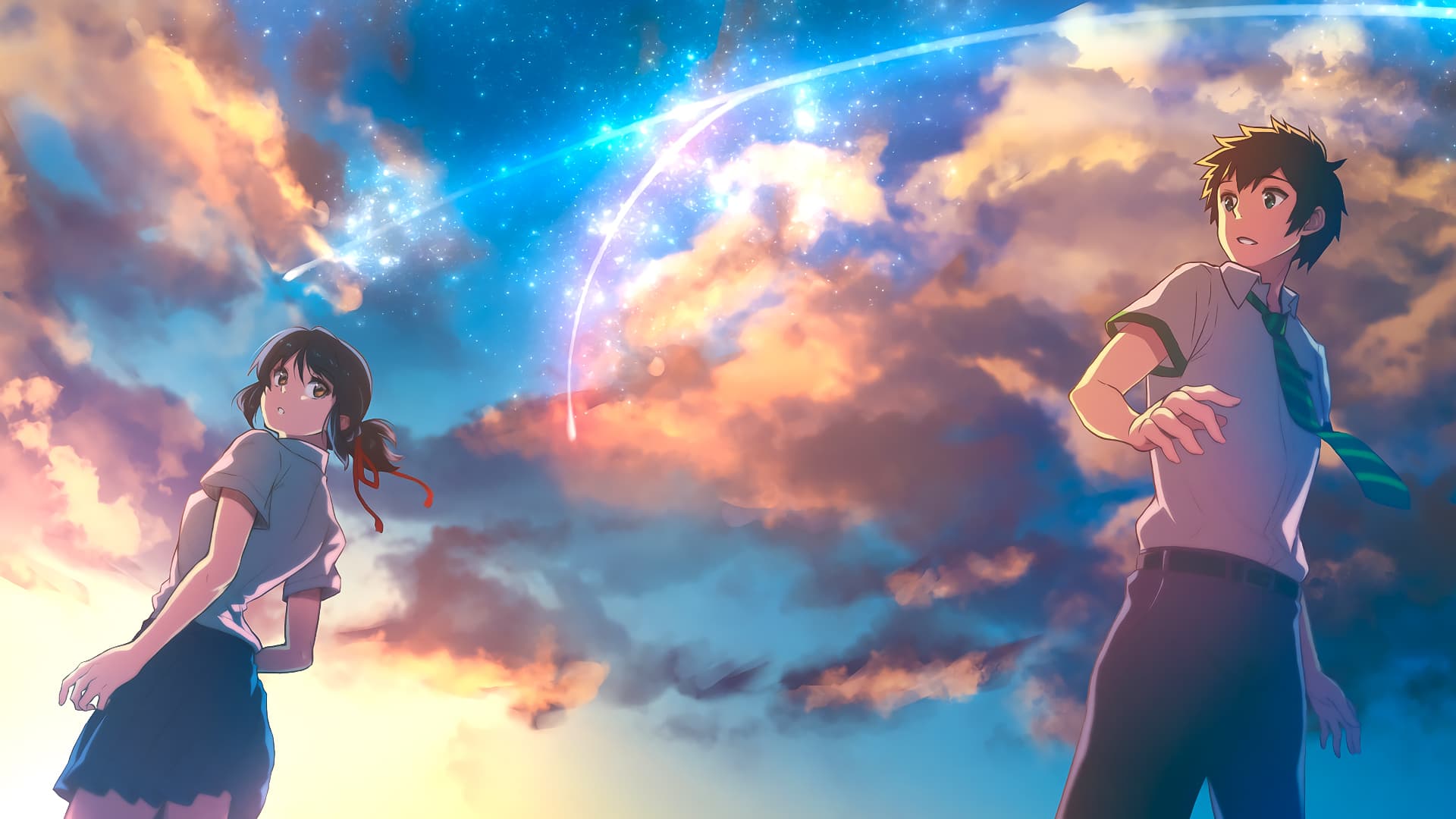
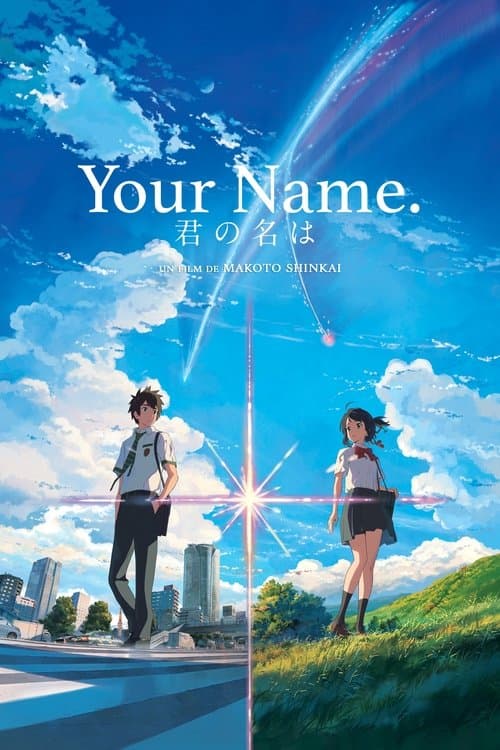
High schoolers Mitsuha and Taki are complete strangers living separate lives. But one night, they suddenly switch places. Mitsuha wakes up in Taki’s body, and he in hers. This bizarre occurrence continues to happen randomly, and the two must adjust their lives around each other.
About this title
- Format
- Feature film
- Year
- 2016
- Runtime
- 1h 47m
- Countries
- Japan
- Original language
- JA
- Studios
- CoMix Wave Films, TOHO, KADOKAWA, jeki, AMUSE, voque ting, Lawson Entertainment
Content barometer
- Violence3/5Notable
- Fear2/5A few scenes
- Sexuality2/5Mild
- Language1/5Mild
- Narrative complexity3/5Complex
- Adult themes1/5Mild
Values conveyed
- Friendship
- Compassion
- courage
- cooperation
- perseverance