Young Justice
Does this age rating seem accurate to you?
Detailed parental analysis
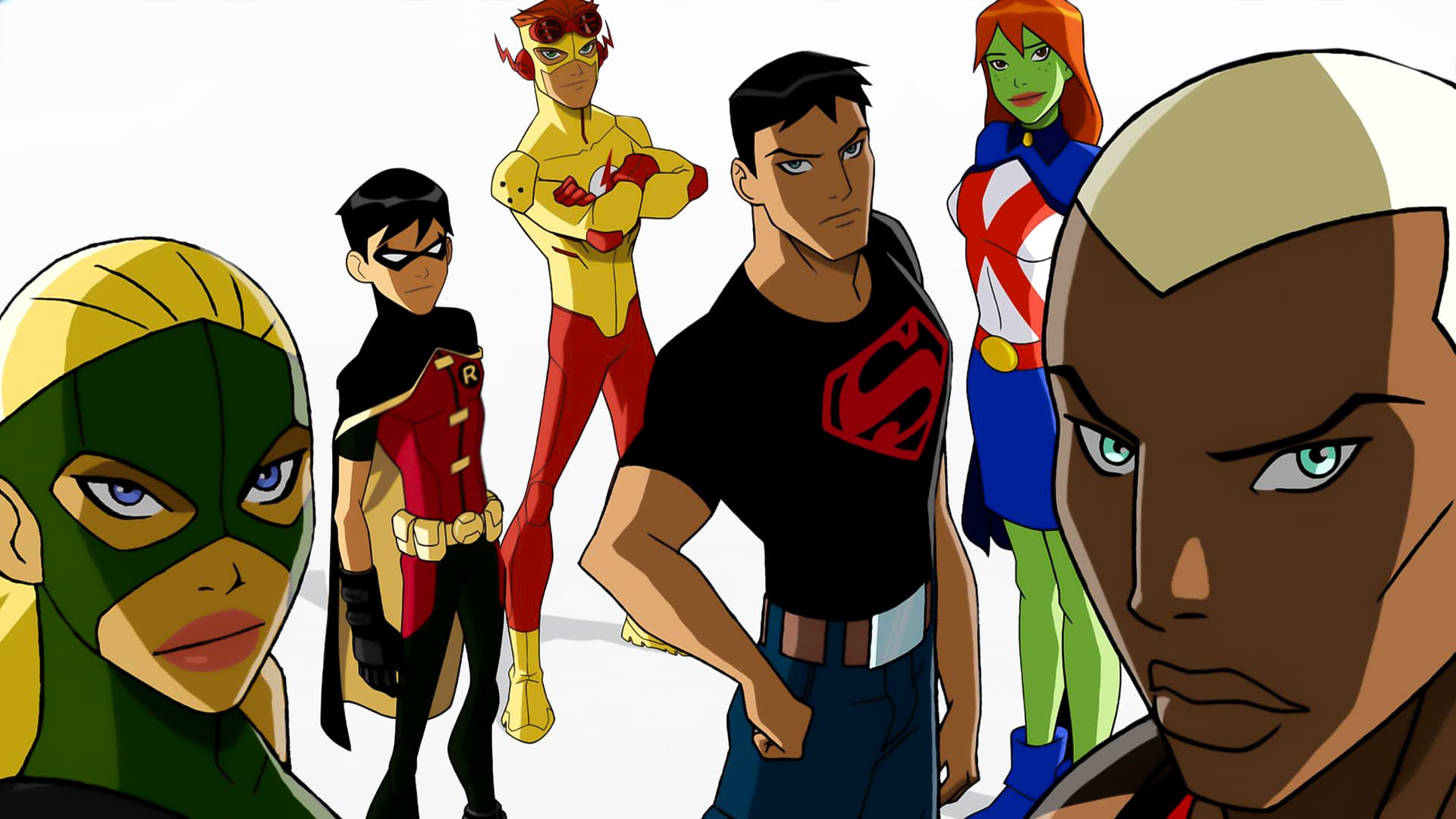
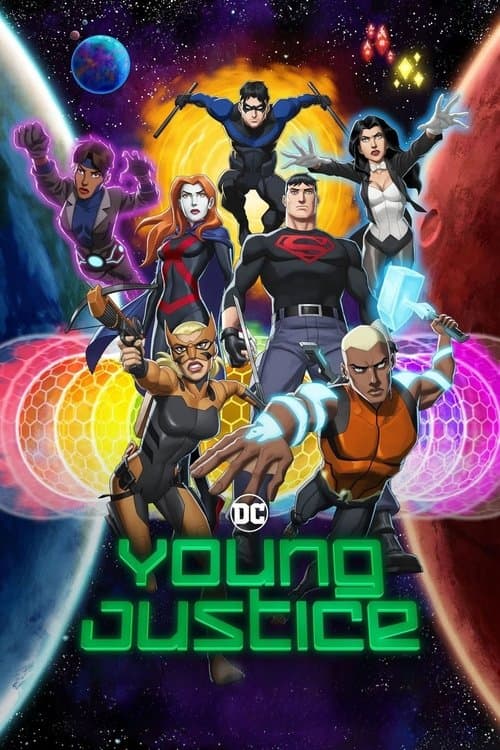
Young Justice is a superheroic animation series with a serial and progressive atmosphere, oscillating between youth adventure in its first two seasons and a noticeably darker tone in subsequent ones. The plot follows a team of young heroes operating in the shadow of the Justice League, seeking to establish themselves as an independent force against threats of global scale. The target audience is initially that of pre-teens and teenagers who are fans of superheroes, although later seasons clearly address a more mature audience.
Violence
Fights are omnipresent and constitute the heart of each episode: hand-to-hand blows, energy blasts, bows, swords and sharp projectiles populate the action in sustained fashion. In seasons 1 and 2, violence remains stylised and without bloody consequences, clearly inscribed within the convention of the superhero genre where narrative stakes take priority over gore. Seasons 3 and 4 cross a significant threshold in terms of intensity and visual harshness, and no longer address the same audience. The death of important characters, including a particularly striking heroic sacrifice at the end of season 2, anchors violence in an emotional reality that is rare for animation intended for young people, and may disturb sensitive children.
Underlying Values
The central tension of the narrative concerns the relationship between the young heroes and their adult mentors from the Justice League: the teenagers regularly question the directives and transparency of adults, asserting their autonomy of judgement. The show does not present this questioning as gratuitous rebellion but as a learning process of moral responsibility, which makes it a particularly rich subject for discussion. Individual and collective performance is valued, but always linked to a sense of sacrifice and ethics. Violence as a tool for resolving conflicts is used extensively without being truly questioned as such, which constitutes a structural limitation of the narrative.
Parental and Family Portrayals
Adult figures, notably members of the Justice League, are represented as benevolent but fallible authorities, sometimes condescending or opaque in their decisions. This mentor-apprentice dynamic constitutes a major dramatic axis and offers an interesting mirror to parent-child relationships in adolescence. The biological families of characters are generally absent or secondary, with team dynamics serving as the primary emotional unit.
Sex and Nudity
Romantic relationships between adolescent characters are present throughout the series, treated with restraint and without explicit or heavily suggestive content. The couples formed are shown with a certain adolescent normality, without hypersexualisation. This is not a cause for concern, but it is a natural entry point for addressing the question of romantic relationships with a young viewer.
Social Themes
The series uses its superhero mythology to address questions of identity and integration: Superboy, an alien clone in search of belonging, functions as a readable metaphor for the adolescent who does not yet know who he is or where he stands in the world. The narrative arcs of later seasons touch upon geopolitical issues and manipulation on a large scale, introducing a political complexity that goes beyond the youngest audience.
Strengths
The first two seasons offer serial storytelling of a quality that is rare for youth superhero animation: characters are constructed with flaws, doubts and coherent development from one episode to the next, which stands out from the usual episodic format of the genre without continuity. The writing knows how to balance emotional tension and action, and treats its young protagonists with genuine narrative respect, without condescension. For a pre-teen who is a superhero fan, it is a solid introduction to demanding fiction, which builds the habit of following a long arc and becoming attached to imperfect characters.
Age recommendation and discussion points
Seasons 1 and 2 are suitable from 10-11 years old for relaxed viewing, provided the child is comfortable with character deaths and regular combat violence. Seasons 3 and 4, noticeably darker, should be reserved for ages 14 and up. After viewing, two angles of discussion merit opening: why the young heroes are right or wrong to disobey their adult mentors, and how far violence can be a legitimate response when one wants to protect others.
Synopsis
Teenage superheroes strive to prove themselves as members of the Justice League.
Where to watch
Availability checked on Apr 27, 2026
About this title
- Format
- TV series
- Year
- 2010
- Runtime
- 22m
- Countries
- United States of America
- Original language
- EN
- Directed by
- Greg Weisman, Brandon Vietti
- Main cast
- Jesse McCartney, Khary Payton, Nolan North, Danica McKellar, Stephanie Lemelin, Greg Cipes, Lacey Chabert, Denise Boutte
- Studios
- Warner Bros. Animation, DC Entertainment, DC
Content barometer
- Violence3/5Notable
- Fear2/5A few scenes
- Sexuality1/5Allusions
- Language1/5Mild
- Narrative complexity1/5Accessible
- Adult themes0/5None
Watch-outs
- Death
- Violence
Values conveyed
- Courage
- Acceptance of difference
- Perseverance
- Loyalty
- Autonomy
- friendship
- teamwork