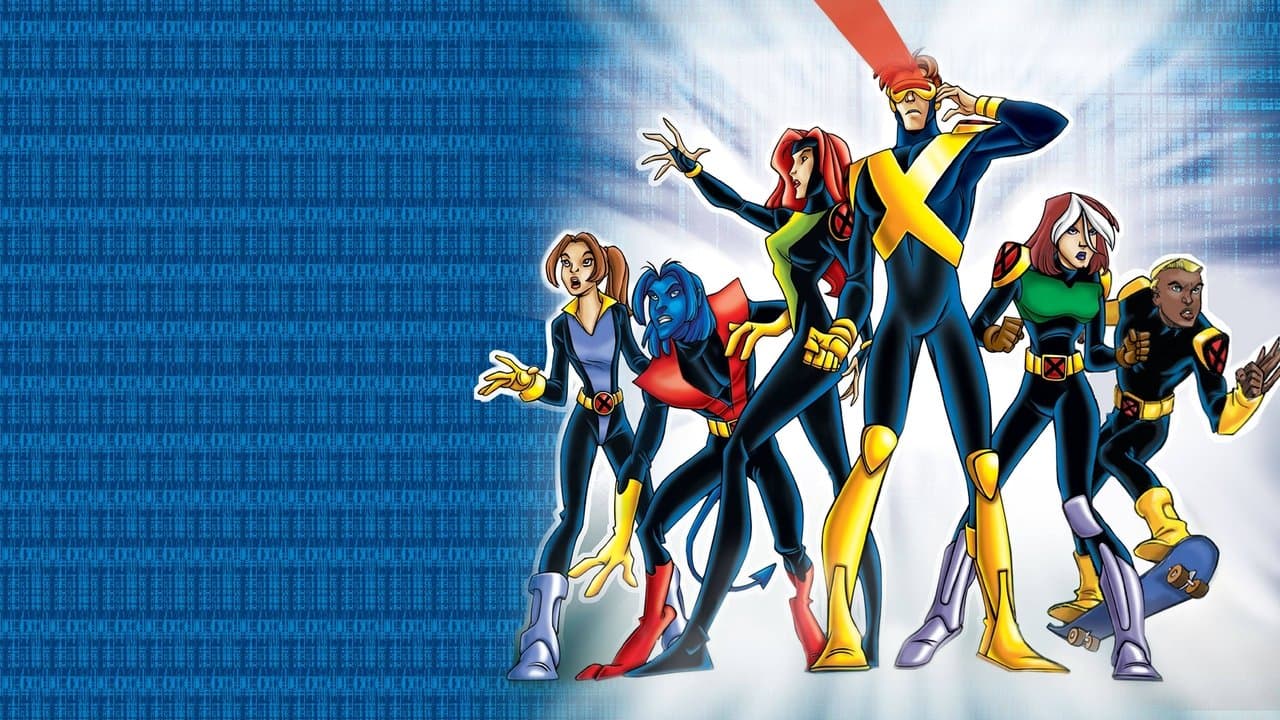

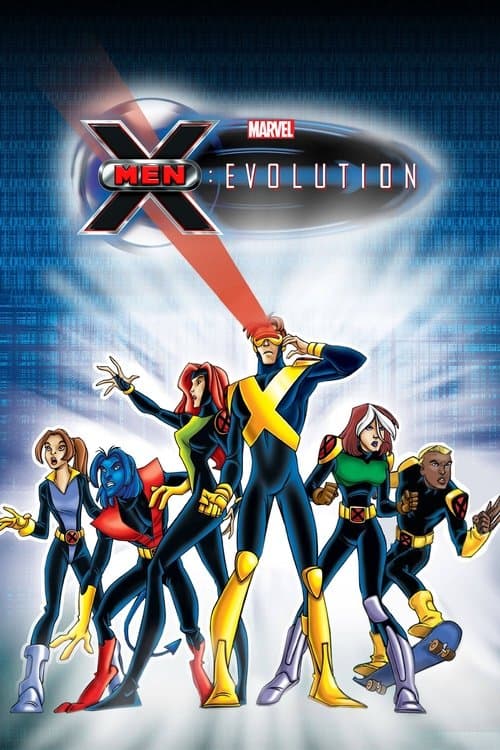
X-Men: Evolution
Does this age rating seem accurate to you?
Detailed parental analysis
X-Men: Evolution is a colourful, accessible and occasionally tense animated adventure and action series that revisits the world of the mutant X-Men by placing its heroes within the context of the American high school. The plot follows a group of teenagers with extraordinary powers who learn to master them whilst facing mounting threats stemming from human distrust of mutants. The series is clearly aimed at children from age 10 onwards and pre-adolescents, with a deliberately softened tone compared to other adaptations of the franchise.
Social Themes
The series builds its entire dramatic structure around a metaphor of exclusion and difference: mutants are registered, monitored, feared and sometimes hunted by institutions and the general population. The treatment of state control, fear of difference and social rejection is repeated and structuring throughout, far more than mere backdrop. This is precisely what makes the series worth discussing with a child or pre-adolescent: it concretely raises the question of what it means to be different in a society that seeks to normalise. The progression into seasons 2 and 3 intensifies these stakes, with a global existential threat that gives the narrative a more pronounced political dimension.
Violence
Fights are frequent, particularly from season 2 onwards, and intensity builds progressively. Characters are struck, hurled through obstacles and face real threats, but without visible blood or graphic violence. The tension is sometimes sustained, notably in arcs involving Apocalypse, whose plan would result in the death of the majority of humanity. This mass threat remains abstract and unshown, but it is stated explicitly. Violence is narrative and purposeful: it serves dramatic progression without ever becoming gratuitous spectacle, making it a reasonable entry point for a young audience.
Underlying Values
The series carries values of cooperation and self-improvement, and stages them coherently: even antagonists eventually join the X-Men when facing common threats, which effectively nuances the initial manichaeism. The group takes precedence over the individual, and strength is never exercised without collective responsibility. The narrative also questions the legitimacy of instituted authority, particularly when it persecutes what it does not understand. These moral layers are accessible to a young audience without being simplistic, and they lend themselves well to post-viewing conversation about why people fear what is different.
Parental and Family Portrayals
Parental figures are largely absent or in the background in the series: young mutants evolve mainly under the guardianship of Professor Xavier, a benevolent mentor figure but distant from classical family dynamics. Some characters carry painful or complex family histories, particularly linked to rejection or discovery of their powers by relatives. This pattern of the substitute mentor replacing family is recurring throughout the franchise and warrants mention, not as a problem but as an angle for discussion about what it means to find one's place outside the family circle.
Strengths
The series achieves something quite rare: adapting a politically charged comics universe for a young audience without emptying it of meaning. The high school setting gives questions of identity and belonging a concrete resonance for pre-adolescents, well beyond the pretext of action. The narrative progression across seasons is carefully crafted, with gradual complexification of characters and alliances that rewards sustained engagement with the series. Several supporting characters, notably in the opposing camp, benefit from psychological depth unusual for this format of youth animation.
Age recommendation and discussion points
The series is suitable from age 10 onwards, and becomes increasingly enjoyable across seasons for pre-adolescents aged 11 to 14. Two angles of discussion merit opening after viewing: why do humans fear mutants so much when the latter do not threaten them initially, and what this says about how we actually treat people who do not conform to the norm. You can also explore together the moments when enemies become allies: what changes, and does that mean we should trust everyone?
Synopsis
Teenagers Cyclops, Jean Grey, Rogue, Nightcrawler, Shadowcat, and Spike fight for a world that fears and hates them.
Where to watch
Availability checked on Apr 27, 2026
About this title
- Format
- TV series
- Year
- 2000
- Countries
- United States of America
- Original language
- EN
- Directed by
- Robert N. Skir, Marty Isenberg, David Wise
- Main cast
- Kirby Morrow, Venus Terzo, David Kaye, Brad Swaile, Maggie O'Hara, Meghan Black, Kirsten Alter, Scott McNeil
- Studios
- Film Roman, Marvel Studios
Content barometer
- Violence2/5Moderate
- Fear2/5A few scenes
- Sexuality0/5None
- Language1/5Mild
- Narrative complexity2/5Moderate
- Adult themes0/5None
Watch-outs
Values conveyed
- Courage
- Acceptance of difference
- Loyalty
- friendship
- acceptance
- solidarity