
Words Bubble Up Like Soda Pop
サイダーのように言葉が湧き上がる
Does this age rating seem accurate to you?
Detailed parental analysis
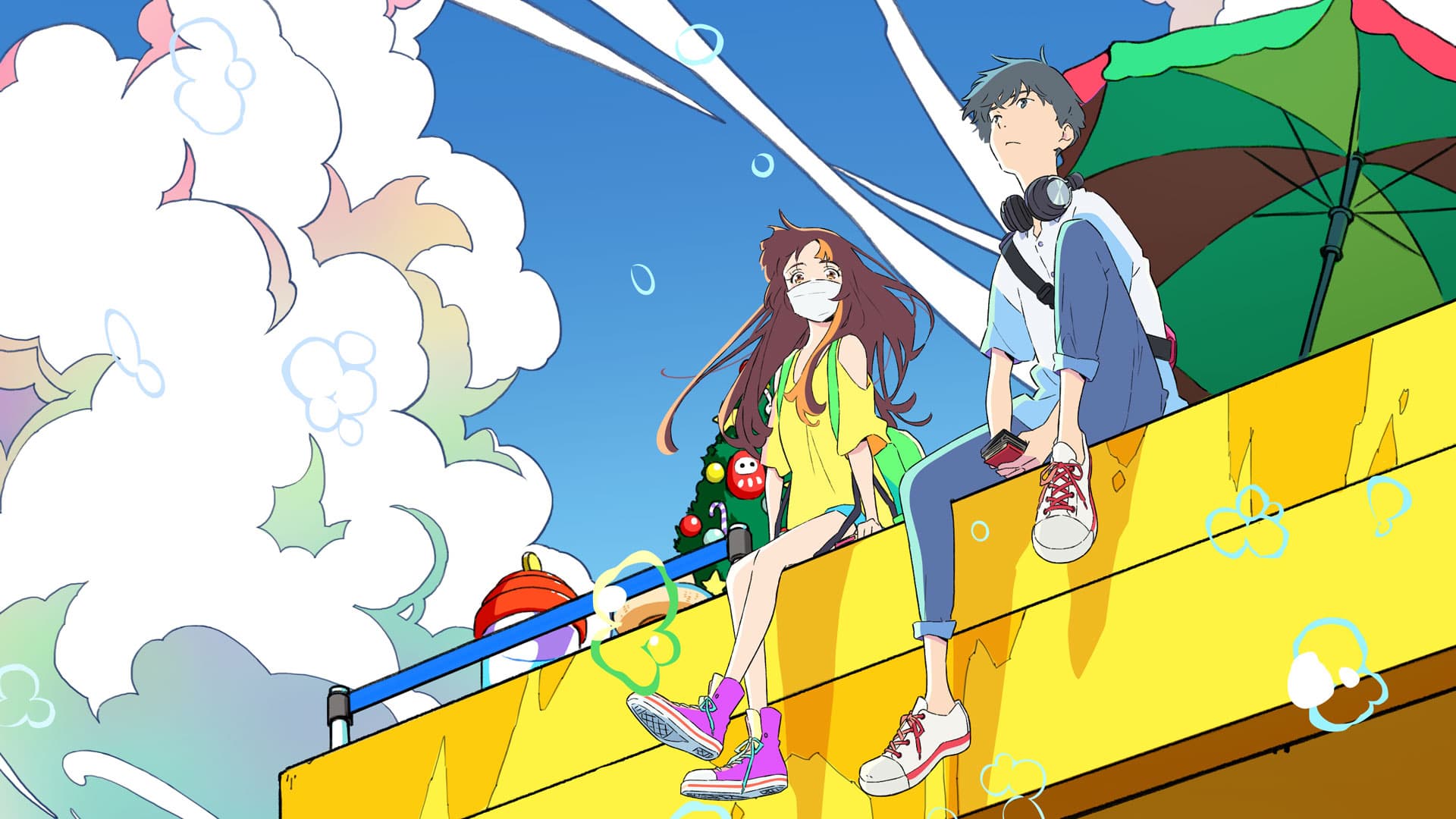
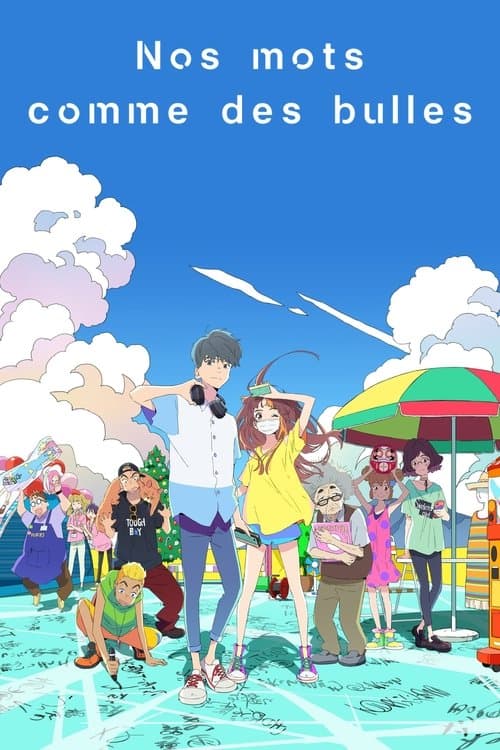
Our Words Like Bubbles is a Japanese animated film with a gentle, contemplative atmosphere, bathed in the warmth of a suburban shopping centre's summer. The plot follows two shy teenagers who learn to draw closer despite their respective insecurities, one expressing himself through haikus, the other concealing his face behind a mask. The film is primarily aimed at teenagers and young adults, but its gentleness and absence of any difficult content make it accessible to children from around 7 or 8 years old when accompanied.
Underlying Values
The film builds its entire argument around authenticity in the face of social pressure and digital mediation. The two protagonists are teenagers who hide themselves, one behind the words of others (the haikus he recites rather than speaking in his own voice), the other behind a physical mask. The narrative values the courage to show oneself as one truly is, without ever framing this in a moralising way. The confession of love at the climax does not conclude with a kiss but with the removal of the mask and a smile, a narrative choice that makes clear the stakes are authenticity, not romance. Friendship and direct human connection are presented as an antidote to the isolation fostered by social networks, without the film condemning technology in a caricatural manner.
Discrimination
The heroine wears a mask to conceal her teeth and dental braces, an insecurity tied to physical appearance that the film treats with kindness. This narrative choice reflects a very concrete adolescent reality and the story does not judge her: it accompanies her. The film does not reinforce the stereotype that physical appearance determines a person's worth; it shows instead that this insecurity is an obstacle to overcome, not a truth about the character. It is a natural entry point for discussing with a child or teenager the pressure surrounding self-image.
Social Themes
The film discreetly but clearly raises a question about teenagers' relationship with social networks and digital celebrity. The heroine is an influencer who hides her face online, a paradox that structures part of the narrative. The film does not preach, but it invites reflection on what one shows of oneself on the internet and the difference between a constructed online presence and a real human relationship. For a parent, this is a concrete opening to a conversation about teenagers' digital habits.
Strengths
The film distinguishes itself through luminous art direction and a rare attention to the sensory details of a Japanese summer, which creates an immersive atmosphere without ever seeking to impress. The narration is patient, which may disconcert in the first half but builds genuine emotional resonance at the moment of climax. The use of haiku as a tool for communication between characters is an elegant writing idea: it says something true about the way certain teenagers find in artistic form a language that direct speech does not allow them. The film provokes strong emotional reactions without sentimental manipulation, which is a sign of narrative mastery. It also offers a window onto contemporary Japanese culture, between poetic tradition and digital modernity, which can nourish the curiosity of a young viewer.
Age recommendation and discussion points
The film is accessible from 7 or 8 years old and fully suited to all teenagers without reservation. Two angles of discussion are worth opening after viewing: why do the two characters hide themselves, and what ultimately gives them the courage to show themselves as they truly are? And for older teenagers: what does the film say about the difference between what one shows of oneself online and what one truly is?
Synopsis
After meeting one day, a shy boy who expresses himself through haiku and a bubbly but self-conscious girl share a brief, magical summer.
About this title
- Format
- Feature film
- Year
- 2021
- Runtime
- 1h 27m
- Countries
- Japan
- Original language
- JA
- Directed by
- Kyohei Ishiguro
- Main cast
- Somegoro Ichikawa, Hana Sugisaki, Megumi Han, Natsuki Hanae, Yuuichirou Umehara, Megumi Nakajima, Sumire Morohoshi, Shizuka Itoh, Minori Suzuki, Hiroshi Kamiya
- Studios
- Signal.MD, Sublimation
Content barometer
- Violence0/5None
- Fear0/5None
- Sexuality0/5None
- Language0/5None
- Narrative complexity2/5Moderate
- Adult themes0/5None
Watch-outs
- Grief
- Death / grief
Values conveyed
- Courage
- Friendship
- Acceptance of difference
- confidence
- self acceptance
- empathy