
Woody Woodpecker Goes to Camp
Does this age rating seem accurate to you?
Detailed parental analysis
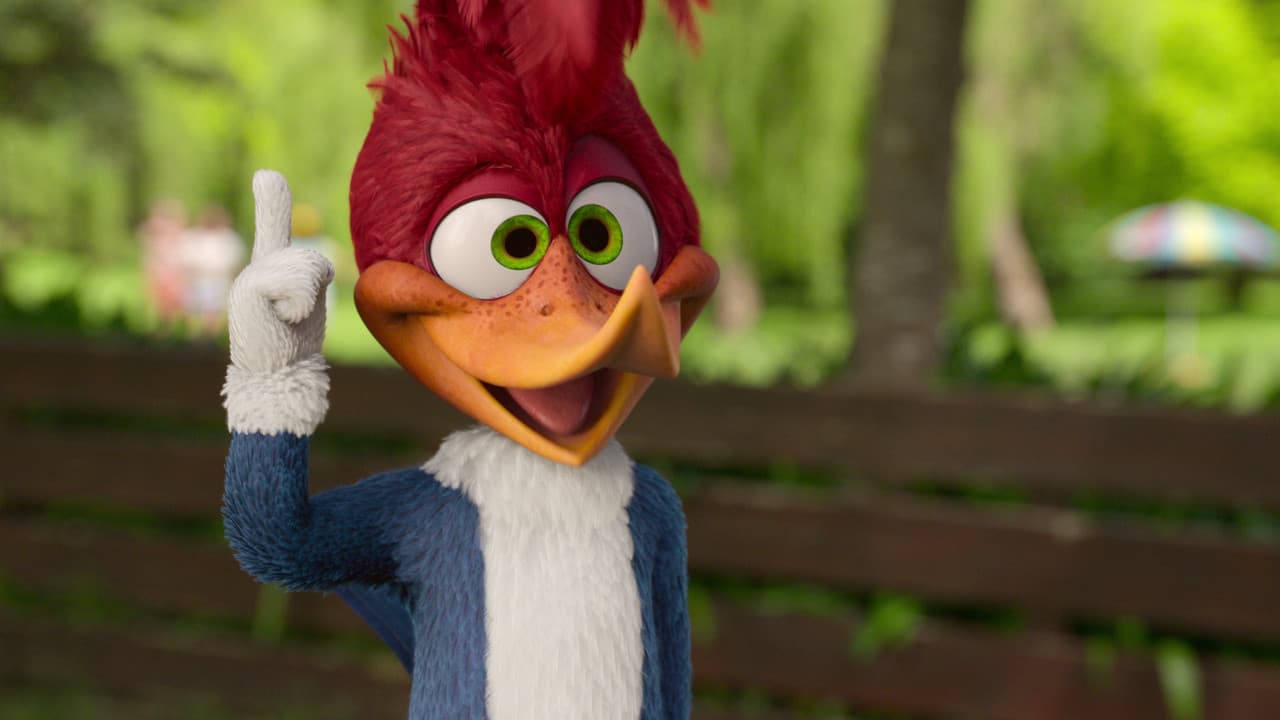
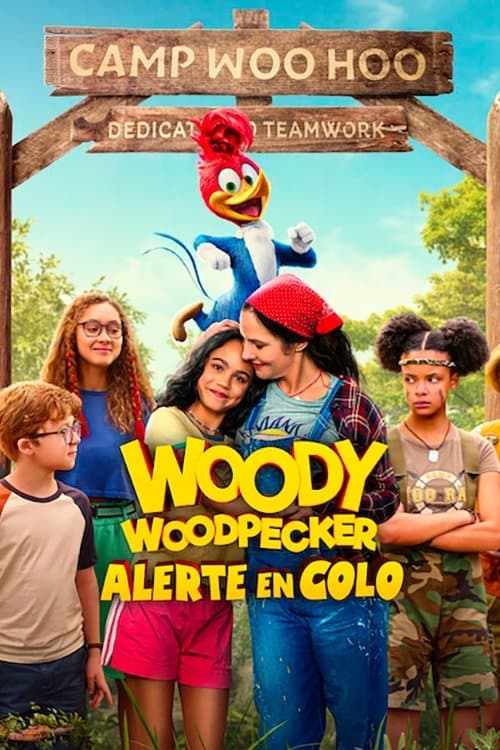
Woody Woodpecker: Camp Tales is a loud and unbridled family comedy, driven by exaggerated slapstick humour and a deliberately frantic pace. The plot follows Woody, the mischievous woodpecker, who arrives at a summer camp and causes chaos whilst gradually learning the value of teamwork. The film targets young children, roughly between 4 and 8 years old, and makes no attempt whatsoever to appeal to parents or teenagers.
Violence
Violence is omnipresent in the form of classical slapstick taken to extremes: faces grilled at a barbecue, a character frozen solid, a helicopter crash, projection into a freezer that smashes to the ground. Everything is presented in a cartoonish manner, with characters bouncing back from each accident unscathed, which constitutes the genre convention. For very young children who have not yet clearly grasped the difference between animation and reality, the repetition and intensity of these scenes warrant attention, even though they are never graphic or cruel in intent. The violence remains functional to the comic narrative and does not glorify others' pain, but it occupies a narratively central rather than incidental place.
Language
The film multiplies insults directed directly at children: 'moron', 'jerk', 'chump', 'dolt', 'loser', amongst others. These formulae recur repeatedly and pointedly, often as a comedic device, which normalises their use in the eyes of young viewers. The distinction between 'it's funny in the film' and 'it's acceptable in real life' is not made on screen, and that is precisely the point which merits being raised with the child after viewing.
Discrimination
The film opposes two stereotyped camps in fairly caricatural fashion: children from the science camp (science, technology, engineering and mathematics) are depicted as creative but physically weak, whilst those from the military camp are strong but arrogant. This binary scheme is the central driver of narrative conflict. The treatment of bullying towards gifted children is documented in the film: the mockery directed at them is presented first as a source of conflict, and the final resolution values the inclusion of each person's skills. Narrative redemption exists, but it does not entirely neutralise the effect of these mockeries' repetition throughout the film.
Underlying Values
The film articulates a clear message about the dangers of excessive individualism: acting alone for one's own benefit creates problems, and cooperation remains the effective path. The main character undergoes a convincing redemption arc, learning that acknowledging one's mistakes is not a weakness. These values are transmitted in a manner that is explicit and accessible for the target age, without particular subtlety but with narrative coherence.
Strengths
The film has no artistic pretension and does not seek to have any: it is a comedy of strung-together gags, faithful to the spirit of the original character born in the 1940s. Its principal asset for parents is the complete absence of adult cultural references, double-meaning humour or winking allusions aimed at an older audience, which has become rare in contemporary family animation. The message about cooperation and the value of individual differences is sincere and readable for a five-year-old child. On the other hand, narrative coherence remains superficial and the pace is designed to overwhelm rather than to engage.
Age recommendation and discussion points
The film is suitable from 5 years old for children familiar with animated gag comedies, with parental guidance recommended for younger children or those sensitive to noise and stylised violence. Two angles of discussion are worth pursuing after viewing: ask the child whether the insulting nicknames used in the film seem acceptable between classmates, and ask him why Woody succeeds better when he works with others than when acting alone.
Synopsis
After getting kicked out of the forest, Woody thinks he's found a forever home at Camp Woo Hoo — until an inspector threatens to shut down the camp.
About this title
- Format
- Feature film
- Year
- 2024
- Runtime
- 1h 40m
- Countries
- United States of America
- Original language
- EN
- Studios
- Universal 1440 Entertainment, Universal Animation Studios, Universal Pictures
Content barometer
- Violence3/5Notable
- Fear1/5Mild
- Sexuality0/5None
- Language3/5Notable
- Narrative complexity2/5Moderate
- Adult themes0/5None
Watch-outs
- Bullying
- Strong language
- Mockery
- Violence
Values conveyed
- Acceptance of difference
- Perseverance
- friendship
- teamwork
- self confidence
- creativity