
Wonka
Does this age rating seem accurate to you?
Detailed parental analysis
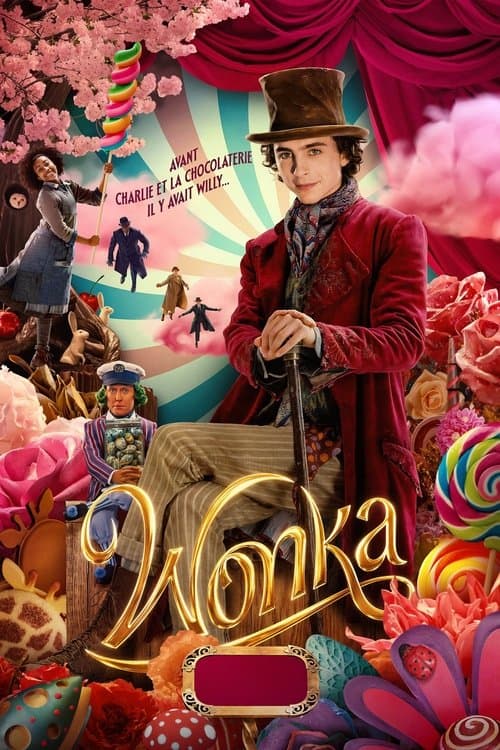
Wonka is a whimsical musical film with a colourful, wintry atmosphere, resolutely cheerful in its overall tone despite a few darker passages. The plot retraces the early days of the famous chocolatier Willy Wonka, an ambitious and idealistic young man seeking to open his shop in a major city despite the obstacles erected by corrupt cartels and an unscrupulous innkeeper. The film primarily targets children from age 6-7 onwards and families, with sufficient visual fantasy and catchy songs to captivate the youngest viewers.
Underlying Values
The narrative constructs a clear message around perseverance in the face of adversity, the power of imagination and solidarity among the marginalised. The opposition between Wonka and the chocolate cartel gives the film a genuine moral backbone: organised greed is portrayed as a corruptive force that buys institutions (police, Church), whilst disinterested generosity is presented as the right response. The relationship with wealth is treated with an unusualness for a mainstream film: redistributing rather than accumulating is the choice the hero makes explicitly. The friendship between characters from different backgrounds, all precarious or excluded, is the true driving force of the narrative and not a decorative element.
Violence
Violence remains within the bounds of a fairy tale, but is more present than in a classic animated film. Wonka suffers repeated physical mistreatment from his employer, including a scene of his head being plunged into an icy fountain that may surprise younger viewers. A child is briefly locked in a dark bird cage, and a boat explosion features among the plot twists. These elements are always contextualised by the narrative logic and have no gore or gratuitous quality, but they are sufficient to make the film inadvisable for very sensitive children under 5-6 years without parental accompaniment.
Social Themes
The film addresses the theme of debt bondage quite directly: Wonka and several characters find themselves prisoners of a system of unpayable debts imposed by their employer, who forces them to work with no possibility of leaving. The mechanism is explained clearly and accessibly, without being euphemised. This portrayal of economic exploitation, combined with the corruption of institutions supposedly meant to protect citizens, offers a concrete entry point for discussing with a child how social injustice functions and the dynamics of power.
Discrimination
The film repeatedly relies on humour based on weight gain: the police commissioner grotesquely gains weight from the chocolate, loses mobility and becomes an object of visual ridicule. This comic arc is not an isolated occurrence but a recurring gag, which gives it real narrative weight. This is an angle worth noting with a child, especially if they are sensitive to issues of body image. Moreover, the choice to cast a standard-sized actor as an Oompa-Loompa, made small through digital effects, has drawn legitimate criticism from the community of actors with dwarfism, who see in it a missed opportunity for authentic representation.
Substances
Alcohol is present on several occasions: characters consume gin, and a monk is shown under the influence of alcohol in a comic fashion. Wonka's chocolate moreover produces effects that mimic intoxication, treated in a fantastical rather than a dangerous manner. These elements remain light and do not constitute explicit valorisation of consumption, but the repeated presence of alcohol as a comic device is worth flagging for parents who wish to address this subject.
Parental and Family Portrayals
The maternal figure occupies a central emotional place in the narrative: Wonka's mother, who has disappeared, is recalled through his memories and constitutes the deep emotional driver of his ambition. This absent yet idealised relationship gives the character its sentimental depth and may touch children who have experienced bereavement or family separation.
Strengths
Wonka succeeds in building a coherent and inventive visual universe, with an artistic direction that concretely translates the idea that imagination can transform reality. The songs are well integrated into the narrative and serve emotion rather than punctuating it artificially. The film manages to make legible, for a young audience, quite complex mechanisms such as institutional corruption or debt as a tool of oppression, without ever lapsing into heavy-handed moral lesson. The group dynamic among the precarious characters is treated with real warmth, and the figure of Wonka gains coherence from it: his idealism is not naive but deliberate, rooted in a choice of values.
Age recommendation and discussion points
The film is appropriate from age 6 onwards with parental accompaniment, and can be recommended without major reservations from age 8 onwards. Two concrete angles merit opening up after the film: how does the mechanism of debt function that prevents the characters from leaving freely, and why does the film choose to mock the commissioner by showing him gain weight, what does this say about the way we treat different bodies in the stories we tell.
Synopsis
Willy Wonka – chock-full of ideas and determined to change the world one delectable bite at a time – is proof that the best things in life begin with a dream, and if you’re lucky enough to meet Willy Wonka, anything is possible.
About this title
- Format
- Feature film
- Year
- 2023
- Runtime
- 1h 57m
- Countries
- United Kingdom, United States of America
- Original language
- EN
- Directed by
- Paul King
- Main cast
- Timothée Chalamet, Calah Lane, Keegan-Michael Key, Hugh Grant, Paterson Joseph, Olivia Colman, Tom Davis, Jim Carter, Rowan Atkinson, Matt Lucas
- Studios
- Warner Bros. Pictures, Village Roadshow Pictures, The Roald Dahl Story Company, Heyday Films, Domain Entertainment
Content barometer
- Violence2/5Moderate
- Fear2/5A few scenes
- Sexuality0/5None
- Language1/5Mild
- Narrative complexity2/5Moderate
- Adult themes2/5Present
Values conveyed
- Friendship
- Perseverance
- dream
- solidarity
- family
- creativity
- honesty