Wolfwalkers
Does this age rating seem accurate to you?
Detailed parental analysis
Wolfwalkers is an adventure animation film with a tone that is both enchanting and dark, carried by remarkable visual aesthetics and genuine emotional weight. The story follows a young girl who arrives in Ireland with her father, a wolf hunter in the service of an authoritarian lord, and who befriends a wild child capable of transforming into a wolf at night. The film is primarily aimed at children aged 8 and above as well as their parents, but its thematic density and certain intense sequences make it better suited to shared family viewing than to solitary watching for younger children.
Violence
Violence is present recurrently and constitutes a central dramatic issue: combat between armed soldiers and wolf packs, visible injuries from claws and bites, scenes of hunting and trapping animals. A forest is set on fire by soldiers, a scene that can leave a lasting impression on more sensitive viewers. A main character rushes into a river to flee a transformation, an ambiguous gesture that many children will read as death. The violence is not gratuitous or aestheticised for pleasure: it serves to illustrate the concrete consequences of oppression and fear, which gives it clear narrative purpose. It remains nonetheless sufficiently intense that viewing with an adult is advisable before the age of 9 or 10.
Parental and Family Portrayals
The father-daughter relationship lies at the heart of the film and constitutes one of its richest tensions. The father is a good man, but conditioned by obedience to authority and the desire to protect his daughter by keeping her within conformity. His trajectory, hesitant then decisive, offers a nuanced and realistic portrayal of parenthood: neither monster nor perfect model. The mother of the other heroine is absent for much of the film in the literal sense, and the fear of losing her gives rise to one of the film's most distressing sequences, with a visual evocation of agony that is particularly striking. These two parental figures are sufficiently complex to fuel genuine discussion with a child about what it means to love someone whilst imposing limits upon them.
Underlying Values
The film clearly constructs an opposition between two systems of values: on one side fear, control, the destruction of nature as an instrument of power; on the other compassion, mutual understanding and harmony with the living. The heroine's disobedience towards her father and colonial authority is presented as morally justified, even necessary. This is a point to address with children: the film does not say that all rebellion is legitimate, but shows that blind obedience to unjust authority can lead to complicity. The question of when to disobey, and of whom, is a useful conversation to engage in after viewing.
Discrimination
The film sets its plot in colonised 17th-century Ireland and explicitly shows the mechanisms of systemic oppression, both against local populations and against women. The heroine repeatedly encounters the gendered expectations of her time: she is asked to remain at home, not to hunt, not to take risks. The film treats this injustice seriously without ridiculing it. The character of the Lord Protector embodies an authoritarianism founded on fear of the Other, whether animal, Irish or feminine, which gives the narrative a coherent and child-accessible critical reach.
Social Themes
Ecology is a structuring dimension of the film: the destruction of the forest by soldiers is not mere scenery, it is a direct consequence of a system of thought that treats the living as a threat to be eradicated. The film clearly articulates the link between political domination, environmental destruction and fear of the unknown. The Irish colonial context is treated with a certain historical fidelity in its atmosphere, without being didactic, which can open conversation about the history of Ireland and more broadly about the mechanisms of colonisation for older children.
Strengths
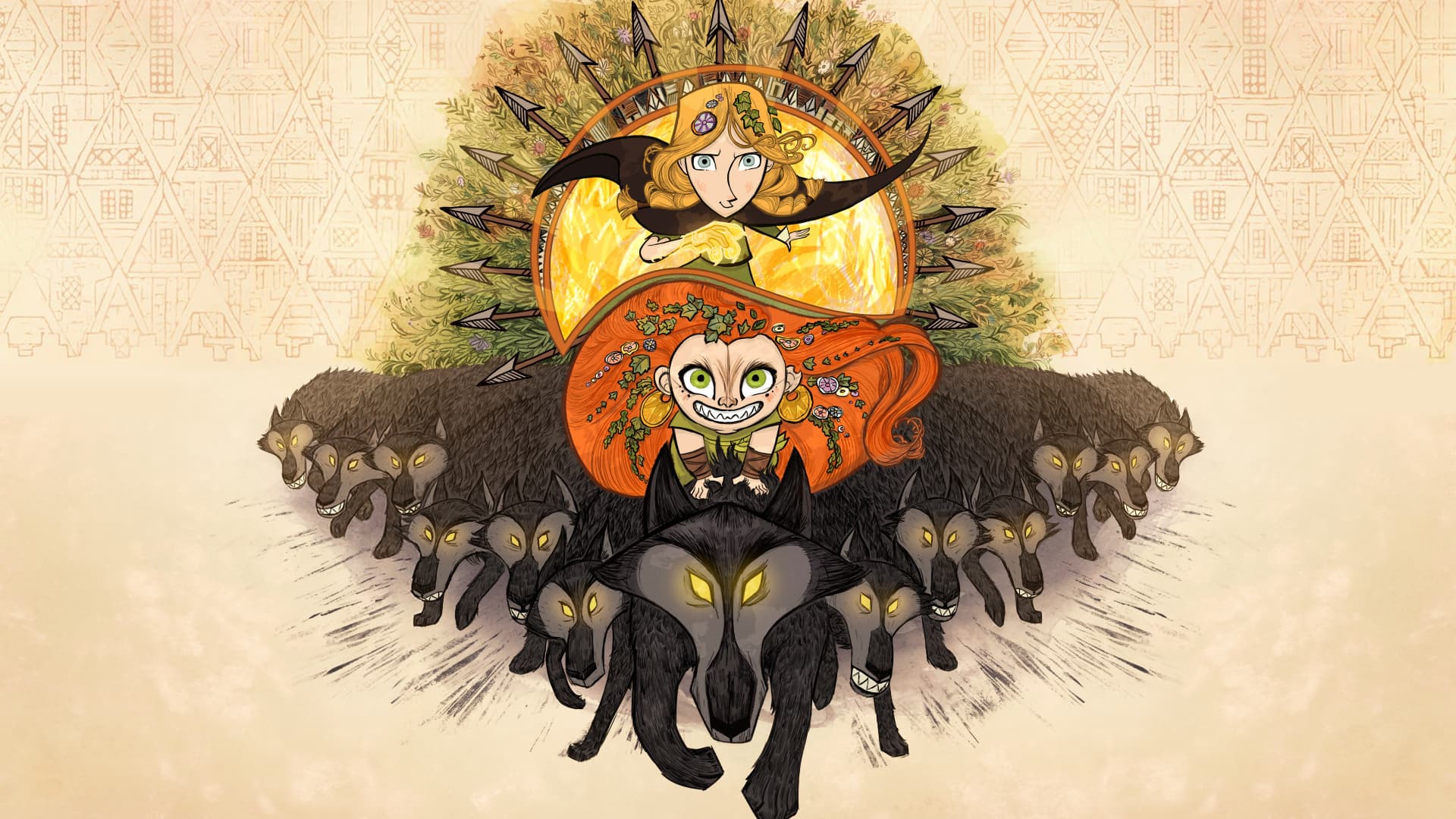
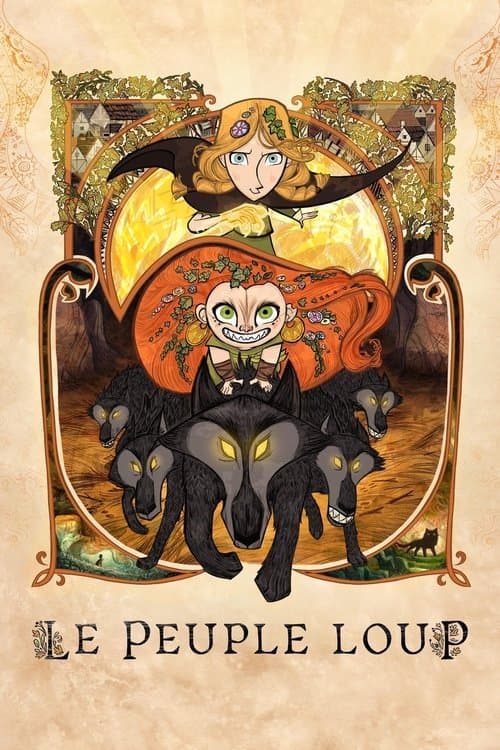
The film is visually exceptional, with a graphic style inspired by medieval illumination that transforms throughout sequences to reflect the inner states of the characters. This coherence between form and meaning is rare in family animation. The narration is sufficiently dense to hold adults' attention without ever losing children. The friendship between the two heroines is written with genuine sincerity, without condescension or sentimentality: it rests on difference, initial misunderstanding, and gradual discovery of the other. The film also conveys a sensitivity to Celtic culture and Irish oral tradition that enriches viewing beyond simple entertainment.
Age recommendation and discussion points
The film is suitable from 8-9 years of age with parental accompaniment, and can be watched more comfortably from 10 years onwards. Two discussion points deserve to be opened after viewing: why does the heroine choose to disobey her father, and is this disobedience always justified or only in certain situations? And how does the film show that fear of what one does not know can lead to destroying what one might have learned to love?
Synopsis
In a time of superstition and magic, when wolves are seen as demonic and nature an evil to be tamed, a young apprentice hunter comes to Ireland with her father to wipe out the last pack. But when she saves a wild native girl, their friendship leads her to discover the world of the Wolfwalkers and transform her into the very thing her father is tasked to destroy.
Where to watch
Availability checked on Apr 26, 2026
About this title
- Format
- Feature film
- Year
- 2020
- Runtime
- 1h 43m
- Countries
- France, Ireland, Luxembourg, United States of America, China
- Original language
- EN
- Directed by
- Tomm Moore, Ross Stewart
- Main cast
- Honor Kneafsey, Eva Whittaker, Sean Bean, Simon McBurney, Tommy Tiernan, Maria Doyle Kennedy, Jon Kenny, John Morton, Nora Twomey, Oliver McGrath
- Studios
- Cartoon Saloon, Melusine Productions, Haut et Court, Canal+, RTÉ, OCS, Folivari, GKIDS, Value & Power Culture Communications, Fís Éireann/Screen Ireland
Content barometer
- Violence3/5Notable
- Fear4/5Intense
- Sexuality0/5None
- Language0/5None
- Narrative complexity2/5Moderate
- Adult themes0/5None
Values conveyed
- Courage
- Friendship
- Compassion
- Autonomy
- empathy
- nature