Wolf Children
おおかみこどもの雨と雪
Does this age rating seem accurate to you?
Detailed parental analysis
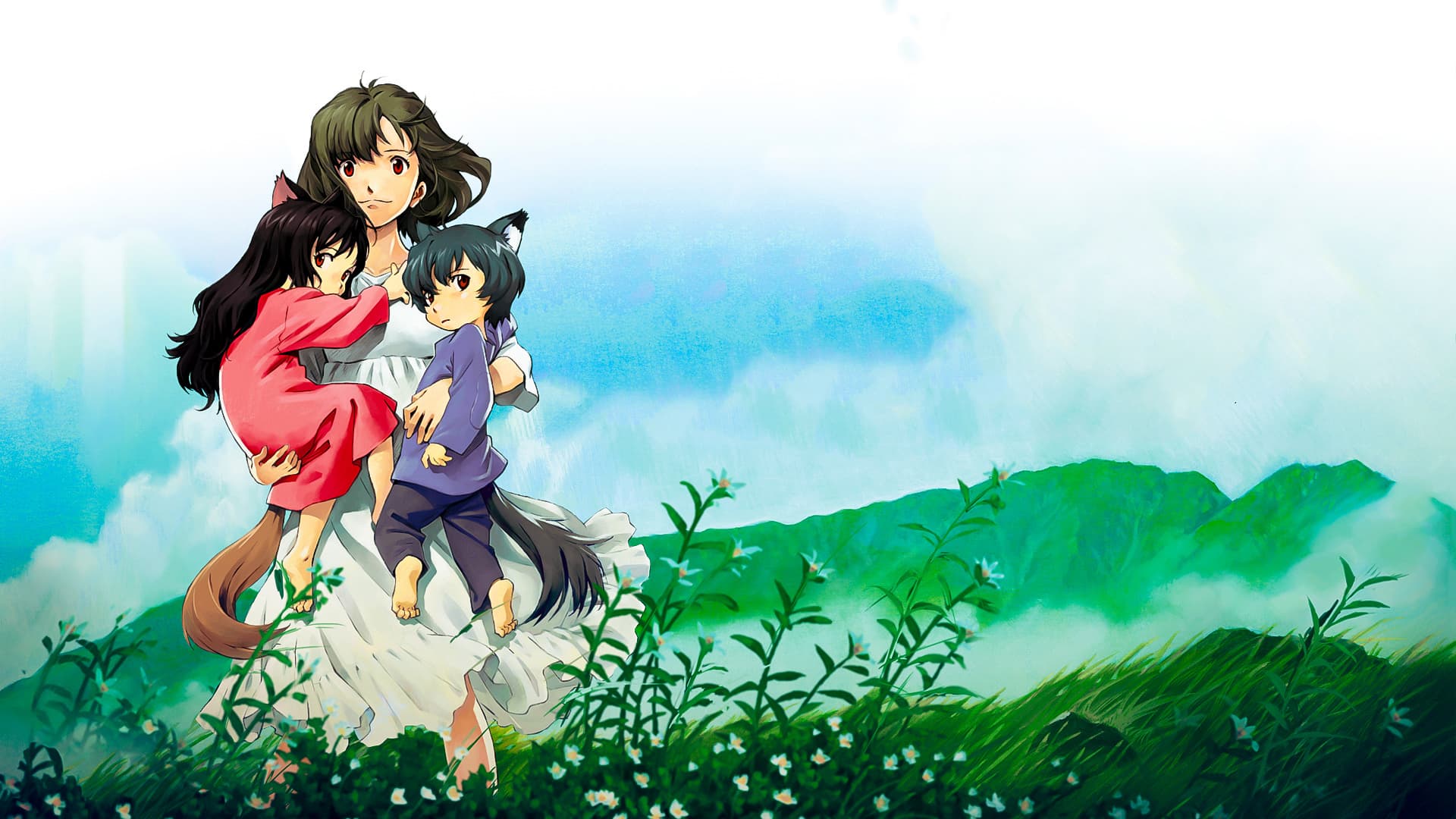
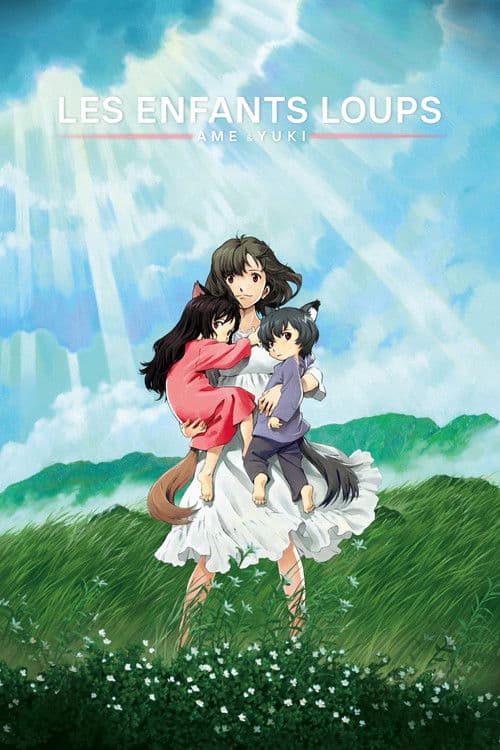
Wolf Children, Ame & Yuki is a Japanese animated film with a contemplative and melancholic tone, carried by a soft visual sensibility that contrasts with the gravity of its themes. It follows a young woman raising her two children alone, born from a union with a man capable of transforming into a wolf, and who must guide them towards their own choice of identity. The film is primarily aimed at children aged 8 and above and at adults, but its emotional depth resonates more with parents than with younger viewers.
Parental and Family Portrayals
The maternal figure is the true heart of the narrative. The mother embodies a model of absolute devotion, facing alone material precariousness, social isolation and the education of children whose dual nature renders every educational choice uncertain. This representation is moving but also idealised: the mother never truly falters, collapses only briefly, and her capacity for sacrifice is presented without shadow or ambivalence. This is a useful angle for discussion with an older child: can one expect so much from a parent, and at what cost to them? The father, for his part, disappears very early in the film, which establishes from the outset a narrative of solitary parenthood without any substitute paternal figure to fill this absence.
Underlying Values
The film constructs its narrative around two central and complementary values: maternal sacrifice as a founding act, and the child's autonomy as the natural culmination of parental love. Letting one's children go, accepting that they choose a path radically different from one's own, is presented as the noblest gesture a parent can accomplish. This reading is generous but merits nuance when discussed with an adolescent: the total autonomy granted to young children, however poetically framed, presupposes conditions that the film never truly questions. The value of work and perseverance in the face of adversity also runs throughout the narrative, in a positive and concrete manner.
Violence
Violence is rare and always emotionally charged, never gratuitous. The most striking scene shows one of the children accidentally wounding a friend during a transformation, with visible blood and scars shown later. A fight between the two children in animal form is intense, physically realistic in its consequences, and aims to materialise the identity tension that sets them against one another. The father's death is shown with genuine narrative restraint, but the sight of an animal's body with open eyes, then its removal in a rubbish truck, constitutes a concrete and lasting image. These elements are meaningful and not traumatising for most children aged 8 and above, but merit being anticipated with more sensitive viewers.
Social Themes
The film treats with sensitivity the question of difference and social integration: growing up whilst concealing an essential part of oneself, fearing rejection if one reveals one's true nature, is a legible and effective metaphor for any child who feels different from the norm. The family's isolation in the countryside, the initial distrust of neighbours, then progressive integration through work and reciprocity, sketch a relationship to community founded on effort and trust earned. These themes are sufficiently universal to fuel conversation about belonging, self-concealment and the price of acceptance.
Sex and Nudity
A scene of breastfeeding briefly shows a breast in the original Japanese version, removed in the English-dubbed version. This nudity is functional and entirely free of any erotic charge. A scene suggests an intimate union between the mother and father without showing anything explicit. These elements are inconsequential for a child aged 8 but may justify preliminary discussion depending on family sensibilities.
Strengths
The film achieves a form of emotional maturity rare in animation aimed at a broad audience. Its writing does not explain, does not moralise, does not resolve everything: it allows characters to move through time with an authenticity that compels attachment. The narrative progression, spanning more than a decade, gives the film a coming-of-age novel texture that few animated features dare to attempt. The relationship between the two children, built upon their progressive divergences rather than their similarity, possesses remarkable psychological precision. For a child or adolescent, it offers a dense emotional experience that leaves a lasting imprint, long after the final image.
Age recommendation and discussion points
The film is suitable from age 8 for children comfortable with strong emotions and death addressed without circumspection, and entirely appropriate from age 10 onwards. Two angles of discussion are essential after viewing: ask the child what they would have chosen in place of the two children, and why, to explore their own vision of identity and belonging. With a pre-adolescent, the question of the mother's sacrifice merits frank discussion: does love truly oblige one to give everything of oneself?
Synopsis
After her werewolf lover unexpectedly dies in an accident, a woman must find a way to raise the son and daughter that she had with him. However, their inheritance of their father's traits prove to be a challenge for her.
About this title
- Format
- Feature film
- Year
- 2012
- Runtime
- 1h 57m
- Countries
- Japan
- Original language
- JA
- Studios
- Studio Chizu, Madhouse, Nippon Television Network Corporation, KADOKAWA Shoten, VAP, D.N. Dream Partners, Yomiuri Telecasting Corporation, TOHO
Content barometer
- Violence2/5Moderate
- Fear2/5A few scenes
- Sexuality1/5Allusions
- Language0/5None
- Narrative complexity3/5Complex
- Adult themes0/5None
Values conveyed
- Acceptance of difference
- Perseverance
- Autonomy
- family
- resilience
- community
- identity