
Wish
Does this age rating seem accurate to you?
Detailed parental analysis
Wish is a Disney animated film with a bright, musical atmosphere, tinged with a few moments of tension. The plot follows Asha, a young woman who discovers the dark secret behind her king's power and decides to oppose it to protect her people's dreams. The film is primarily aimed at young children and families, with an aesthetic deliberately inherited from the studio's classics.
Underlying Values
The film builds its central message around the idea that dreams constitute the heart of each individual's identity and that no authority should dispose of them in place of their owner. Personal autonomy and resistance to confiscatory power are presented as cardinal virtues. As a counterpoint, the narrative also values solidarity: it is the group, and not the heroine alone, that makes victory possible. Blind trust in an apparently benevolent figure of authority is explicitly called into question, which offers a useful angle for discussion with children about the difference between obedience and informed consent.
Violence
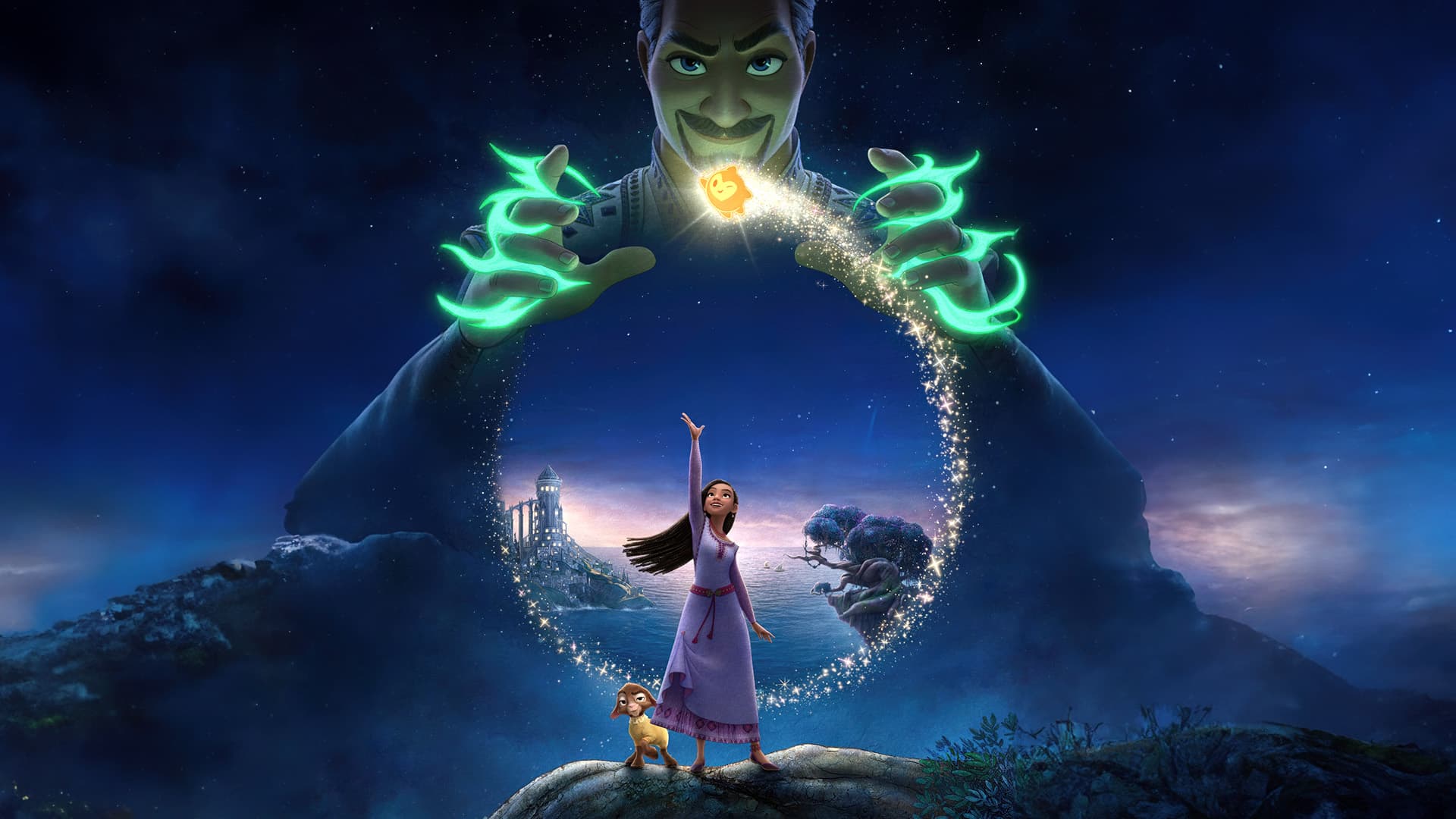
Violence remains within the bounds of family animation, but it is more present than in Disney's gentler productions. The villain uses magical power aggressively, in scenes whose intensity evokes constraint and punishment. He destroys luminous orbs containing the characters' dreams, causing them visible distress, fainting spells and a sense of profound loss. Images of shadows with sharp teeth appear sporadically. These sequences are not gratuitous: they serve to make the villain's danger credible and to give weight to the stakes. They may nevertheless impress the most sensitive children under five or six years old.
Parental and Family Portrayals
Asha's father has died before the story begins, and his death is evoked with sadness by the characters. This absence partly structures Asha's quest and her relationship to the figure of the king, initially presented as a protective paternal substitute. The film treats this grief with sobriety, without exploiting it in a melodramatic way, but it is sufficiently present that children who have experienced a family loss may react to it.
Language
The language is generally clean. A colloquial word equivalent to 'buttocks' is used once, without emphasis. Nothing that warrants particular warning.
Strengths
The film carries a sincere symbolic ambition in making dreams not whims but expressions of each person's deep identity, an idea that may resonate differently depending on the viewer's age. The villain's figure is more complex than it appears: a man who began with good intentions and allowed himself to be corrupted by the desire for control, making him a more interesting antagonist to unpack than a simple villain. The narration suffers, however, from a lack of fluidity that even young viewers can sense, and the songs, whilst omnipresent, do not assert themselves with the force of the studio's greatest hours. The film works better as a starting point for conversation than as a memorable cinematic experience in itself.
Age recommendation and discussion points
The film is suitable from age six, with parental presence recommended for younger children or those sensitive to threatening figures of authority. Two angles of discussion are worth opening after viewing: ask the child what their own dream represents and why it belongs to them, and explore together why the king, who initially wanted to protect people, became the most dangerous character in the story.
Synopsis
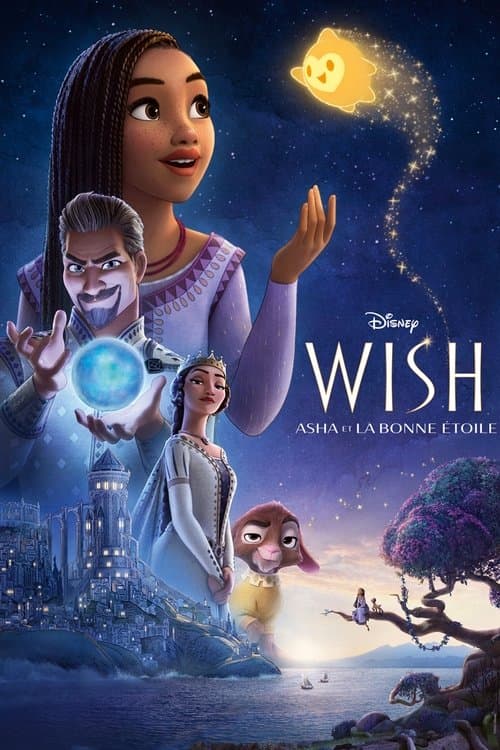
Asha, a sharp-witted idealist, makes a wish so powerful that it is answered by a cosmic force – a little ball of boundless energy called Star. Together, Asha and Star confront a most formidable foe - the ruler of Rosas, King Magnifico - to save her community and prove that when the will of one courageous human connects with the magic of the stars, wondrous things can happen.
About this title
- Format
- Feature film
- Year
- 2023
- Runtime
- 1h 35m
- Countries
- United States of America
- Original language
- EN
- Studios
- Walt Disney Animation Studios
Content barometer
- Violence2/5Moderate
- Fear2/5A few scenes
- Sexuality0/5None
- Language1/5Mild
- Narrative complexity1/5Accessible
- Adult themes0/5None
Watch-outs
- Grief
- Death / grief
Values conveyed
- Courage
- Autonomy
- Forgiveness
- friendship
- hope
- solidarity