
Winnie the Pooh
Does this age rating seem accurate to you?
Detailed parental analysis
Winnie the Pooh is a soft and luminous animated film, carried by a warm atmosphere and tender humour inherited from A. A. Milne's original books. The plot follows Pooh and his friends from the Hundred Acre Wood as they organise themselves to find Eeyore, wrongly convinced that he has been kidnapped by a mysterious creature. The film is aimed primarily at very young children, with complete accessibility for parents who will find in it a nostalgic familiarity.
Underlying Values
The film constructs its entire narrative around a tension between Pooh's self-interest, obsessed with honey, and the wellbeing of his friends. This tension is resolved clearly and repeatedly: helping others always ends up taking precedence over immediate satisfaction. Cooperation is presented as natural and joyful, never preachy. It is a solid structural message, delivered with lightness, which offers a simple and concrete basis for discussion with a young child.
Violence
Violence is non-existent in the proper sense. The few situations of physical tension are treated in the manner of classic visual gags, with falls and cartoonish bounces without any dramatic consequence. The only element likely to provoke an emotional reaction is the imaginary creature called the Backson, described by the characters in increasingly frightening terms whilst it does not actually exist. For the vast majority of children, this device is clearly comic, but a very young child or one who is particularly sensitive may take the description literally. A prior viewing by the parent remains useful for children under 3 years old.
Strengths
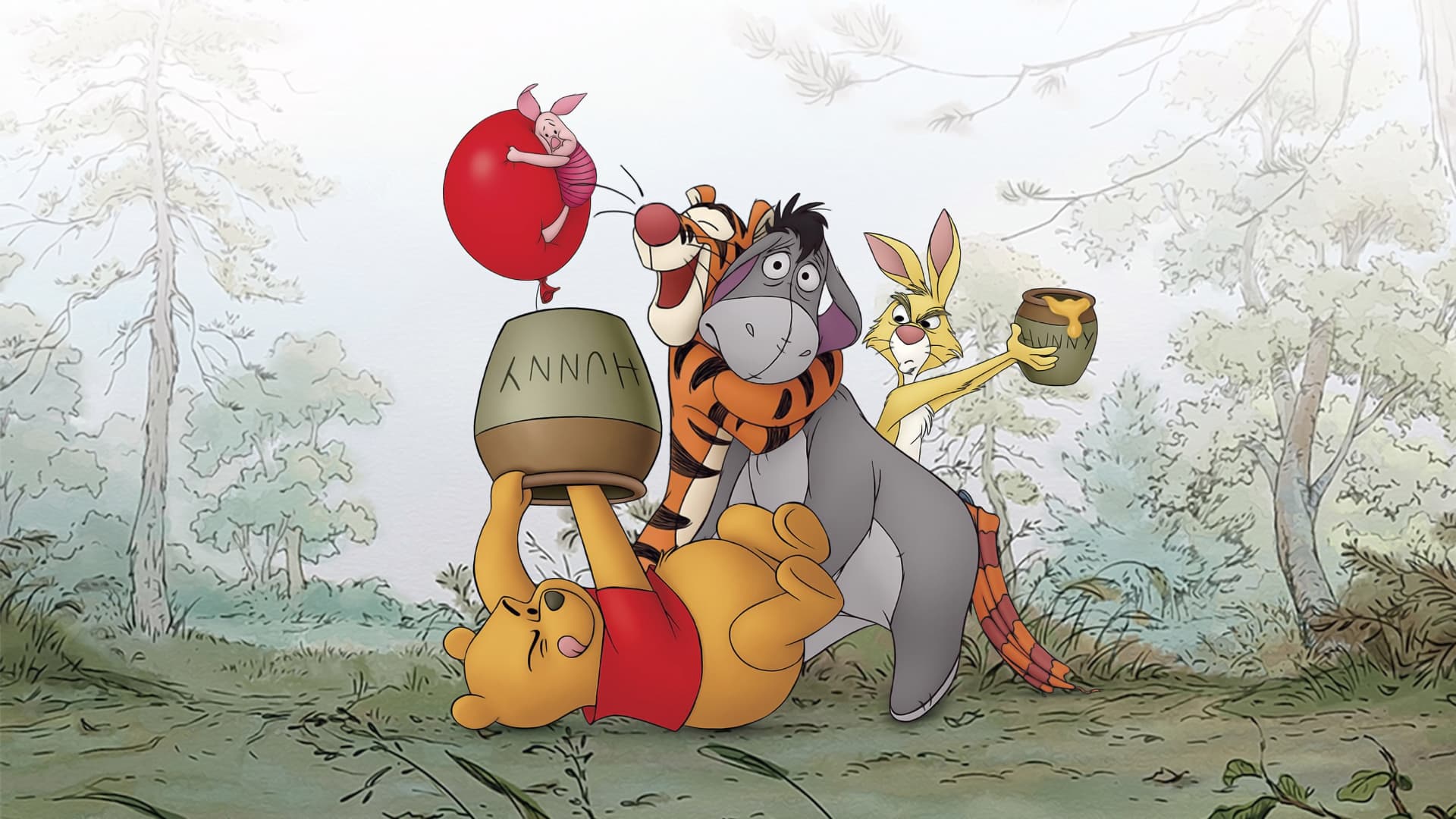
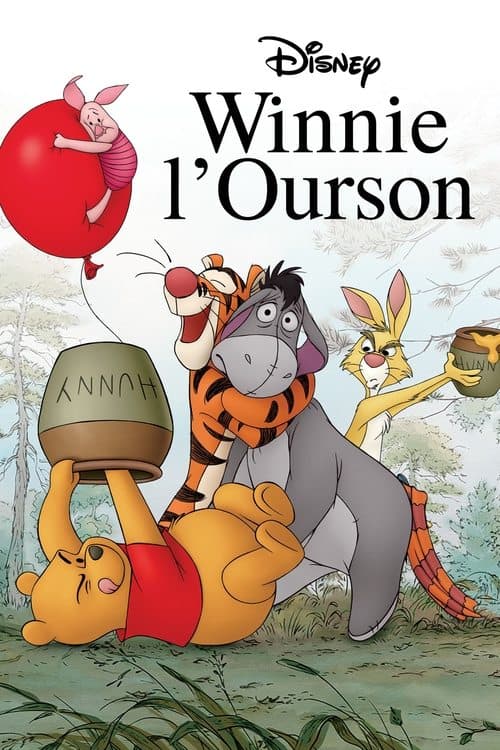
The film distinguishes itself through a narrative economy rare in contemporary children's animation: it takes time to breathe, allows silences to exist and trusts in the intelligence of the young viewer. The humour rests on play with written language, narrators who address the characters and words that literally fall onto the page, which constitutes a playful and original introduction to the materiality of the book for the very young. Fidelity to the graphic universe of Ernest H. Shepard's original illustrations gives the film a visual coherence and aesthetic gentleness that clearly sets it apart from more saturated animated productions. It is a sincere object of cultural transmission, without spectacular excess.
Age recommendation and discussion points
The film is suitable from age 3 without reservation, and can be offered to even younger children in the presence of an adult. After viewing, two angles of discussion present themselves naturally: asking the child why Pooh ends up helping his friends even when he is very hungry, and exploring with him what one feels when imagining something frightening that does not really exist.
Synopsis
During an ordinary day in Hundred Acre Wood, Winnie the Pooh sets out to find some honey. Misinterpreting a note from Christopher Robin, Owl convinces Pooh, Tigger, Rabbit, Piglet, Kanga, Roo, and Eeyore that their young friend has been captured by a creature named "Backson" and they set out to rescue him.
About this title
- Format
- Feature film
- Year
- 2011
- Runtime
- 1h
- Countries
- United States of America
- Original language
- EN
- Directed by
- Don Hall, Stephen J. Anderson
- Main cast
- Jim Cummings, Bud Luckey, Craig Ferguson, Travis Oates, Tom Kenny, Kristen Anderson-Lopez, Wyatt Dean Hall, Jack Boulter, Huell Howser, John Cleese
- Studios
- Walt Disney Animation Studios
Content barometer
- Violence1/5Mild
- Fear1/5Mild
- Sexuality0/5None
- Language0/5None
- Narrative complexity0/5Simple
- Adult themes0/5None
Values conveyed
- Friendship
- Compassion
- teamwork
- kindness
- imagination