Willy Wonka & the Chocolate Factory
Does this age rating seem accurate to you?
Detailed parental analysis
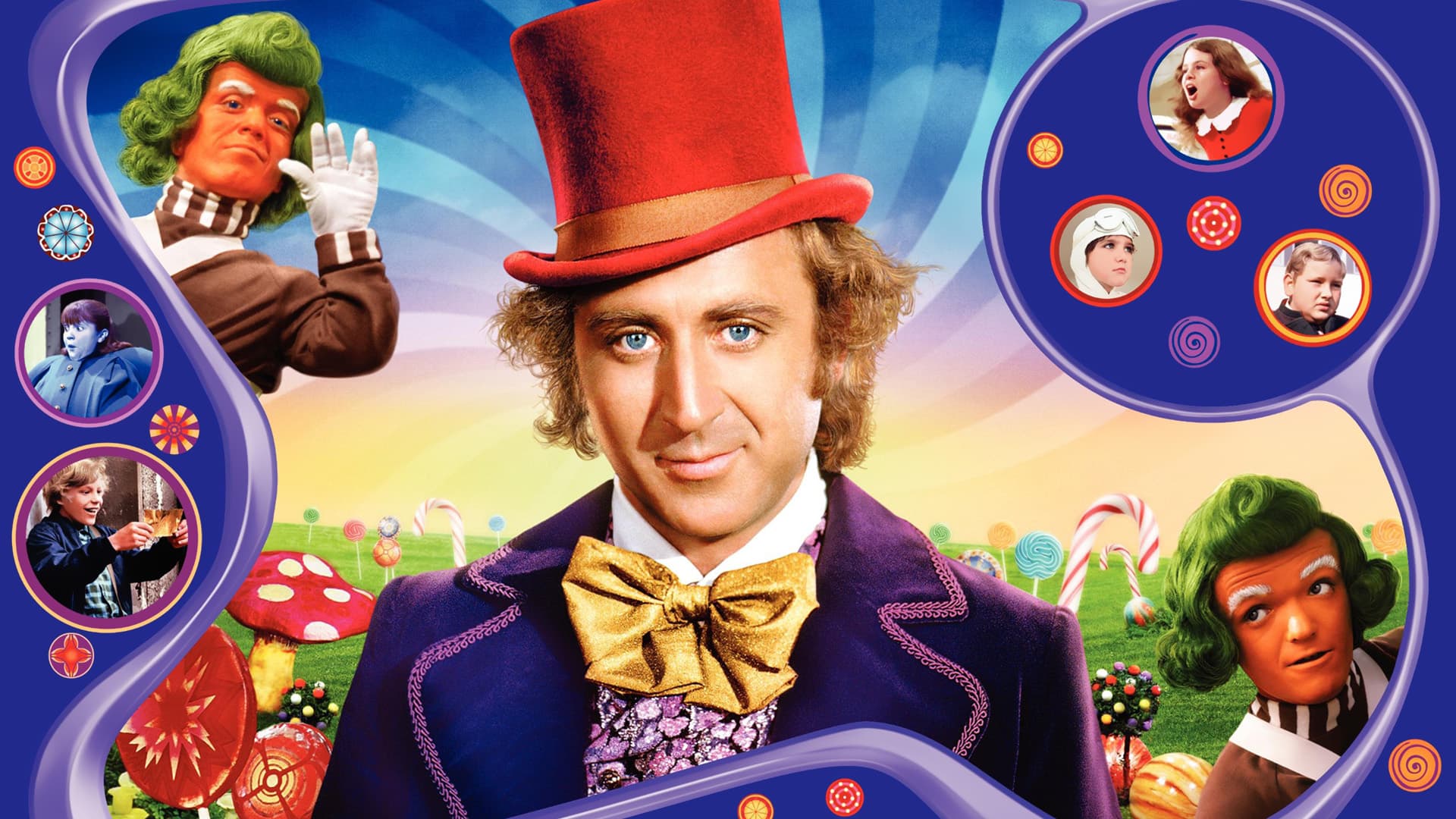
Charlie and the Chocolate Factory is a fantastical tale with an atmosphere that is both magical and unsettling, oscillating between wonder and unease. A poor young boy wins a golden ticket that allows him to visit the mysterious chocolate factory of the eccentric Willy Wonka, alongside four other children with sharply defined personalities. The film is aimed at children of school age and above, but its sometimes dark tone and destabilising sequences make it unsuitable for younger viewers.
Underlying Values
The film rests on a highly explicit moral mechanism: each child embodies a flaw (greed, vanity, avarice, screen obsession) and is punished spectacularly as a consequence, whilst Charlie, poor and virtuous, is rewarded. This scheme is narratively effective but merits discussion with the child, as it directly equates poverty with goodness and wealth with corruption, a simplistic equation. The film also critiques consumerism and parental overprotection through its portrayal of the families of spoilt children. The moral meritocracy it advocates is appealing but reductive: it suggests that the good are rewarded and the bad are punished, which is not a faithful representation of the real world.
Violence
The children's misadventures are presented in a comic and fantastical manner, but their content is objectively unsettling: a child sucked into an industrial pipe, a girl who swells to immobility, another who falls into a trap leading to a boiler, a boy reduced to a few centimetres in height. None of these scenes is gory, but their accumulation and their offhand, almost joyful treatment can trouble sensitive children. The violence here is narrative and punitive, never gratuitous, but it is presented without genuine empathy for the victims, which may raise questions.
Discrimination
The character of Augustus Gloop, an obese child, is the first to be eliminated and his misadventures are directly linked to his greed, presented as a moral flaw inseparable from his body. The film does not distinguish between behaviour and physique, and the implicit mockery directed at him amounts to a form of fatphobia that children readily internalise without questioning it. This is a concrete point to address after viewing, by helping the child distinguish between a criticisable behaviour and a physical appearance.
Parental and Family Portrayals
The parents of the spoilt children are systematically depicted as responsible for their children's flaws: too permissive, too indulgent, too absent in their educational role. Charlie's family, by contrast, is poor but united, warm and morally beyond reproach. This contrast is intentional and pedagogical, but it idealises the modest family to the point of making it an insufficiently nuanced archetype. The figure of Grandpa Joe, complicit and benevolent, is one of the most endearing in the film.
Substances
A line of dialogue from Wonka explicitly cites alcohol as a faster means than sweets to get what one wants, and boxes labelled 'buttergin' are visible in the set decoration. The reference is brief and humorous, but it is there. Grandpa Joe also mentions having smoked tobacco before giving it up. These elements are anecdotal in the film's overall structure, but sufficiently explicit to be noticed by an attentive child.
Strengths
The film possesses genuine visual evocative power, with a chocolate factory conceived as a space of waking dream whose strangeness remains memorable decades after viewing. The sequence of the boat in the tunnel, deliberately surreal and destabilising, is a rare example of children's cinema that assumes it need not reassure. The writing of Wonka's dialogue is dense with literary and poetic references, offering multiple levels of reading depending on age. The film also conveys a sensitivity to imaginative literature and constitutes a natural gateway to the work of Roald Dahl, whose dark humour and bittersweet cruelty it captures well.
Age recommendation and discussion points
The film is not recommended before the age of 7 due to its anxiety-inducing sequences and sometimes unsettling tone, and can be watched with ease from the age of 8 onwards. Two angles of discussion are worth pursuing after viewing: ask the child whether the punishments inflicted on the children seem fair and proportionate to him or her, and explore with them why the film associates poverty so directly with virtue and wealth with character flaw.
Synopsis
When eccentric candy man Willy Wonka promises a lifetime supply of sweets and a tour of his chocolate factory to five lucky kids, penniless Charlie Bucket seeks the golden ticket that will make him a winner.
Where to watch
Availability checked on Apr 28, 2026
About this title
- Format
- Feature film
- Year
- 1971
- Runtime
- 1h 40m
- Countries
- United States of America
- Original language
- EN
- Directed by
- Mel Stuart
- Main cast
- Gene Wilder, Jack Albertson, Peter Ostrum, Roy Kinnear, Julie Dawn Cole, Leonard Stone, Denise Nickerson, Nora Denney, Paris Themmen, Ursula Reit
- Studios
- Wolper Pictures
Content barometer
- Violence2/5Moderate
- Fear3/5Notable tension
- Sexuality0/5None
- Language1/5Mild
- Narrative complexity2/5Moderate
- Adult themes1/5Mild
Watch-outs
Values conveyed
- Acceptance of difference
- kindness
- honesty
- family
- humility