
Wicked
Does this age rating seem accurate to you?
Detailed parental analysis
Wicked is an epic musical comedy with an atmosphere that is both colourful and emotionally dense, driven by large-scale musical numbers and choreography. The plot follows two young women with opposing personalities who meet at a magical academy and form an unexpected friendship, before their destinies diverge under the pressure of an authoritarian regime. The film primarily targets teenagers and adults, although its fantastical universe naturally appeals to children from 8-9 years old, which warrants some caution.
Underlying Values
This is where the film is most enriching and stimulating for parent-child conversation. The narrative methodically constructs a critique of conformism: popularity, charm and social approval are presented as tools of manipulation, not virtues. The unconventionally-looking heroine repeatedly chooses her moral convictions at the expense of her social integration, which is narratively rare and pedagogically powerful. In parallel, political power is represented as fundamentally corrosive, disseminating false information to maintain its grip, a theme that opens direct discussion of authority, propaganda and the courage of dissent. These two threads interweave without heavy didacticism, and this is what makes it the film's true backbone.
Discrimination
Discrimination is a central subject and explicitly addressed, not by allusion but through the narrative itself. The green-skinned protagonist suffers systematic exclusion from childhood, by her peers, her family and society at large, based solely on her appearance. The film goes further by showing that this exclusion is sustained and weaponised by those in power. Speaking animals, capable of thought and language, are progressively silenced in the name of social order, with an explicit line of dialogue on this subject. These two narrative threads function as a coherent metaphor for the persecution of minorities and scapegoating, sufficiently readable for a teenager and subtle enough to merit discussion.
Parental and Family Portrayals
Parental figures are unanimously inadequate. The protagonist's father shows open rejection linked to her appearance, a rejection rooted in guilt and shame rather than abstract malice, which makes its toxicity all the more realistic. The protagonist's birth is associated with her mother's death and a transgressive maternal past, which places an unjust weight of guilt on her from the outset. These dynamics are not easily resolved and constitute an emotionally potentially difficult backdrop for children who have themselves experienced family rejection.
Violence
Violence remains confined to spectacular fantasy register. The most intense scenes involve painful bodily transformations of animal characters, with visual effects designed to be impressive rather than gory. A sequence involving a burning balloon and a fall is brief but visually striking. Aggressive chase scenes with broken glass and periodic startles may unsettle more sensitive children. Overall, nothing that exceeds the register of major family fantasy productions, but children under 7 risk finding certain sequences difficult.
Sex and Nudity
The film contains no nudity. A physical relationship between adults is briefly suggested in the opening through narrative ellipsis, without any explicit content. Dance sequences include flirtatious choreography between adults, in a festive rather than troubling register. Kisses between adult characters are present. The overall tone remains well below what might be termed sensitive content for a teenager.
Social Themes
The film treats coherently and consistently the mechanics of authoritarian power: misinformation, surveillance, designation of a public enemy, control of speech and bodies. These elements are not peripheral but structural, and their representation within a fantastical framework makes them accessible to teenagers without softening them. It is one of the rare wide-release films that concretely models how a society slides into authoritarianism, step by step, often with the consent of those who benefit from it in the short term.
Strengths
The film offers musical writing of genuine dramatic density, where songs do not serve as interludes but advance the plot and reveal characters from within. The relationship between the two protagonists is constructed with unusual psychological finesse for the genre: their friendship is born of friction, evolves through credible stages and avoids sentimental shortcuts. The staging of power dynamics is concrete enough for a teenager to recognise real mechanisms in a fantastical setting, which makes it a solid object of political reflection disguised as large-scale entertainment. The duration of two hours forty minutes is a genuine constraint for those under ten, but teenagers and adults will find sustained pacing.
Age recommendation and discussion points
The film is recommended from 10 years old for children comfortable with intense fantasy, and completely appropriate from 12 years old. Two concrete angles merit discussion after viewing: why the most popular and most liked character is not necessarily the one who is right, and how to recognise, in real life, the mechanisms by which a group designates a scapegoat to solidify its identity.
Synopsis
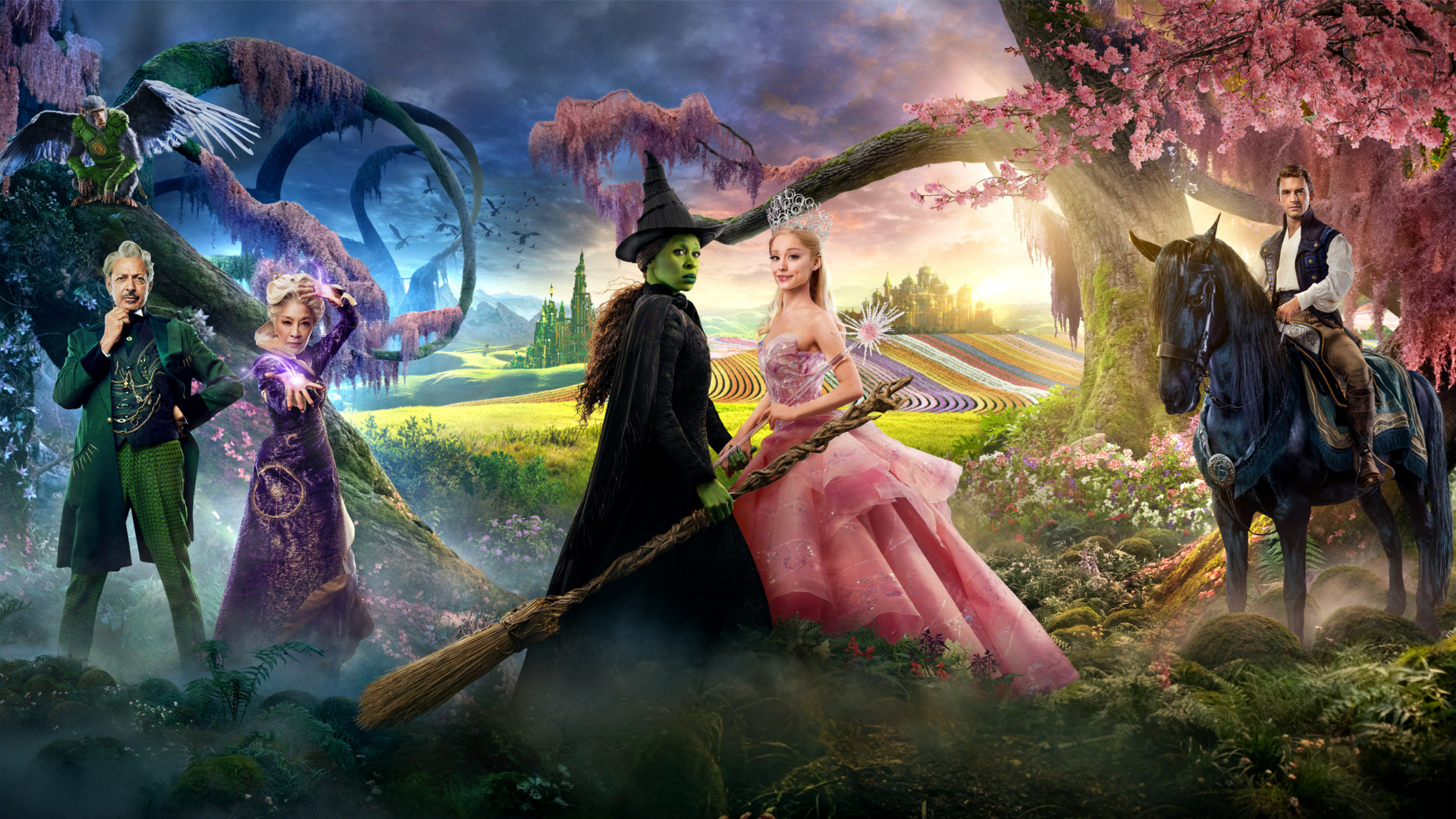
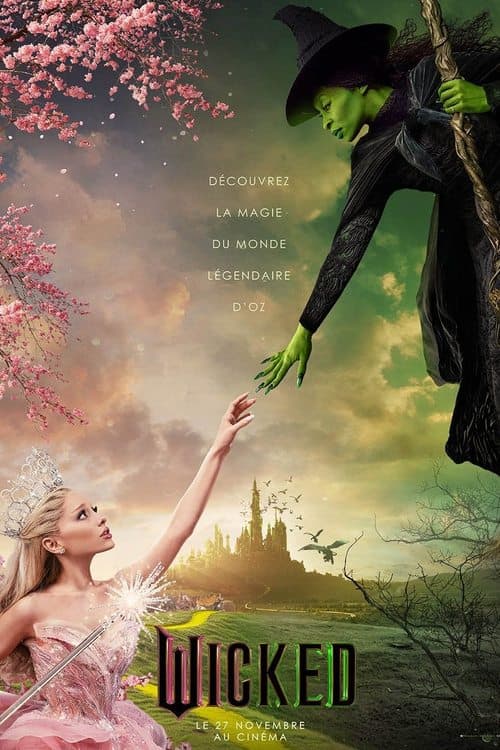
In the land of Oz, ostracized and misunderstood green-skinned Elphaba is forced to share a room with the popular aristocrat Glinda at Shiz University, and the two's unlikely friendship is tested as they begin to fulfill their respective destinies as Glinda the Good and the Wicked Witch of the West.
Where to watch
Availability checked on Apr 09, 2026
About this title
- Format
- Feature film
- Year
- 2024
- Runtime
- 2h 40m
- Countries
- United States of America
- Original language
- EN
- Directed by
- Jon M. Chu
- Main cast
- Cynthia Erivo, Ariana Grande, Michelle Yeoh, Jonathan Bailey, Ethan Slater, Marissa Bode, Jeff Goldblum, Peter Dinklage, Andy Nyman, Courtney-Mae Briggs
- Studios
- Universal Pictures, Marc Platt Productions
Content barometer
- Violence2/5Moderate
- Fear2/5A few scenes
- Sexuality1/5Allusions
- Language0/5None
- Narrative complexity3/5Complex
- Adult themes0/5None
Watch-outs
- Bullying
- Mockery
Values conveyed
- Courage
- Friendship
- Acceptance of difference
- Perseverance
- moral courage
- resistance to injustice
- self-affirmation
- solidarity