
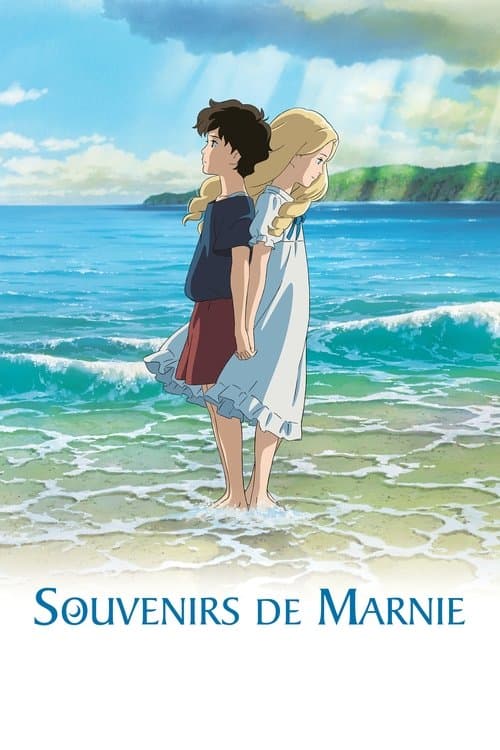
When Marnie Was There
思い出のマーニー
Does this age rating seem accurate to you?
Detailed parental analysis
When Marnie Was There is a contemplative and melancholic animated film, sustained by a bittersweet atmosphere and a narrative that unfolds at a measured pace. The story follows Anna, an introverted adolescent profoundly isolated, sent to the countryside for her health, who forms a mysterious and intense friendship with a young girl named Marnie. The film is a Studio Ghibli production, which French families generally associate with a certain narrative care and demanding emotional sensitivity. It is directed first and foremost at preteens and teenagers, with a depth that speaks to adults as well, but which risks leaving younger children on the outside.
Underlying Values
The narrative rests entirely on the question of personal worth, the feeling of illegitimacy and the need to be loved unconditionally. Anna is convinced that she is a burden to her adoptive parents and perceives herself as fundamentally flawed. This is not a message the film leaves unanswered, but the journey is long and traverses emotionally dense territory before reaching it. The film values forgiveness, including towards oneself, and emotional transmission across generations. Family attachment is presented here as something that can exist without physical presence, which is a beautiful idea but one that merits being discussed with a child who has themselves experienced separation or adoption.
Parental and Family Portrayals
Parental figures lie at the heart of the narrative, but almost entirely through their absence or failure. Anna's biological parents died in a car accident when she was very young. Her maternal grandmother, a central figure in the story, entrusted her to domestic servants who mistreated her before abandoning her to an institution. Anna's adoptive parents are presented as kind-hearted but distant, and Anna perceives their affection as self-interested, since they receive an allowance for taking her in. The film treats these wounds honestly without minimising them, and the final resolution is carried by the idea that authentic love can exist even within broken or indirect family configurations. For an adopted child or one from a blended family, this film can resonate very strongly and requires careful guidance.
Violence
Direct physical violence is rare but present in two distinct moments. In one scene, Anna pulls out a knife in the face of a peer who provokes her, a gesture of emotional rupture rather than actual aggression, but explicit enough to warrant flagging. Furthermore, Marnie describes in raw terms the abuse she suffered in her childhood: physical punishment, humiliation and threats of being locked in a silo. These accounts of past maltreatment are handled without visual indulgence but with a narrative frankness that can affect sensitive children. Violence is always framed within a logic of trauma and repair, never justified or sensationalised.
Social Themes
The film addresses with genuine depth the mental health of an adolescent girl: Anna displays recognisable symptoms of social anxiety, depression and a severely degraded self-image. Her asthma attacks are also depicted realistically, with episodes of acute physical distress. These representations are treated seriously and without excessive dramatisation, but they may strike a chord with children living through similar difficulties. The film offers no simple solution to psychological suffering, which is honest, but it does require that the parent be available to discuss it after viewing.
Substances
A few party scenes show adults drinking alcohol, and Anna herself drinks a glass of wine in one of them. Tobacco appears occasionally. These elements are neither valorised nor explicitly condemned; they are part of the social backdrop of certain scenes without constituting a message in themselves. Parental attention is chiefly useful regarding the glass of wine consumed by Anna, which may merit a brief remark to a younger child.
Language
The language is broadly gentle, in keeping with the film's contemplative tone. Anna does call a peer a 'fat pig' in a moment of explosive anger, however, and describes herself as 'pathetic'. These instances are few but not trivial: the first illustrates verbal violence as a reaction to social rejection, the second reveals the severity of the regard Anna holds towards herself.
Strengths
When Marnie Was There is a film of rare subtlety in its treatment of adolescent loneliness. It takes time to describe the inner life of a young girl without ever reducing her to her symptoms or imposing an artificial redemption. The narrative structure, which interweaves present and past through the lens of mystery, maintains a gentle tension whilst building towards an emotionally satisfying resolution. The film possesses the rather uncommon quality of making visible what words such as 'feeling superfluous' or 'not deserving to be loved' mean concretely in a child's day-to-day life, which makes it a valuable tool for conversation with an adolescent navigating similar difficulties.
Age recommendation and discussion points
The film is suitable from age 10 for a mature child, accompanied by an adult prepared to discuss it, but it truly comes into its own with preteens and teenagers aged 12 and above who can engage with its emotional complexity independently. Two concrete angles merit being opened after viewing: ask the child why Anna feels superfluous despite her adoptive parents' love, and reflect together on what it means to love someone you have never met.
Synopsis
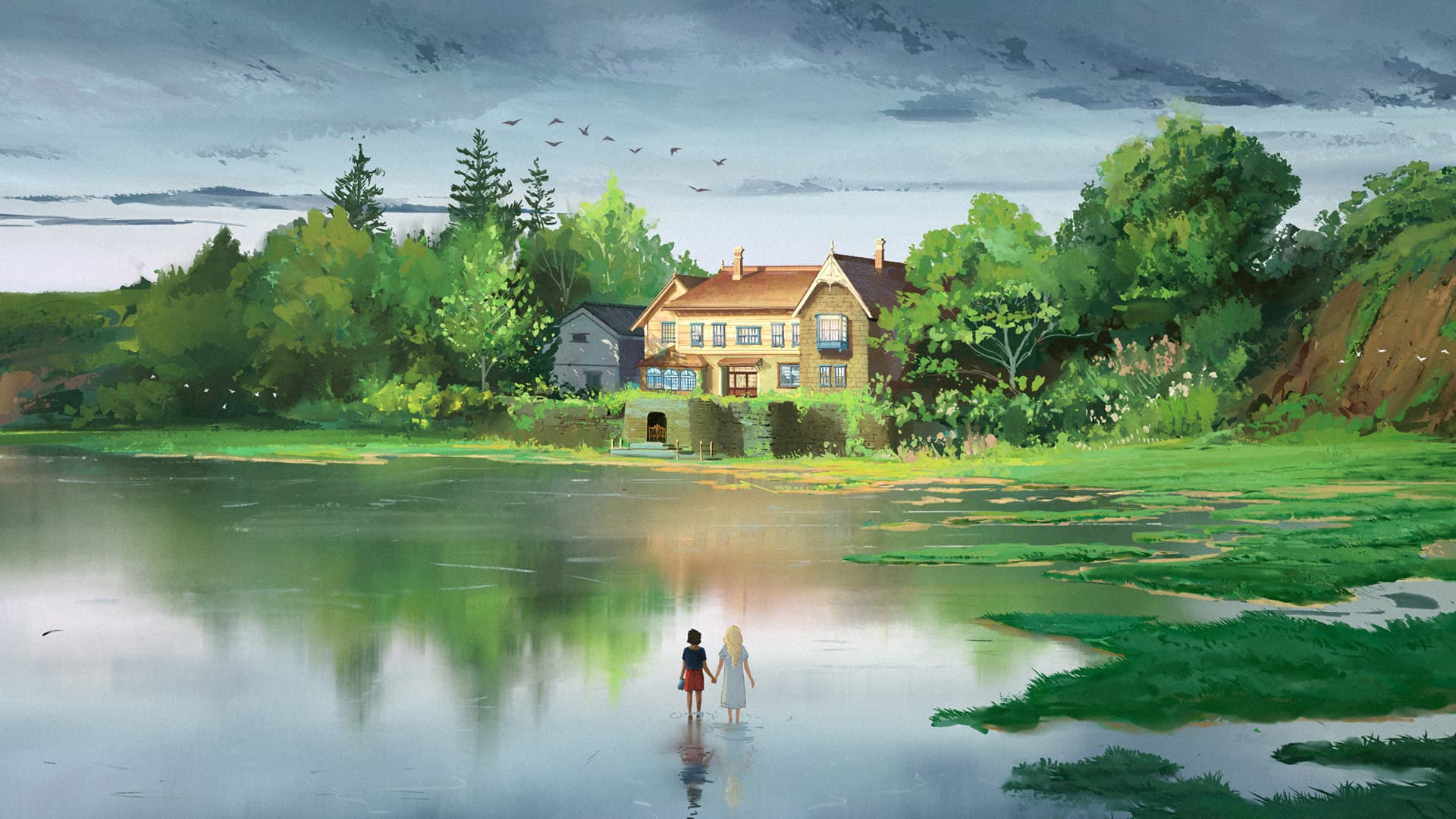
Upon being sent to live with relatives in the countryside due to an illness, an emotionally distant adolescent girl becomes obsessed with an abandoned mansion and infatuated with a girl who lives there - a girl who may or may not be real.
About this title
- Format
- Feature film
- Year
- 2014
- Runtime
- 1h 44m
- Countries
- Japan
- Original language
- JA
- Directed by
- Hiromasa Yonebayashi
- Main cast
- Sara Takatsuki, Kasumi Arimura, Nanako Matsushima, Susumu Terajima, Toshie Negishi, Ryoko Moriyama, Kazuko Yoshiyuki, Hitomi Kuroki, Hiroyuki Morisaki, Takuma Otoo
- Studios
- Studio Ghibli, Hakuhodo DY Media Partners, KDDI, Nippon Television Network Corporation, TOHO, dentsu, The Walt Disney Company (Japan), Mitsubishi
Content barometer
- Violence2/5Moderate
- Fear2/5A few scenes
- Sexuality0/5None
- Language1/5Mild
- Narrative complexity3/5Complex
- Adult themes1/5Mild
Values conveyed
- Acceptance of difference
- Forgiveness
- friendship
- empathy
- resilience
- healing