
Whale Rider
Does this age rating seem accurate to you?
Detailed parental analysis
Whale Rider is a contemplative and emotionally restrained film, rooted in the Maori culture of New Zealand, with an atmosphere that is both intimate and quietly infused with epic resonance. It tells the story of a young girl who, despite rejection from her grandfather, the keeper of traditions, seeks to establish herself as the rightful heir of her people. The film targets pre-adolescents and teenagers, but its themes of grief, identity and transmission make it equally relevant for adults.
Underlying Values
The narrative is structured around a fundamental tension between the rigidity of tradition and the necessity of its evolution. The grandfather embodies a legitimate cultural authority but is blinded by an exclusively masculine vision of lineage and power, and it is precisely this vision that the film systematically dismantles without ever caricaturing the man who holds it. The young protagonist's perseverance in the face of repeated rejection constitutes the principal emotional drive of the film, and the final resolution offers a clear message: the most solid traditions are those capable of broadening without denying themselves. This is not a film about rebellion, but about recognition, which gives it added depth and provides a good springboard for discussion with teenagers about the place of the individual within a collective inheritance.
Parental and Family Portrayals
The central parental figure is the grandfather, both loving and rigid, capable of profound tenderness and painful rejection. The protagonist's biological mother dies in childbirth at the film's opening, in a brief but explicit scene that immediately establishes a register of loss and grief. The father, absent and largely uninvested, leaves his daughter with her grandparents. The film does not judge these absences with severity, but makes them the fertile ground for a quest for belonging that is particularly legible for young viewers. The relationship between grandfather and granddaughter, despite its harshness, is ultimately the emotional heart of the film.
Discrimination
Gender discrimination is an explicitly treated subject in the narrative. The young protagonist is systematically denied access to the teaching of warrior and spiritual traditions solely because she is a girl, and the film shows unambiguously why this exclusion is unjust. This is not a manifesto, but a narrative demonstration: the daughter proves more capable than the boys designated as successors, which invites questioning of aptitude criteria based on gender. The film treats Maori culture with respect and depth, carefully distinguishing between what belongs to living tradition and what amounts to individual rigidity.
Social Themes
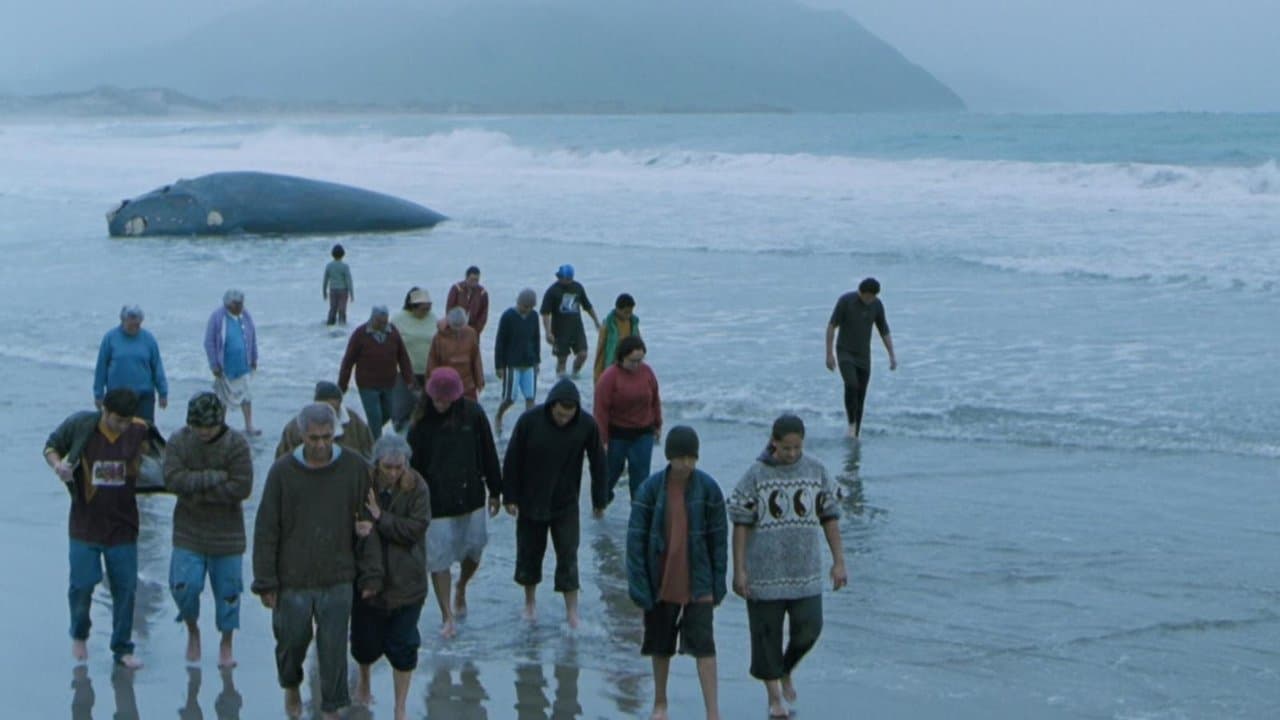
The film carries serious reflection on cultural transmission within an indigenous community confronted by the erosion of its landmarks. One perceives beneath the surface tensions between modernity and heritage, between the exodus of young people to the cities and the difficulty of maintaining a collective identity. The scene of stranded whales is powerful and distressing, addressing without didacticism the relationship between a people and its sacred natural environment. This is not an environmentalist film in the activist sense, but it offers a view of a connection to the living world that merits discussion with teenagers.
Substances
Several adults smoke cigarettes, and a minor character is associated with cannabis consumption, with materials briefly visible. Alcohol is present in social contexts. None of these elements is valorised or glamorised: they belong to the realistic picture of a community with its vulnerabilities. The narrative impact is limited, but the presence is sufficiently concrete to warrant mention.
Violence
Traditional Maori combat techniques are taught to boys in several scenes, treated as a cultural ritual rather than as spectacular violence. An adult gives a tap to the back of a teenager's head, and one scene shows a man physically attacking his father. These moments are brief, without gratification, and never glorified. The overall intensity remains low and raises no particular concern.
Language
The film contains a limited number of strong words, including a few moderately vulgar occurrences. The overall level remains well below what is found in most films for teenagers. This point warrants no particular vigilance beyond the recommended age.
Strengths
The film is a success in restrained storytelling: it avoids easy effects and lets silences do the work. The performance of the young lead actress is remarkable in its restraint and depth, carrying the narrative without ever forcing emotion. Maori culture is conveyed with rare authenticity, particularly through songs, dances and legends, without ever lapsing into postcard imagery or surface exoticism. The direction uses New Zealand's coastal landscapes to anchor the narrative in a relationship to territory and the sacred that transcends mere backdrop. For teenagers, this is a film that teaches something about how a collective identity is built, transmitted and can evolve.
Age recommendation and discussion points
The film is recommended from age 10-11 for children comfortable with themes of grief and injustice, but viewing is truly serene from age 12 onwards and the themes are fully accessible. Two discussion angles are particularly worthwhile after the film: why does the grandfather refuse for so long to see what is nonetheless evident, and what does that say about our own difficulty in changing our minds when our beliefs are tied to our identity? And also: how can a tradition both deserve to be preserved and need to evolve in order to survive?
Synopsis
A contemporary story of love, rejection, and triumph as a young Māori girl fights to fulfill a destiny her grandfather refuses to recognize.
Where to watch
Availability checked on Apr 10, 2026
About this title
- Format
- Feature film
- Year
- 2003
- Runtime
- 1h 37m
- Countries
- Germany, New Zealand
- Original language
- EN
- Directed by
- Niki Caro
- Main cast
- Keisha Castle-Hughes, Rawiri Paratene, Vicky Haughton, Cliff Curtis, Grant Roa, Mana Taumaunu, Rachel House, Taungaroa Emile, Tammy Davis, Mabel Wharekawa
- Studios
- South Pacific Pictures, Pandora Film, ApolloMedia, New Zealand Film Production Fund, New Zealand Film Commission, NZ on Air, Filmstiftung Nordrhein-Westfalen
Content barometer
- Violence1/5Mild
- Fear2/5A few scenes
- Sexuality1/5Allusions
- Language2/5Moderate
- Narrative complexity3/5Complex
- Adult themes2/5Present
Values conveyed
- Courage
- Perseverance
- cultural identity
- gender equality
- connection with nature
- passing on traditions
- family love