
Weathering with You
天気の子
Does this age rating seem accurate to you?
Detailed parental analysis
Children of the Weather is a fantastical animated film with a contemplative and melancholic atmosphere, carried by breathtaking artistic direction and intense emotional sensitivity. The plot follows a teenage runaway who arrives in Tokyo and meets a young girl with the power to control the weather, in a rainy Japan that seems never to warm. The film is primarily aimed at adolescents and young adults, though its visual world and romantic themes may attract younger children, who are not necessarily its most appropriate audience.
Underlying Values
The moral heart of the film is profoundly subversive: the main character deliberately chooses to save the girl he loves at the expense of the world's balance, triggering a lasting climate catastrophe. This choice is presented not as a tragic mistake to be regretted, but as an act of love that is embraced and celebrated by the narrative. The film thus promotes a form of radical romantic individualism, where attachment to a single person justifies irreversible collective consequences. This is a strong and deliberate message, one that deserves frank discussion with a teenager: the logic of the narrative deserves to be named, not merely felt.
Violence
Violence is present at several points and goes beyond being incidental. Hodaka is beaten physically, with visible kicks and punches, and displays realistic injuries including an open wound that bleeds on his face. He also brandishes a gun he finds by chance and points it at police officers. These sequences are embedded in a logic of teenage survival and desperation rather than glorification of violence, which gives them genuine narrative weight without making them gratuitous. They may nonetheless surprise or trouble preteens expecting a lighthearted fantasy film.
Social Themes
The ecological dimension is central to the narrative, even if treated ambiguously. The film depicts Japan flooded under relentless rains and questions humanity's relationship with natural forces. Paradoxically, the ending does not resolve the climate crisis but allows it to spread, lending the film a rare and uncomfortable tone regarding collective responsibility. This ambiguity is precisely what makes the subject worth exploring with a teenager: the film does not deliver a neat lesson; it poses an open question about what we sacrifice and for whom.
Substances
Alcohol is consumed regularly by adult characters and, notably, beer is offered to Hodaka, a minor, on several occasions. Consumption is normalised without being explicitly questioned. Tobacco also appears in several scenes. These elements are not presented as problematic behaviours, which reinforces their visibility to a young viewer.
Sex and Nudity
The film contains several suggestive elements without explicit nudity. Hodaka watches a young woman's breasts several times, and the film emphasises these glances through close-ups of her décolletage and legs. A repeated line ('You were looking at my breasts') confirms these glances are intentional in the writing. Furthermore, two adults attempt to coerce Hina, aged 15, into working in a sexually oriented establishment: this scene, although quickly defused, introduces a genuine threat to a minor.
Parental and Family Portrayals
Adult and parental figures are largely deficient or absent. Hodaka is a runaway cut off from his family, Hina is an orphan raising her young brother alone. Trustworthy adults are scarce and the film's main male mentor is himself on the margins of society. This narrative configuration valorises teenage autonomy and resourcefulness in the face of institutions (family, police, society) presented as hostile or indifferent.
Language
The film uses around a dozen expletives in the dubbed or subtitled version, including terms such as 'shit', 'bastards' or 'bullshit'. The register remains within the bounds of a standard teenage film, without particular excess.
Strengths
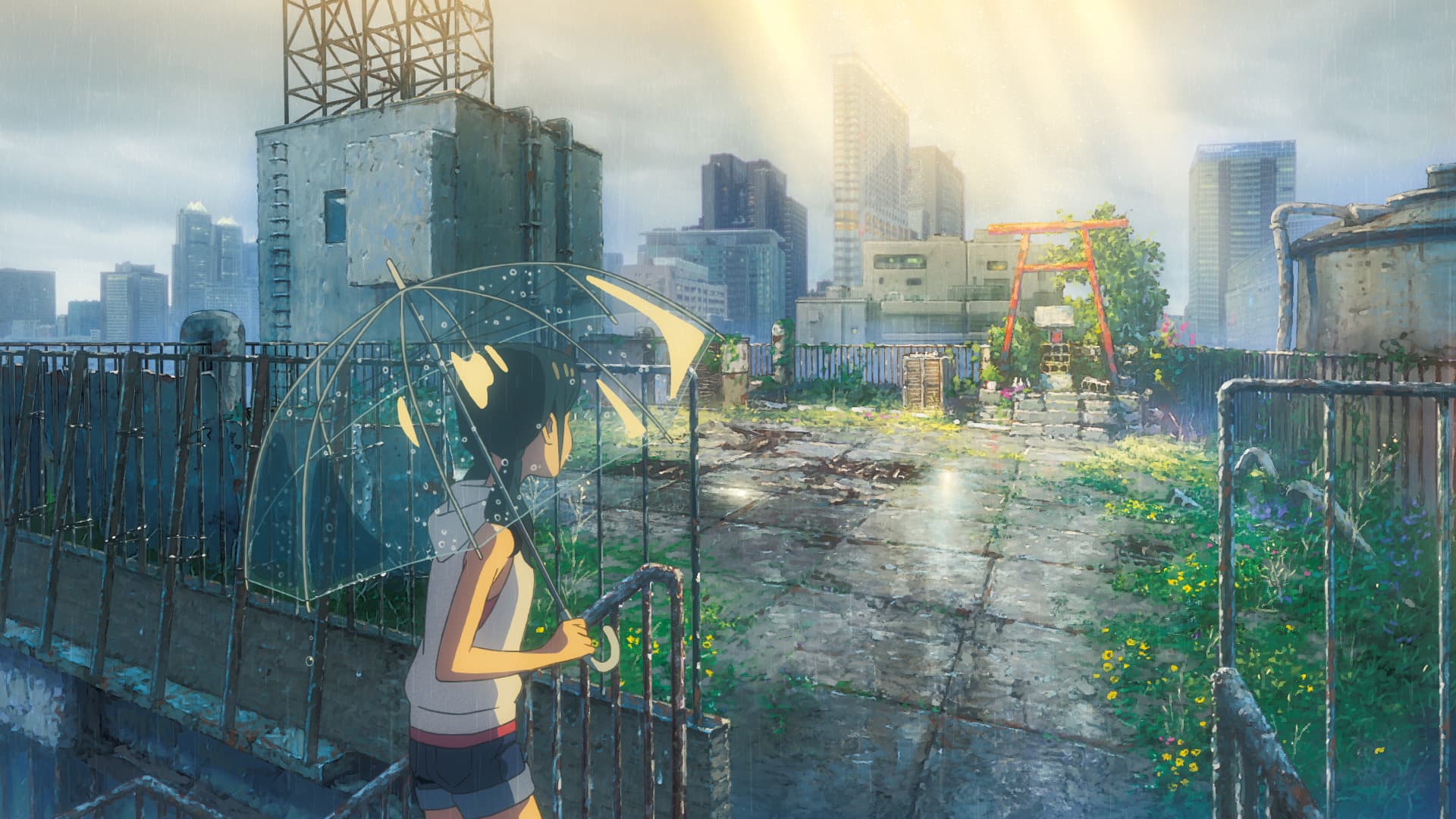
The film offers a visually stunning experience, with depictions of rain, light and clouds that constitute a powerful aesthetic object in themselves. The relationship between the two protagonists is constructed with care and credibility, without falling into sentimentality, and the emotional tension of the final act is genuinely well executed. The narrative choice not to properly resolve the central moral dilemma is bold and intellectually stimulating for a teenager capable of confronting it. The soundtrack contributes significantly to the overall atmosphere and the viewer's emotional investment.
Age recommendation and discussion points
The film is not recommended before age 12 due to physical violence, suggestive elements and the emotional intensity of certain scenes. For fully relaxed and productive viewing, age 14 is a more reasonable threshold, particularly to engage with the central moral dimension. Two discussion angles emerge after viewing: is it right to sacrifice the common good to save someone you love, and what does this choice tell us about our relationship with collective responsibility in the face of environmental crises?
Synopsis
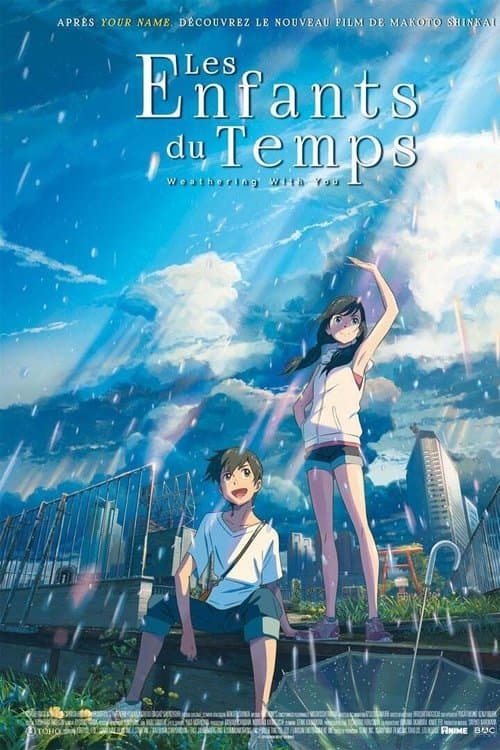
The summer of his high school freshman year, Hodaka runs away from his remote island home to Tokyo, and quickly finds himself pushed to his financial and personal limits. The weather is unusually gloomy and rainy every day, as if taking its cue from his life. After many days of solitude, he finally finds work as a freelance writer for a mysterious occult magazine. Then, one day, Hodaka meets Hina on a busy street corner. This bright and strong-willed girl possesses a strange and wonderful ability: the power to stop the rain and clear the sky.
About this title
- Format
- Feature film
- Year
- 2019
- Runtime
- 1h 53m
- Countries
- Japan
- Original language
- JA
- Studios
- CoMix Wave Films, Story, TOHO, KADOKAWA, jeki, Lawson Entertainment, "Weathering With You" Film Partners