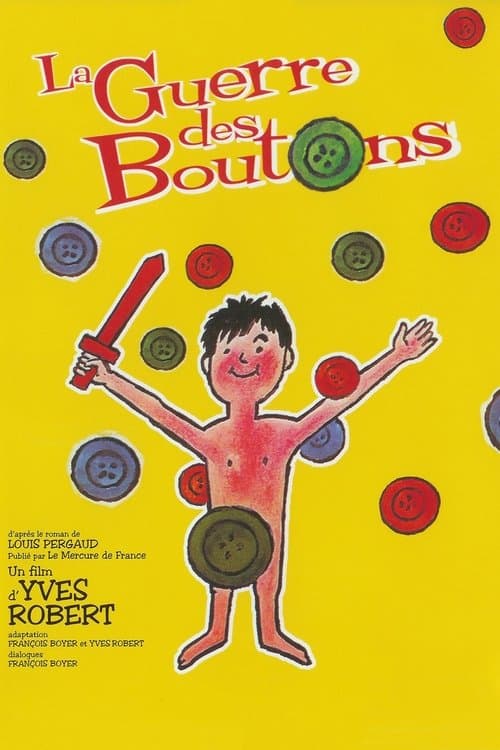
War of the Buttons
Does this age rating seem accurate to you?
Detailed parental analysis
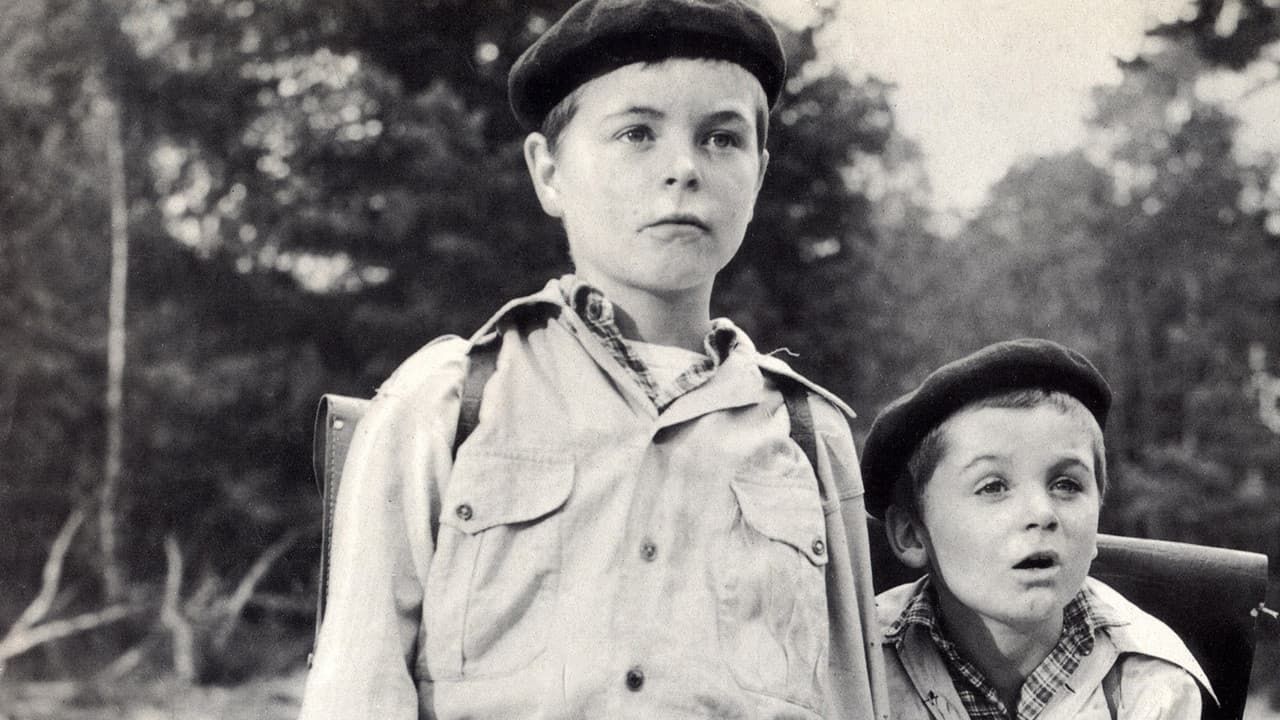
War of the Buttons is a comedy-drama with a rustic and nostalgic atmosphere, driven by exuberant childlike energy and often caustic humour. The plot follows two rival gangs of boys from neighbouring villages engaged in a merciless war, with buttons torn from the losers' clothing serving as trophies. The film is primarily aimed at a broad family audience, but its actual content is better suited to children aged 10 and above, with adult accompaniment recommended for younger viewers.
Substances
The film shows children smoking and drinking in their secret hideout, presented as acts of freedom and joyful transgression. More seriously, two adults give strong alcohol to a child and find it amusing, without the scene being condemned by the narrative. These elements are not incidental: they contribute to constructing an image of rebellious and liberated childhood that was common in popular culture of the 1960s, but which today warrants explicit contextualisation with a child or adolescent.
Sex and Nudity
Child nudity is central to the film: the children decide to fight entirely naked so they have nothing to lose, and these scenes are treated with a comic and liberating tone. The film dates from an era when this type of representation did not raise the same questions as it does today, but parents should be informed before viewing. There is also a scene in which an adult asks a girl to show her breasts during a boozy meal, treated as a consequence-free joke. This scene, brief but real, is not questioned by the film and may require explanation.
Violence
Violence between children is omnipresent but remains in the register of playground fighting, without gore or serious injuries. It is presented as a ritualised game, almost chivalrous, with its own rules and codes of honour. The scene in which a prisoner is tied to a tree and threatened with mutilation, notably with castration, exceeds this register and may disturb younger viewers. Animal cruelty, with the smoking out of a fox, is counterbalanced by care shown towards an injured rabbit, which offers a useful point of discussion about the moral consistency of the characters.
Language
The film is peppered with vulgar language rooted in the rural slang of the 1960s, with insults such as 'couille molle', 'peigne-cul' or 'salaud', used naturally by both children and adults. This register is part of the film's authenticity and social grounding, but it may surprise parents who are not expecting it. For a child, it is also an opportunity to understand that language evolves and that certain words carry different weight depending on the era and context.
Parental and Family Portrayals
Adults, and fathers in particular, are depicted as authoritarian figures who punish without seeking to understand, who shout loudly and strike quickly. This representation is deliberately critical: the film builds its argument on the gap between the world of children, lively and inventive, and that of adults, rigid and unjust. The fear of punishment is so strong that Lebrac considers running away rather than facing the consequences at boarding school, which says something about the symbolic violence of adult authority in the narrative.
Discrimination
The only girl integrated into the group is confined to cleaning and mending clothes, without the film questioning or ironising this division of labour. This is not a minor detail: it is the only female child role in the narrative, and it reproduces without critical distance a domestic assignment. For a child or adolescent today, this is a concrete point of discussion about what cinema of a particular era reveals about the social norms of its time.
Underlying Values
The film strongly valorises leadership, group solidarity, ingenuity and resistance to unjust authority. Lebrac embodies a charismatic leader capable of uniting and strategising, making him a positive model of courage and initiative. Implicitly, the narrative defends a form of childhood autonomy and freedom from institutions, a message that remains relevant but which coexists with behaviours that the film does not condemn, such as violence, substance use or humiliation.
Strengths
The film possesses genuine evocative power: it restores with precision and tenderness the mental universe of childhood, its codes, its absolute loyalties, its absurd wars and simple joys. The dialogue writing, rooted in authentic popular speech, gives the characters a depth rare for a film of this era. The staging of nature and rural landscapes contributes to an atmosphere of freedom and adventure that has marked generations of viewers. It is also a document on rural France in the post-war period, its social hierarchies and its relationship with authority, which can nourish a conversation about the history of everyday life.
Age recommendation and discussion points
The film is not recommended before age 10 due to child nudity, scenes involving alcohol and tobacco, and certain threatening sequences. From age 10-11 onwards, it is best watched with an attentive adult who can provide context. Two angles of discussion are essential after viewing: why do the adults in the film punish without listening, and what does this say about the relationship between children and authority today? And also: how does the film treat girls, and what does this reveal about the era in which it was made?
Synopsis
For generations, two rival French villages, Longueverne and Velrans, have been at war. But this is no ordinary conflict, for the on-going hostilities are between two armies of young schoolboys. When he is beaten by his father for having lost his buttons, the leader of the Longueverne army, Lebrac, has an idea which will give his side the advantage: next time, he and his brave soldiers will go in battle without their clothes...
About this title
- Format
- Feature film
- Year
- 1962
- Runtime
- 1h 30m
- Countries
- France
- Original language
- FR
- Directed by
- Yves Robert
- Main cast
- Jacques Dufilho, Yvette Etiévant, Michel Galabru, Michèle Méritz, Jean Richard, Pierre Tchernia, Pierre Trabaud, Claude Confortès, Paul Crauchet, Henri Labussière
- Studios
- Les Productions de la Guéville
Content barometer
- Violence2/5Moderate
- Fear2/5A few scenes
- Sexuality2/5Mild
- Language3/5Notable
- Narrative complexity2/5Moderate
- Adult themes3/5Marked
Watch-outs
- Alcohol
- Strong language
- Gender stereotypes
- Abuse