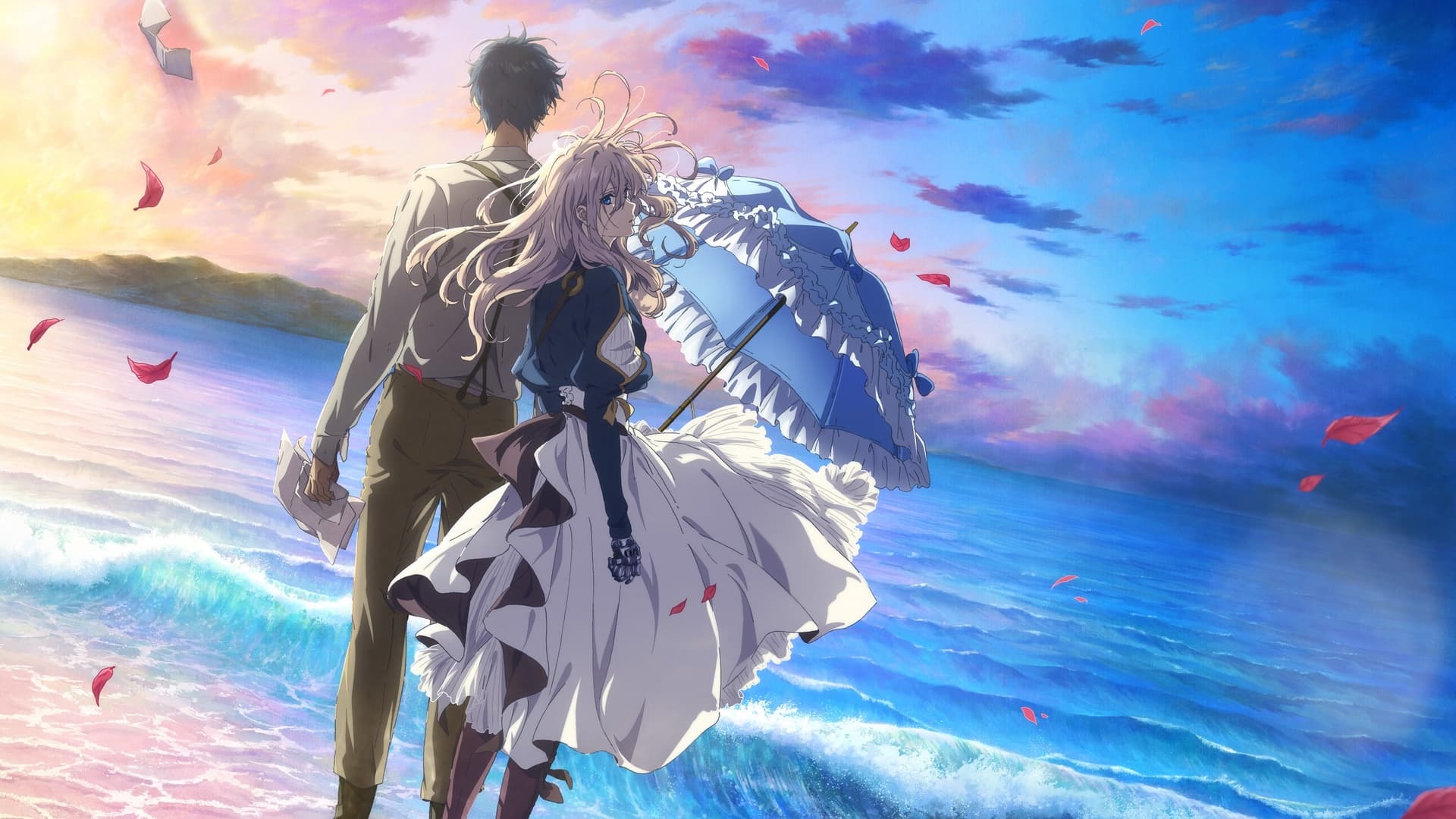

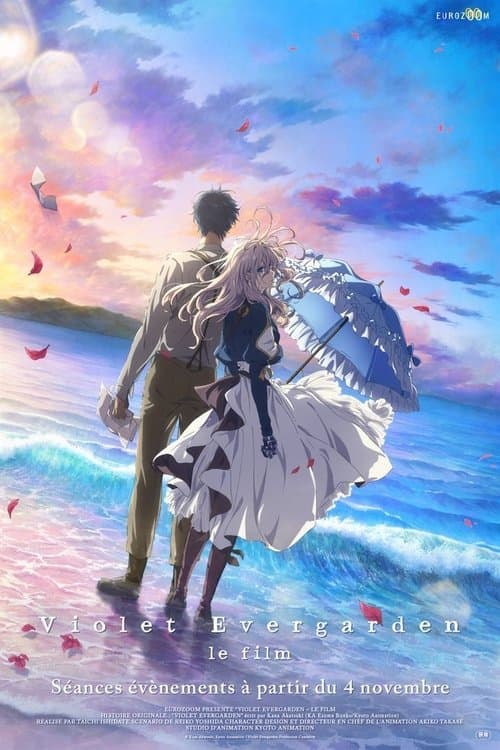
Violet Evergarden: The Movie
劇場版 ヴァイオレット・エヴァーガーデン
Does this age rating seem accurate to you?
Detailed parental analysis
Violet Evergarden: The Movie is a Japanese animated film with a contemplative and profoundly melancholic tone, driven by muted emotion and carefully crafted visual beauty. It follows Violet, a former soldier turned professional letter writer, as she seeks to understand the meaning of love while confronting the aftereffects of war and loss. The film is primarily aimed at adolescents and adults; it is absolutely incomprehensible without having watched the television series that precedes it.
Underlying Values
Violence is present in the form of war flashbacks: we see blood, severed limbs, close-combat scenes including bayonet strikes. The most striking scene shows the protagonist losing both arms in an explosion, rendered with stark visual intensity. A secondary character is shot in the eye with visible blood spray. These sequences are integrated into a narrative logic that implicitly condemns war and its human consequences; they are neither aestheticised nor indulgent, but their intensity remains real. A sensitive child or young adolescent could be significantly disturbed by these images.
Violence
Violence is present in the form of war flashbacks: we see blood, severed limbs, close-combat scenes including bayonet strikes. The most striking scene shows the protagonist losing both arms in an explosion, rendered with stark visual intensity. A secondary character is shot in the eye with visible blood spray. These sequences are integrated into a narrative logic that implicitly condemns war and its human consequences; they are neither aestheticised nor indulgent, but their intensity remains real. A sensitive child or young adolescent could be significantly disturbed by these images.
Social Themes
War constitutes the substrate of the entire story. The film does not depict an identifiable contemporary conflict, but its treatment of post-combat trauma, the dehumanisation of child-soldiers, and the psychological cost of institutionalised violence is serious and coherent. The question of a young girl being instrumentalised as a weapon of war is present beneath the surface and opens important space for discussion about the responsibility of adults towards children in conflict contexts.
Parental and Family Portrayals
Parental and guardian figures are almost entirely absent or failing in Violet's story: she grew up without a known family, trained only by a commanding officer who both protected and exploited her. This ambiguous relationship, between genuine attachment and conditioning, runs through the entire film and may prompt questions about what it truly means to care for a child. Other secondary characters embody healthier family dynamics, notably around illness and the transmission of affection between generations.
Sex and Nudity
The romantic register is central but remains entirely chaste. No explicit or suggestive scenes of a sexual nature. A female character wears blouses with partially open necklines, cut in a way that accentuates her silhouette, but this remains occasional and without notable erotic charge in the narrative.
Substances
A pipe is smoked by a character in one scene. The consumption is incidental, without valorisation or particular staging.
Strengths
The film demonstrates a rare narrative and emotional mastery within its genre. The writing takes time to let silences exist, to show grief in its duration rather than in its spectacle, and to construct credible inner progression for its main character. The way it articulates the death of a sick child, separation, and the idea of transmission through letters gives the narrative a depth that touches upon universal questions about what we leave behind. For a sufficiently mature adolescent, this is a film that can open genuine conversations about loss, the meaning of love, and how we learn to express what we feel.
Age recommendation and discussion points
The film is not recommended for children under 12 due to the violence of war flashbacks and sustained emotional intensity over two hours; a serene viewing would be more appropriate from age 14 onwards, when the adolescent is able to gain some distance from the emotional weight and themes of grief. Two angles of discussion are worth opening after viewing: firstly, why the film associates the meaning of life so strongly with being loved by one particular person, and what this might imply for the construction of self; secondly, what it means to grow up in a war context and what responsibility adults have towards the children they draw into their conflicts.
Synopsis
As the world moves on from the war and technological advances bring changes to her life, Violet still hopes to see her lost commanding officer again.
About this title
- Format
- Feature film
- Year
- 2020
- Runtime
- 2h 20m
- Countries
- Japan
- Original language
- JA
- Directed by
- Taichi Ishidate
- Main cast
- Yui Ishikawa, Daisuke Namikawa, Takehito Koyasu, Hidenobu Kiuchi, Haruka Tomatsu, Koki Uchiyama, Aya Endo, Minori Chihara, Kaori Mizuhashi, Rina Sato
- Studios
- Kyoto Animation, ABC Animation, Pony Canyon, Bandai Namco Arts, Rakuonsha
Content barometer
- Violence3/5Notable
- Fear3/5Notable tension
- Sexuality1/5Allusions
- Language0/5None
- Narrative complexity3/5Complex
- Adult themes1/5Mild
Values conveyed
- Acceptance of difference
- Compassion
- Forgiveness
- grief and resilience
- unconditional love
- reconciliation
- emotional courage
- the power of words and letters
- family bonds