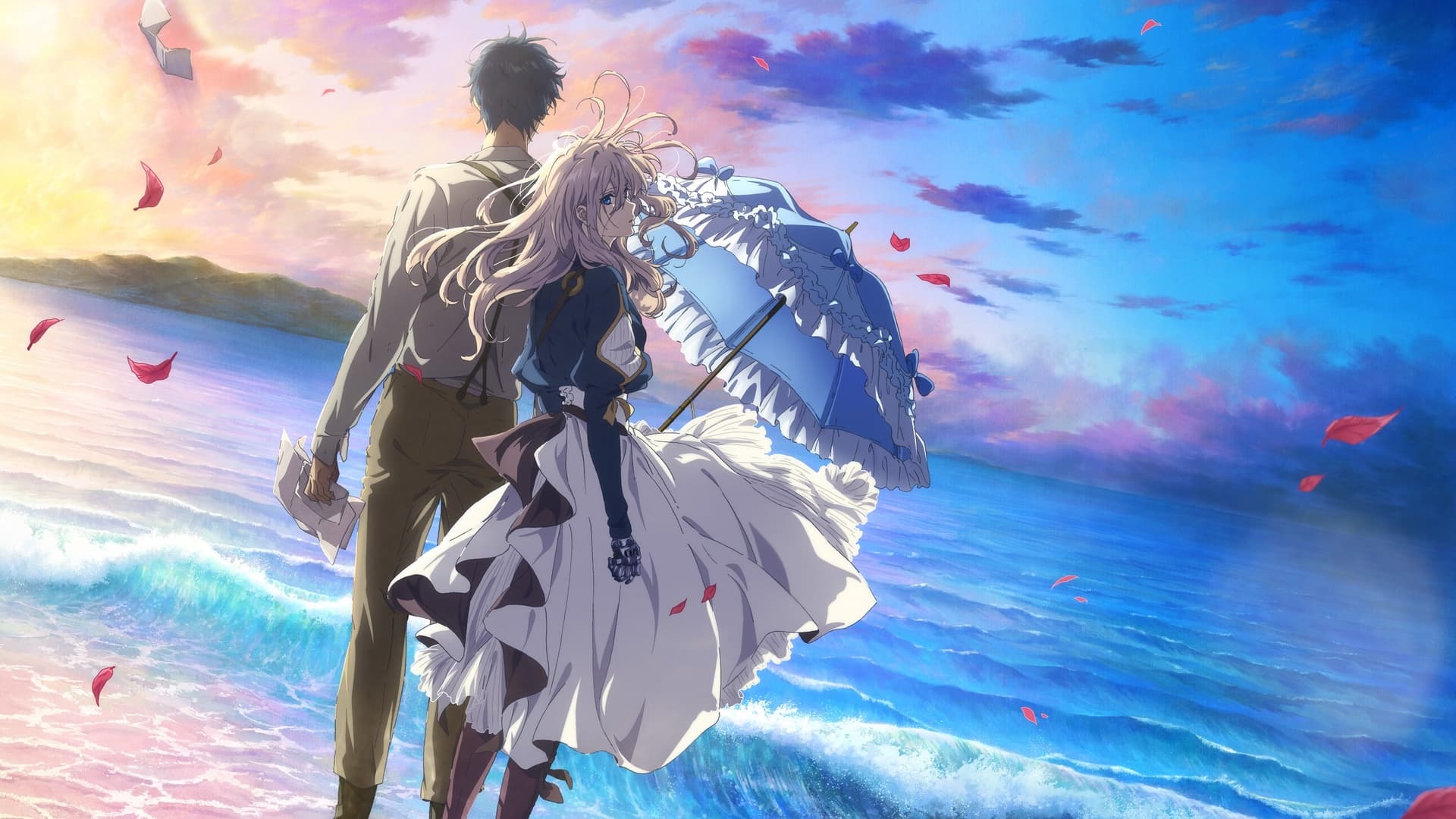


Violet Evergarden: The Movie
劇場版 ヴァイオレット・エヴァーガーデン
Violet Evergarden: The Movie
劇場版 ヴァイオレット・エヴァーガーデン
Your feedback improves this guide
Your feedback highlights guides that need a second look and keeps the rating trustworthy.
Does this age rating seem accurate to you?
Sign in to vote
Watch-outs
What this film brings
Content barometer
Violence
2/5
Moderate
Fear
2/5
A few scenes
Sexuality
1/5
Allusions
Language
0/5
None
Narrative complexity
3/5
Complex
Adult themes
0/5
None
Expert review
This 2020 Japanese animated film is a poignant and melancholic work that closes the story of a young former child soldier learning to understand her own emotions after the traumas of war. The tone is bittersweet, carried by refined animation and a narrative focused on grief, guilt, imminent death, and reconciliation with the past. Sensitive elements include the death of a gravely ill young boy depicted with restraint but genuine emotional weight, repeated references to the horrors of war and the physical injuries of key characters, as well as scenes of deep psychological distress. These moments are frequent and form the narrative core of the film, requiring real emotional maturity from young viewers. Parents are encouraged to watch this film alongside sensitive teenagers to support conversations about grief, death, and sacrifice, and to be aware that several prolonged crying scenes may affect unprepared viewers quite deeply.
Synopsis
As the world moves on from the war and technological advances bring changes to her life, Violet still hopes to see her lost commanding officer again.
Difficult scenes
A young boy named Yuris, suffering from a terminal illness, asks Violet to write farewell letters to his family before he dies. His physical decline is shown progressively: he becomes unable to rise from bed, and he passes away during the film. His death is handled with restraint but is clearly depicted, and the letters later read by his parents create a moment of intense grief that may deeply affect emotionally sensitive children. Violet, a former child soldier who lost both arms in combat, wears metal prosthetics that are shown regularly throughout the film. Flashbacks allude to her childhood years as a weapon of war, without graphic violence but with a very heavy emotional weight surrounding the exploitation of a child soldier. An intense scene of emotional breakdown shows Violet collapsing in tears when the man she loves refuses to see her, unable to overcome his own guilt. This sequence is long, largely silent, and particularly harrowing, concentrating the character's accumulated suffering over several minutes. The aftermath of war is evoked repeatedly through multiple characters who are amputated or physically scarred, as well as through dialogue about the human cost of the conflict. These references, while never treated in a violent or graphic way, create a pervasive atmosphere of collective mourning throughout the film.
Where to watch
No verified platform for the US market yet. We keep this section updated as availability changes.
Availability checked on Apr 01, 2026
About this title
- Format
- Feature film
- Year
- 2020
- Runtime
- 2h 20m
- Countries
- Japan
- Original language
- JA
- Directed by
- Taichi Ishidate
- Main cast
- Yui Ishikawa, Daisuke Namikawa, Takehito Koyasu, Hidenobu Kiuchi, Haruka Tomatsu, Koki Uchiyama, Aya Endo, Minori Chihara, Kaori Mizuhashi, Rina Sato
- Studios
- Kyoto Animation, ABC Animation, Pony Canyon, Bandai Namco Arts, Rakuonsha
Content barometer
Violence
2/5
Moderate
Fear
2/5
A few scenes
Sexuality
1/5
Allusions
Language
0/5
None
Narrative complexity
3/5
Complex
Adult themes
0/5
None
Expert review
This 2020 Japanese animated film is a poignant and melancholic work that closes the story of a young former child soldier learning to understand her own emotions after the traumas of war. The tone is bittersweet, carried by refined animation and a narrative focused on grief, guilt, imminent death, and reconciliation with the past. Sensitive elements include the death of a gravely ill young boy depicted with restraint but genuine emotional weight, repeated references to the horrors of war and the physical injuries of key characters, as well as scenes of deep psychological distress. These moments are frequent and form the narrative core of the film, requiring real emotional maturity from young viewers. Parents are encouraged to watch this film alongside sensitive teenagers to support conversations about grief, death, and sacrifice, and to be aware that several prolonged crying scenes may affect unprepared viewers quite deeply.
Synopsis
As the world moves on from the war and technological advances bring changes to her life, Violet still hopes to see her lost commanding officer again.
Difficult scenes
A young boy named Yuris, suffering from a terminal illness, asks Violet to write farewell letters to his family before he dies. His physical decline is shown progressively: he becomes unable to rise from bed, and he passes away during the film. His death is handled with restraint but is clearly depicted, and the letters later read by his parents create a moment of intense grief that may deeply affect emotionally sensitive children. Violet, a former child soldier who lost both arms in combat, wears metal prosthetics that are shown regularly throughout the film. Flashbacks allude to her childhood years as a weapon of war, without graphic violence but with a very heavy emotional weight surrounding the exploitation of a child soldier. An intense scene of emotional breakdown shows Violet collapsing in tears when the man she loves refuses to see her, unable to overcome his own guilt. This sequence is long, largely silent, and particularly harrowing, concentrating the character's accumulated suffering over several minutes. The aftermath of war is evoked repeatedly through multiple characters who are amputated or physically scarred, as well as through dialogue about the human cost of the conflict. These references, while never treated in a violent or graphic way, create a pervasive atmosphere of collective mourning throughout the film.