
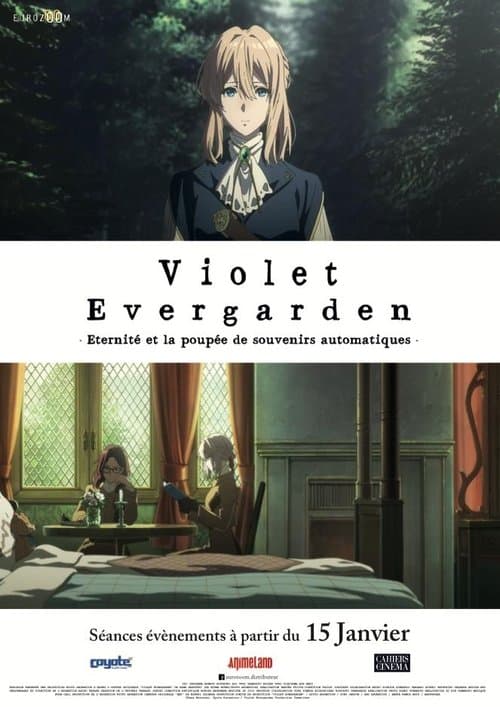
Violet Evergarden: Eternity and the Auto Memory Doll
ヴァイオレット・エヴァーガーデン 外伝 - 永遠と自動手記人形 -
Violet Evergarden: Eternity and the Auto Memory Doll
ヴァイオレット・エヴァーガーデン 外伝 - 永遠と自動手記人形 -
Your feedback improves this guide
Your feedback highlights guides that need a second look and keeps the rating trustworthy.
Does this age rating seem accurate to you?
Sign in to vote
Watch-outs
What this film brings
Content barometer
Violence
1/5
Mild
Fear
1/5
Mild
Sexuality
0/5
None
Language
0/5
None
Narrative complexity
2/5
Moderate
Adult themes
0/5
None
Expert review
This 2019 Japanese animated film, a spin-off from the Violet Evergarden series, tells an intimate story centered on sisterly bonds, family separation, and emotional healing, presented through refined visuals and a pervading melancholic atmosphere. The sensitive elements are primarily emotional in nature: a young girl is taken away from her adoptive sister by an aristocratic family, her health is noticeably fragile due to recurring coughing fits, and the pain of loss and separation is portrayed as something close to permanent. These themes are not conveyed through physical violence or frightening imagery, but through a quiet and persistent sadness that runs throughout the film, including several genuinely tearful farewell moments. Parents are encouraged to watch alongside younger viewers and open a conversation about the themes of forced family separation, poverty, and self-sacrifice born of love, in order to help contextualize these emotionally demanding situations.
Synopsis
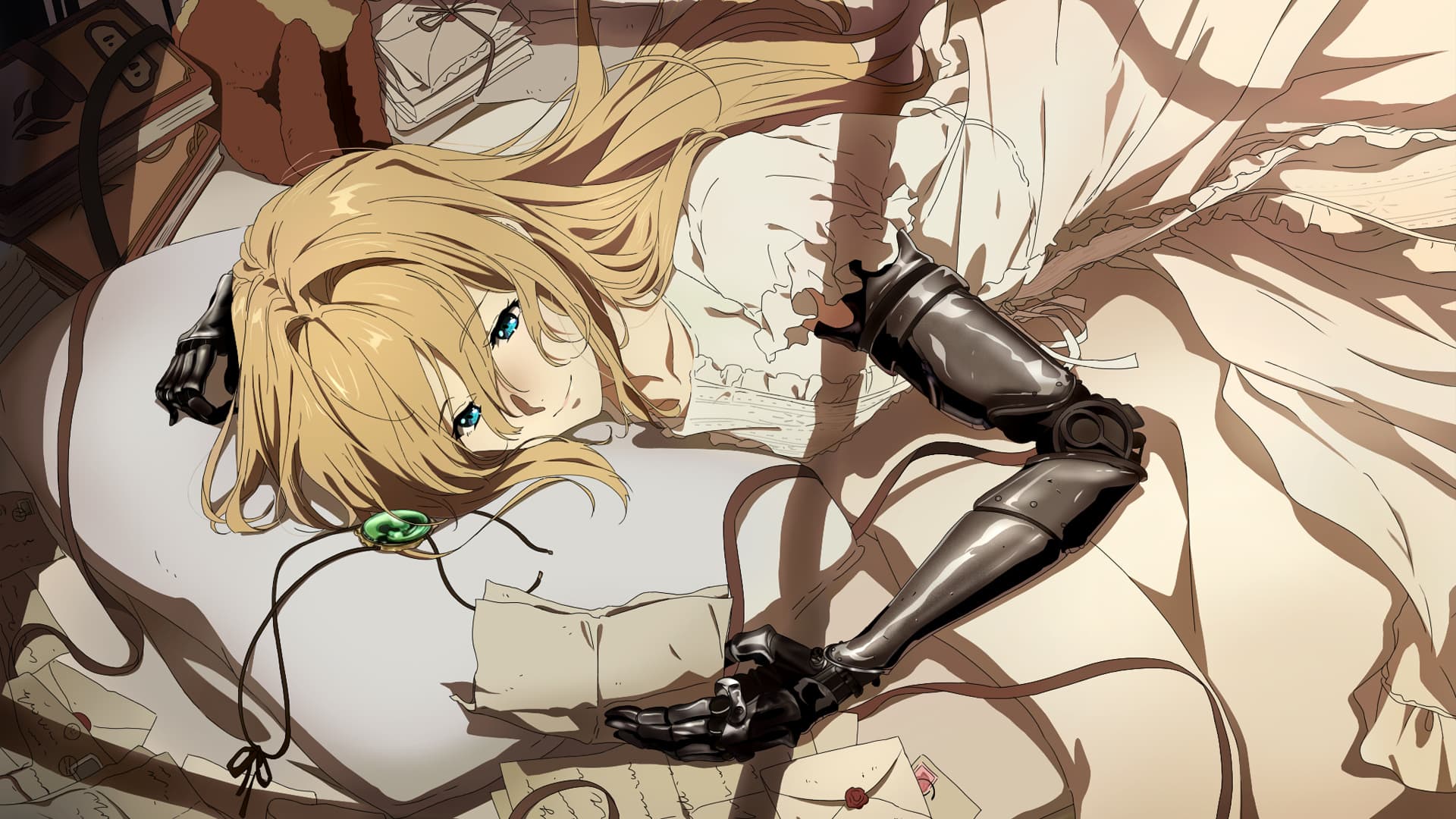
Violet Evergarden comes to a private women's academy to tutor Isabella in the ways of being a lady. Heir to the York family, Isabella feels trapped in this new and uncomfortable world. She still grieves for the only person to ever bring her happiness – now lost to her. Violet's lessons do give her a brief respite from the melancholy but with the absence of joy, how long does it take to truly heal?
Difficult scenes
Isabella reveals to Violet that she is actually Amy Bartlett, an illegitimate child who grew up in poverty, and that she reluctantly agreed to join the York family in exchange for the promise of a better life for Taylor, the little girl she had adopted as her sister. This confession scene is lengthy, laden with shame and guilt, and may provoke genuine sadness in children who are sensitive to themes of injustice or sibling separation. Throughout the film, Isabella suffers from recurring coughing fits that hint at a declining state of health without a clear explanation being given. Although not violent, these episodes create an atmosphere of fragility and emotional precariousness that may worry younger viewers. The scene in which Isabella dictates a letter to Violet intended for Taylor is one of the film's most emotionally charged moments: Isabella expresses her love, her regrets, and her hopes for her sister in a context where the two girls cannot be reunited. This sequence typically moves viewers of all ages to tears and may resonate deeply with children who share a close bond with a sibling. Taylor, still very young, sets out alone to learn how to read so that she can one day deliver her own letters to Isabella. Her initial solitude, her life at the orphanage, and her desperate wish to reconnect with her sister form a melancholic subplot that, although resolved on a hopeful note, may weigh emotionally on younger viewers.
Where to watch
No verified platform for the US market yet. We keep this section updated as availability changes.
Availability checked on Apr 01, 2026
About this title
- Format
- Feature film
- Year
- 2019
- Runtime
- 1h 30m
- Countries
- Japan
- Original language
- JA
- Directed by
- Haruka Fujita
- Main cast
- Yui Ishikawa, Minako Kotobuki, Aoi Yuuki, Koki Uchiyama, Takehito Koyasu, Aya Endo, Minori Chihara, Haruka Tomatsu, Azusa Tadokoro, Hana Takeda
- Studios
- Kyoto Animation, Pony Canyon, ABC Animation, Bandai Namco Arts
Content barometer
Violence
1/5
Mild
Fear
1/5
Mild
Sexuality
0/5
None
Language
0/5
None
Narrative complexity
2/5
Moderate
Adult themes
0/5
None
Expert review
This 2019 Japanese animated film, a spin-off from the Violet Evergarden series, tells an intimate story centered on sisterly bonds, family separation, and emotional healing, presented through refined visuals and a pervading melancholic atmosphere. The sensitive elements are primarily emotional in nature: a young girl is taken away from her adoptive sister by an aristocratic family, her health is noticeably fragile due to recurring coughing fits, and the pain of loss and separation is portrayed as something close to permanent. These themes are not conveyed through physical violence or frightening imagery, but through a quiet and persistent sadness that runs throughout the film, including several genuinely tearful farewell moments. Parents are encouraged to watch alongside younger viewers and open a conversation about the themes of forced family separation, poverty, and self-sacrifice born of love, in order to help contextualize these emotionally demanding situations.
Synopsis
Violet Evergarden comes to a private women's academy to tutor Isabella in the ways of being a lady. Heir to the York family, Isabella feels trapped in this new and uncomfortable world. She still grieves for the only person to ever bring her happiness – now lost to her. Violet's lessons do give her a brief respite from the melancholy but with the absence of joy, how long does it take to truly heal?
Difficult scenes
Isabella reveals to Violet that she is actually Amy Bartlett, an illegitimate child who grew up in poverty, and that she reluctantly agreed to join the York family in exchange for the promise of a better life for Taylor, the little girl she had adopted as her sister. This confession scene is lengthy, laden with shame and guilt, and may provoke genuine sadness in children who are sensitive to themes of injustice or sibling separation. Throughout the film, Isabella suffers from recurring coughing fits that hint at a declining state of health without a clear explanation being given. Although not violent, these episodes create an atmosphere of fragility and emotional precariousness that may worry younger viewers. The scene in which Isabella dictates a letter to Violet intended for Taylor is one of the film's most emotionally charged moments: Isabella expresses her love, her regrets, and her hopes for her sister in a context where the two girls cannot be reunited. This sequence typically moves viewers of all ages to tears and may resonate deeply with children who share a close bond with a sibling. Taylor, still very young, sets out alone to learn how to read so that she can one day deliver her own letters to Isabella. Her initial solitude, her life at the orphanage, and her desperate wish to reconnect with her sister form a melancholic subplot that, although resolved on a hopeful note, may weigh emotionally on younger viewers.