

Inside Out
Inside Out
Your feedback improves this guide
Your feedback highlights guides that need a second look and keeps the rating trustworthy.
Does this age rating seem accurate to you?
Sign in to vote
Watch-outs
What this film brings
Content barometer
Violence
1/5
Mild
Fear
2/5
A few scenes
Sexuality
0/5
None
Language
0/5
None
Narrative complexity
3/5
Complex
Adult themes
0/5
None
Expert review
Inside Out is a colorful, imaginative family animation, yet its emotional core is deeper and heavier than its playful style may suggest. The main sensitive elements involve sadness, loss of stability after a move, scenes of crying, a brief runaway idea, and a memorable sequence centered on forgetting and the disappearance of a character important to the heroine. There is very little physical violence in the usual sense, and the tension comes mostly from inner distress, with several scenes where Riley feels overwhelmed and parts of her mind become darker and more unsettling. The film remains clearly child friendly in form, with no realistic harm or adult content, but emotionally sensitive children may find some moments intense or upsetting. I would suggest it from around age 7 for most children, with an adult ready to talk afterward about sadness, change, and the idea that asking for comfort is healthy.
Synopsis
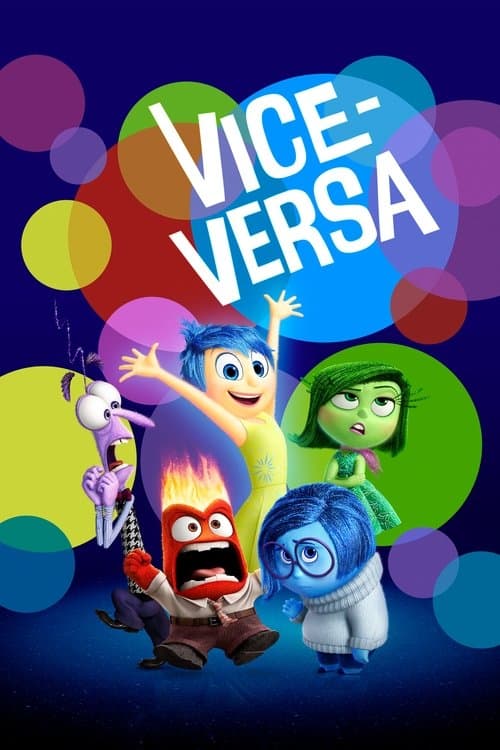
When 11-year-old Riley moves to a new city, her Emotions team up to help her through the transition. Joy, Fear, Anger, Disgust and Sadness work together, but when Joy and Sadness get lost, they must journey through unfamiliar places to get back home.
Difficult scenes
The moving setup can already unsettle a young child, because Riley loses her home, routines, and excitement in a short span of time. She is shown feeling disappointed by her new environment, isolated, and misunderstood, which may resonate strongly with children who have experienced a major life change. On Riley's first day at school, she becomes overwhelmed and starts crying in front of her whole class. The scene is not violent, but it presents a feeling of embarrassment and strong inner distress, which may be hard for children who are very sensitive to social discomfort. Several scenes in the mind world show memories being lost, parts of personality collapsing, and an impression of emptiness and forgetting. The visuals remain stylized and fantastical, yet the idea of important things fading away can feel sad or mildly unsettling for some children. The material involving Bing Bong is often the most emotionally striking part for families. Without revealing the ending, the film very clearly touches on the loss of a cherished childhood figure, and many children respond strongly to this sequence with sadness or questions about being forgotten. At one point, Riley considers running away in order to return to a place she connects with happiness. This can be worrying because it shows a child acting from emotional distress and separating from her parents, even though the film presents it in a psychological rather than graphically dangerous way.
Where to watch
No verified platform for the US market yet. We keep this section updated as availability changes.
Availability checked on Apr 01, 2026
About this title
- Format
- Feature film
- Year
- 2015
- Runtime
- 1h 34m
- Countries
- United States of America
- Original language
- EN
- Studios
- Pixar
Content barometer
Violence
1/5
Mild
Fear
2/5
A few scenes
Sexuality
0/5
None
Language
0/5
None
Narrative complexity
3/5
Complex
Adult themes
0/5
None
Expert review
Inside Out is a colorful, imaginative family animation, yet its emotional core is deeper and heavier than its playful style may suggest. The main sensitive elements involve sadness, loss of stability after a move, scenes of crying, a brief runaway idea, and a memorable sequence centered on forgetting and the disappearance of a character important to the heroine. There is very little physical violence in the usual sense, and the tension comes mostly from inner distress, with several scenes where Riley feels overwhelmed and parts of her mind become darker and more unsettling. The film remains clearly child friendly in form, with no realistic harm or adult content, but emotionally sensitive children may find some moments intense or upsetting. I would suggest it from around age 7 for most children, with an adult ready to talk afterward about sadness, change, and the idea that asking for comfort is healthy.
Synopsis
When 11-year-old Riley moves to a new city, her Emotions team up to help her through the transition. Joy, Fear, Anger, Disgust and Sadness work together, but when Joy and Sadness get lost, they must journey through unfamiliar places to get back home.
Difficult scenes
The moving setup can already unsettle a young child, because Riley loses her home, routines, and excitement in a short span of time. She is shown feeling disappointed by her new environment, isolated, and misunderstood, which may resonate strongly with children who have experienced a major life change. On Riley's first day at school, she becomes overwhelmed and starts crying in front of her whole class. The scene is not violent, but it presents a feeling of embarrassment and strong inner distress, which may be hard for children who are very sensitive to social discomfort. Several scenes in the mind world show memories being lost, parts of personality collapsing, and an impression of emptiness and forgetting. The visuals remain stylized and fantastical, yet the idea of important things fading away can feel sad or mildly unsettling for some children. The material involving Bing Bong is often the most emotionally striking part for families. Without revealing the ending, the film very clearly touches on the loss of a cherished childhood figure, and many children respond strongly to this sequence with sadness or questions about being forgotten. At one point, Riley considers running away in order to return to a place she connects with happiness. This can be worrying because it shows a child acting from emotional distress and separating from her parents, even though the film presents it in a psychological rather than graphically dangerous way.