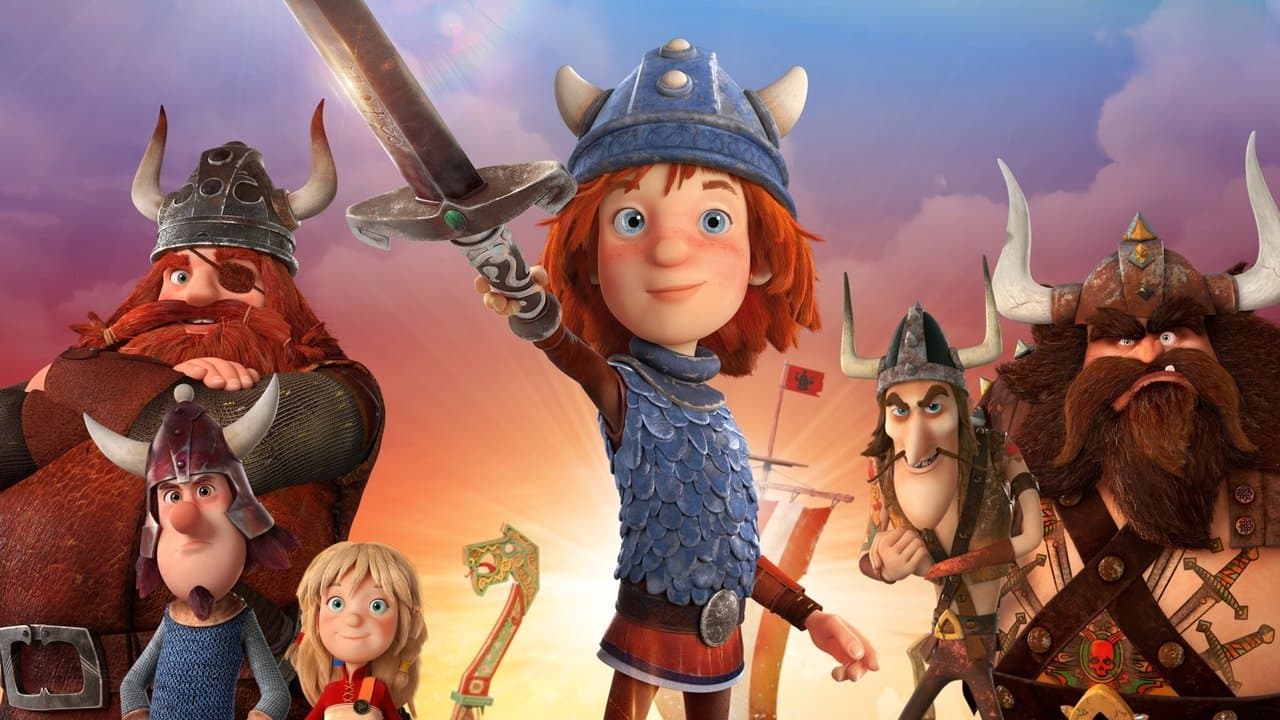

Vic the Viking: The Magic Sword
Does this age rating seem accurate to you?
Detailed parental analysis
Vic the Viking is an animated family adventure with a cheerful and light tone, driven by lively energy and humour calibrated for children. A young Viking, as ingenious as he is reluctant to fight, must save his mother and his village by relying on his quick wit rather than his strength. The film is clearly aimed at nursery and primary school children, without any particular pretension to reach beyond this audience.
Parental and Family Portrayals
The emotional heart of the film rests on the relationship between Vic and his father, a proud Viking chief who struggles to recognise the worth of his son because the boy does not fit the expected warrior ideal. This paternal rejection, even though it is resolved by the end of the story, is expressed clearly and may affect children who are sensitive to the question of parental validation. The father pushes his son away emotionally and the child internalises a form of guilt for not being "enough". The resolution is positive and the film ends with genuine reconciliation, but the journey is real and deserves to be supported.
Underlying Values
The film coherently and clearly argues that intelligence and creativity are worth more than brute strength, which is a structurally sound message for an audience of children often less comfortable with models of physical masculinity. Greed is mocked and ridiculed through the antagonists, without excessive subtlety but with effectiveness for the intended age group. Beneath the surface, the narrative strongly values the child's individual performance as the driver of collective salvation, which flatters the young viewer but may foster a somewhat megalomaniacal vision of their own ability to solve everything alone.
Violence
The film contains several action sequences between Vikings and pirates, with punches, sword fights and chases, but no bloody or realistic consequences. Violence remains at cartoon level, with no ambiguity about its spectacular and playful purpose. Two scenes rise slightly in intensity: a storm at sea where characters explicitly express the fear of dying, and a situation where Vic's mother is threatened with being cut by a circular saw. These moments stay within the register of fairy tale suspense rather than genuine terror, but they exist and may surprise the youngest or most sensitive children.
Sex and Nudity
One scene stands out from the film's usual register: a male character dressed as a woman performs a seductive dance routine to distract pirates, with the intention of comic striptease. The scene is played for the laughter of adults and probably goes unnoticed by very young children, but it introduces a burlesque erotic register that is out of step with the rest of the film. It is not shocking in itself, but it is a point worth noting if you watch the film with children aged 6 to 9 who are beginning to perceive this kind of code.
Discrimination
The film's female characters are confined to stereotypical roles without nuance: the mother is shrewish and scolding, the secondary female figure is lovesick and passive. No female character has agency of her own or narrative function independent of her relationship to men. The film does not question these representations and treats them as ordinary comic elements. This is a good talking point for a conversation after watching, particularly if you have a girl in your audience.
Strengths
The film honestly fulfils its function: it is well-paced, short (less than one hour and twenty minutes), and its central message about intelligence as a tool for emancipation is expressed with enough clarity to be understood and retained by a primary school child. The father-son relationship brings genuine emotional depth to the genre, and the fact that it is the child who solves the adults' problems gives the young viewer a welcome sense of legitimacy. This is not an animated film with ambitious writing, but it works as a platform for a conversation about difference, recognition and the value of intelligence.
Age recommendation and discussion points
The film is suitable from age 6 for the vast majority of children, with particular attention for the more sensitive aged 6 to 7 due to a few tense scenes and the dynamic of paternal rejection. Two angles are worth addressing after watching: ask the child why he thinks Vic's father struggled to be proud of his son, and what this says about what is sometimes expected of boys; and discuss the fact that the film's female characters have almost nothing to do, to open up the question of what stories choose to show or erase.
Synopsis
Vic dreams of going to sea as a member of the crew captained by Halvar, his father, who unfortunately thinks that the child is too weak to embark with him and his brave warriors in search of dangerous adventures; but fate will offer Vic the opportunity to prove to Halvar that he is a true Viking.
About this title
- Format
- Feature film
- Year
- 2019
- Runtime
- 1h 19m
- Countries
- Germany, Belgium, France
- Original language
- EN
- Studios
- SND, Studio 100 Media, Studio 100 Animation, Belvision, ZDF, BNP Paribas Fortis, Canal+, Ciné+
Content barometer
- Violence2/5Moderate
- Fear2/5A few scenes
- Sexuality1/5Allusions
- Language0/5None
- Narrative complexity1/5Accessible
- Adult themes0/5None
Watch-outs
- Gender stereotypes
- Violence
Values conveyed
- Courage
- Acceptance of difference
- ingenuity
- family
- perseverance