Viana – The Legend of the Golden Hearts
Does this age rating seem accurate to you?
Detailed parental analysis
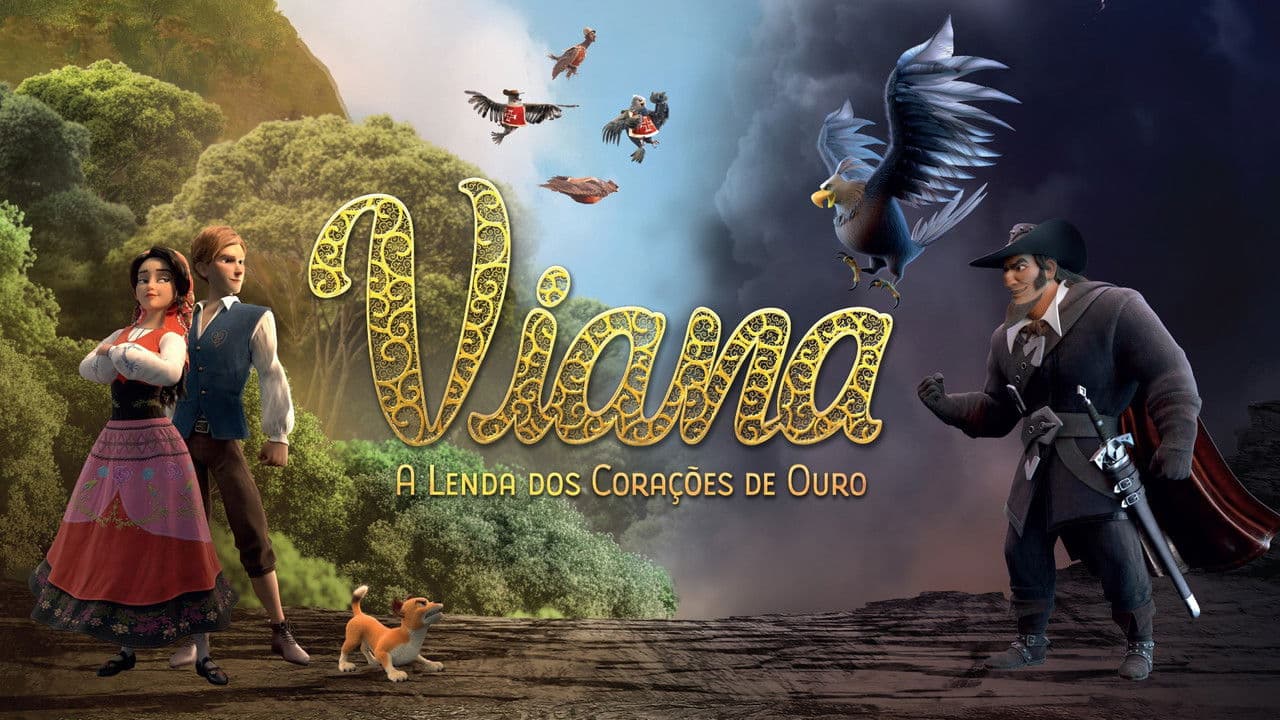
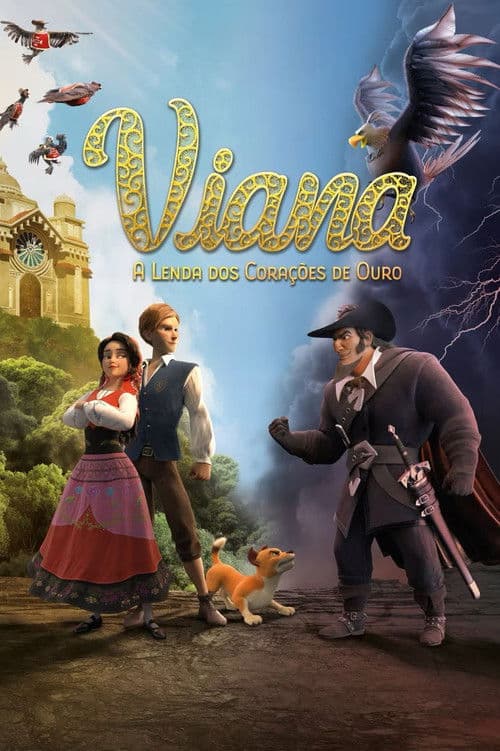
Viana is a three-dimensional musical animated film with a warm and festive atmosphere, rooted in the folklore of northern Portugal. The story follows Ana and Thomas, two young lovers separated by social class, forced to prove that talent and virtue are worth more than noble birth in order to unite their destinies. The film is explicitly directed at families and children, with no ambiguity whatsoever about its target audience.
Underlying Values
The narrative rests on a clear and coherent framework of values. Meritocracy is central to it: Thomas, a poor craftsman and talented guitarist, gains recognition neither through wealth nor birth, but through his skill and moral qualities. The film also celebrates collective generosity, presenting a village community bound by solidarity rather than purely individual paths to success. Love is presented as a force capable of overcoming social barriers, which is an uplifting message but also a worthwhile point for discussion: in reality, class inequalities are not always resolved by virtue. Craftsmanship and manual labour are explicitly celebrated as sources of dignity and recognition, giving the film a concrete educational dimension.
Parental and Family Portrayals
Ana's father is one of the film's primary dramatic drivers. His opposition to his daughter's romantic relationship, based on criteria of nobility and social status, creates real family tension. This character is not treated as a simple caricatured obstacle: his demands reflect a logic consistent with the historical period depicted. For a child, this authoritarian parental figure may prompt questions about the legitimacy of parental authority and the boundary between protection and control. This is a natural angle for discussion after watching the film.
Violence
The Duke of Aragon, the film's antagonist, is presented as a threat looming over the town and over the relationship of the two protagonists. The conflict he generates follows the logic of a classic family adventure, without graphic violence or distressing scenes typical of this type of production. The dramatic intensity remains calibrated for a young audience, and the threat serves above all to highlight the courage of the characters rather than provoke lasting anxiety.
Social Themes
The film is anchored in a Portuguese historical and cultural context that constitutes a subject in its own right. The portrayal of crafts, Portuguese guitar, the traditional dress of Viana do Castelo and community generosity offers an authentic window into an intangible heritage rarely depicted for young audiences. This setting is not merely a backdrop: it is integral to the message about the value of craftsmanship in the face of social hierarchies.
Strengths
The film draws on an ambitious musical score, with five original songs performed by an orchestra of fifty musicians, which gives it a rare sonic dimension in European family animation. The grounding in the folklore of Viana do Castelo, a town in northern Portugal known for its costumes and traditions, gives the narrative a precise and documented cultural identity rather than vague exoticism. The story's structure, which pits talent against noble birth, offers an accessible yet non-simplistic reading of social inequality for a young audience. The film succeeds in combining adventure, comedy and romance without sacrificing one for another.
Age recommendation and discussion points
The film is suitable from age 6 without reservation, and will be equally enjoyable for older children accompanied by their parents. Two angles of discussion are worth exploring after viewing: why does Ana's father oppose this love and is he right to do so, and does talent really suffice, in real life, to erase the inequalities of birth?
Synopsis
In the north of medieval Portugal, the beautiful Ana falls in love with Thomas, a poor artisan. Her father immediately forbids their union, demanding that his daughter’s suitors produce a jewel as proof of their nobility. But the young couple refuse to give up. With the help of their faithful companions, the generosity of the townswomen and the talent of a mysterious jewellery maker, Ana and Thomas will face many challenges out of love, including the powerful and evil Duke of Aragon.
About this title
- Format
- Feature film
- Year
- 2026
- Runtime
- 1h 40m
- Countries
- Portugal
- Original language
- PT
- Directed by
- Rodrigo Carvalho
- Main cast
- Daniela Melchior, Diogo Piçarra, Pêpê Rapazote, Melânia Gomes, Nuno Markl, Vasco Palmeirim
Content barometer
- Violence1/5Mild
- Fear1/5Mild
- Sexuality0/5None
- Language0/5None
- Narrative complexity2/5Moderate
- Adult themes0/5None
Values conveyed
- Courage
- Friendship
- Perseverance
- love
- solidarity
- generosity
- social justice