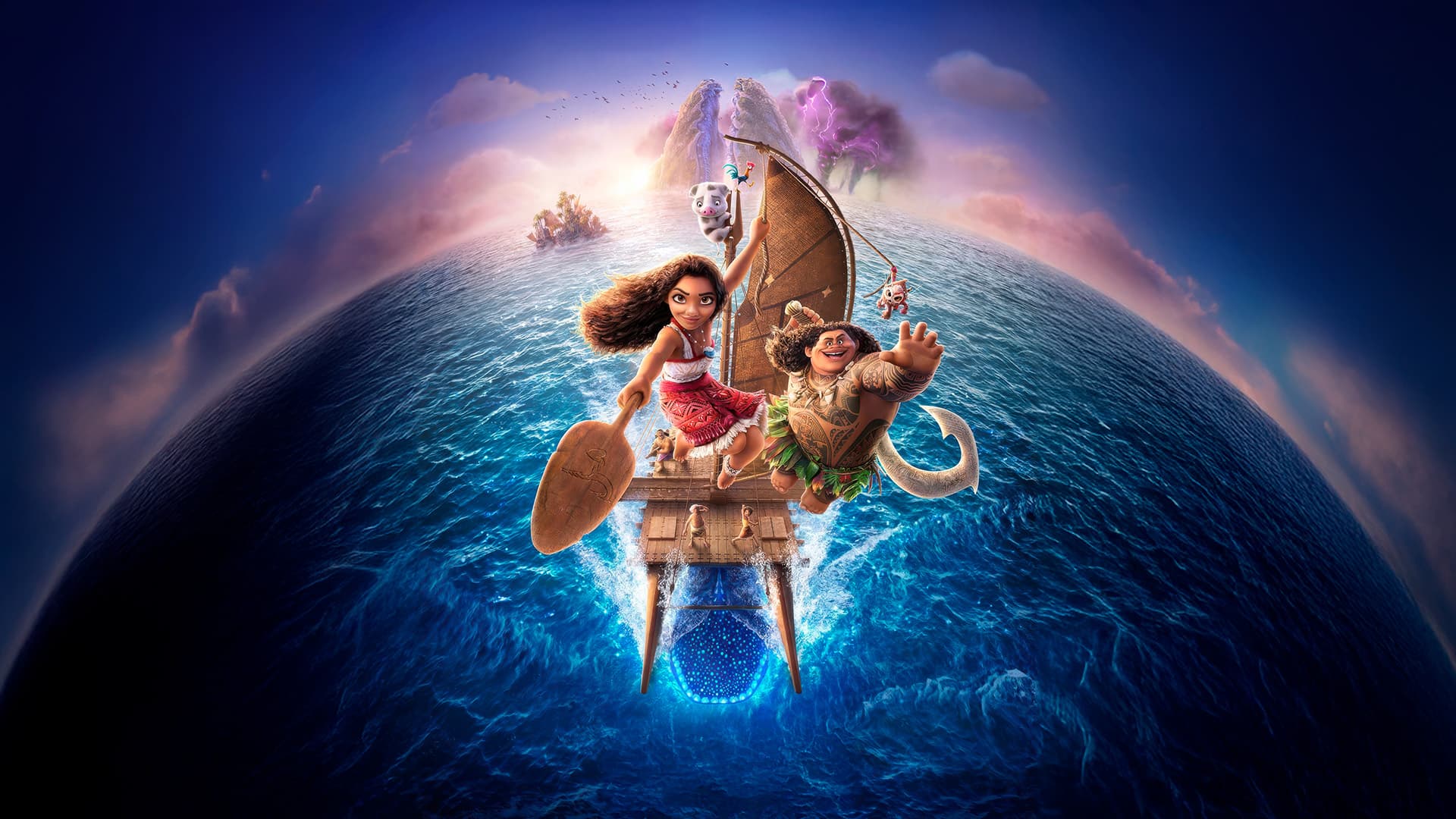

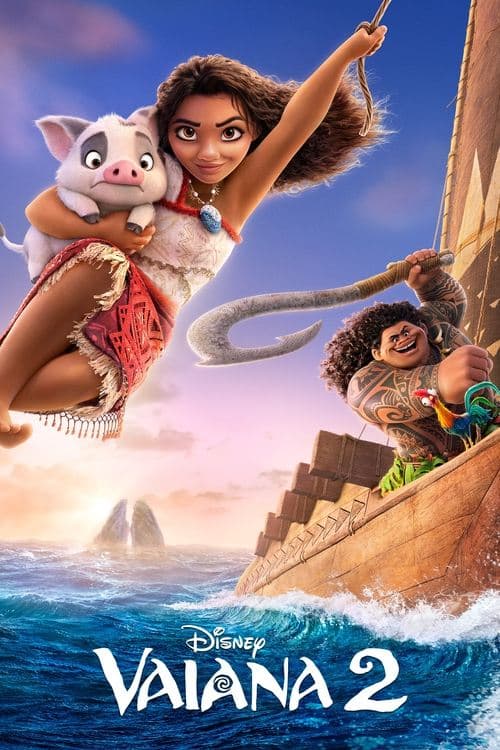
Moana 2
Moana 2
Your feedback improves this guide
Your feedback highlights guides that need a second look and keeps the rating trustworthy.
Does this age rating seem accurate to you?
Sign in to vote
Watch-outs
What this film brings
Content barometer
Violence
2/5
Moderate
Fear
3/5
Notable tension
Sexuality
0/5
None
Language
0/5
None
Narrative complexity
2/5
Moderate
Adult themes
0/5
None
Expert review
Moana 2 is an animated Disney sequel to the beloved Polynesian adventure, following a determined heroine who assembles a new crew to sail into uncharted waters and lift an ancient curse threatening her people. The film introduces a formidable divine antagonist, Nalo, the storm god, whose threat is tangible throughout: he can strike ships with lightning, and his presence drives several sequences of sustained tension at sea. These moments of peril, including giant eel attacks, violent thunderstorms and the climactic confrontation with Nalo, recur frequently enough to potentially unsettle younger or more sensitive children, even though the overall tone remains uplifting and hopeful. Parents of children under 6 are encouraged to watch alongside them, especially during storm and divine confrontation scenes, reassuring them that the crew stays united and that Moana always trusts her path.
Synopsis
After receiving an unexpected call from her wayfinding ancestors, Moana journeys alongside Maui and a new crew to the far seas of Oceania and into dangerous, long-lost waters for an adventure unlike anything she's ever faced.
Difficult scenes
Nalo's giant eels attack the crew's boats on multiple occasions. These creatures are large, fast and clearly presented as instruments of a malevolent god. The scenes are brief but can genuinely startle younger children, particularly those sensitive to threatening aquatic creatures. Nalo, the storm god, unleashes lightning strikes and violent tempests on the characters at sea. The visual staging emphasises the deity's devastating power and the mortal danger he poses to the crew, making these sequences noticeably more intense than the usual maritime adventures of a family Disney film. Maui is captured by Matangi, a visually imposing deity, and held in her lair. Although Matangi eventually becomes an ally, the capture sequence and the discovery of her domain can create genuine anxiety, especially because a familiar and protective character is shown in a vulnerable position. The vision of ancestor Tautai Vasa during Moana's inauguration presents an existential threat to an entire people: if the curse is not lifted, the tribe will perish. This narrative weight, stated explicitly, may affect children who are sensitive to themes of disappearance or the extinction of a community. Maui explicitly warns the crew that they will all die if the curse is not broken in time, recalling how Nalo once sank the island of Motofetou. This direct announcement of collective mortal danger, delivered by a trusted adult character, may leave a stronger impression on young viewers than a more abstract threat would.
Where to watch
No verified platform for the US market yet. We keep this section updated as availability changes.
Availability checked on Apr 01, 2026
About this title
- Format
- Feature film
- Year
- 2024
- Runtime
- 1h 40m
- Countries
- Canada, United States of America
- Original language
- EN
- Studios
- Walt Disney Animation Studios, Walt Disney Animation Studios
Content barometer
Violence
2/5
Moderate
Fear
3/5
Notable tension
Sexuality
0/5
None
Language
0/5
None
Narrative complexity
2/5
Moderate
Adult themes
0/5
None
Expert review
Moana 2 is an animated Disney sequel to the beloved Polynesian adventure, following a determined heroine who assembles a new crew to sail into uncharted waters and lift an ancient curse threatening her people. The film introduces a formidable divine antagonist, Nalo, the storm god, whose threat is tangible throughout: he can strike ships with lightning, and his presence drives several sequences of sustained tension at sea. These moments of peril, including giant eel attacks, violent thunderstorms and the climactic confrontation with Nalo, recur frequently enough to potentially unsettle younger or more sensitive children, even though the overall tone remains uplifting and hopeful. Parents of children under 6 are encouraged to watch alongside them, especially during storm and divine confrontation scenes, reassuring them that the crew stays united and that Moana always trusts her path.
Synopsis
After receiving an unexpected call from her wayfinding ancestors, Moana journeys alongside Maui and a new crew to the far seas of Oceania and into dangerous, long-lost waters for an adventure unlike anything she's ever faced.
Difficult scenes
Nalo's giant eels attack the crew's boats on multiple occasions. These creatures are large, fast and clearly presented as instruments of a malevolent god. The scenes are brief but can genuinely startle younger children, particularly those sensitive to threatening aquatic creatures. Nalo, the storm god, unleashes lightning strikes and violent tempests on the characters at sea. The visual staging emphasises the deity's devastating power and the mortal danger he poses to the crew, making these sequences noticeably more intense than the usual maritime adventures of a family Disney film. Maui is captured by Matangi, a visually imposing deity, and held in her lair. Although Matangi eventually becomes an ally, the capture sequence and the discovery of her domain can create genuine anxiety, especially because a familiar and protective character is shown in a vulnerable position. The vision of ancestor Tautai Vasa during Moana's inauguration presents an existential threat to an entire people: if the curse is not lifted, the tribe will perish. This narrative weight, stated explicitly, may affect children who are sensitive to themes of disappearance or the extinction of a community. Maui explicitly warns the crew that they will all die if the curse is not broken in time, recalling how Nalo once sank the island of Motofetou. This direct announcement of collective mortal danger, delivered by a trusted adult character, may leave a stronger impression on young viewers than a more abstract threat would.