
Turning Red
Does this age rating seem accurate to you?
Detailed parental analysis
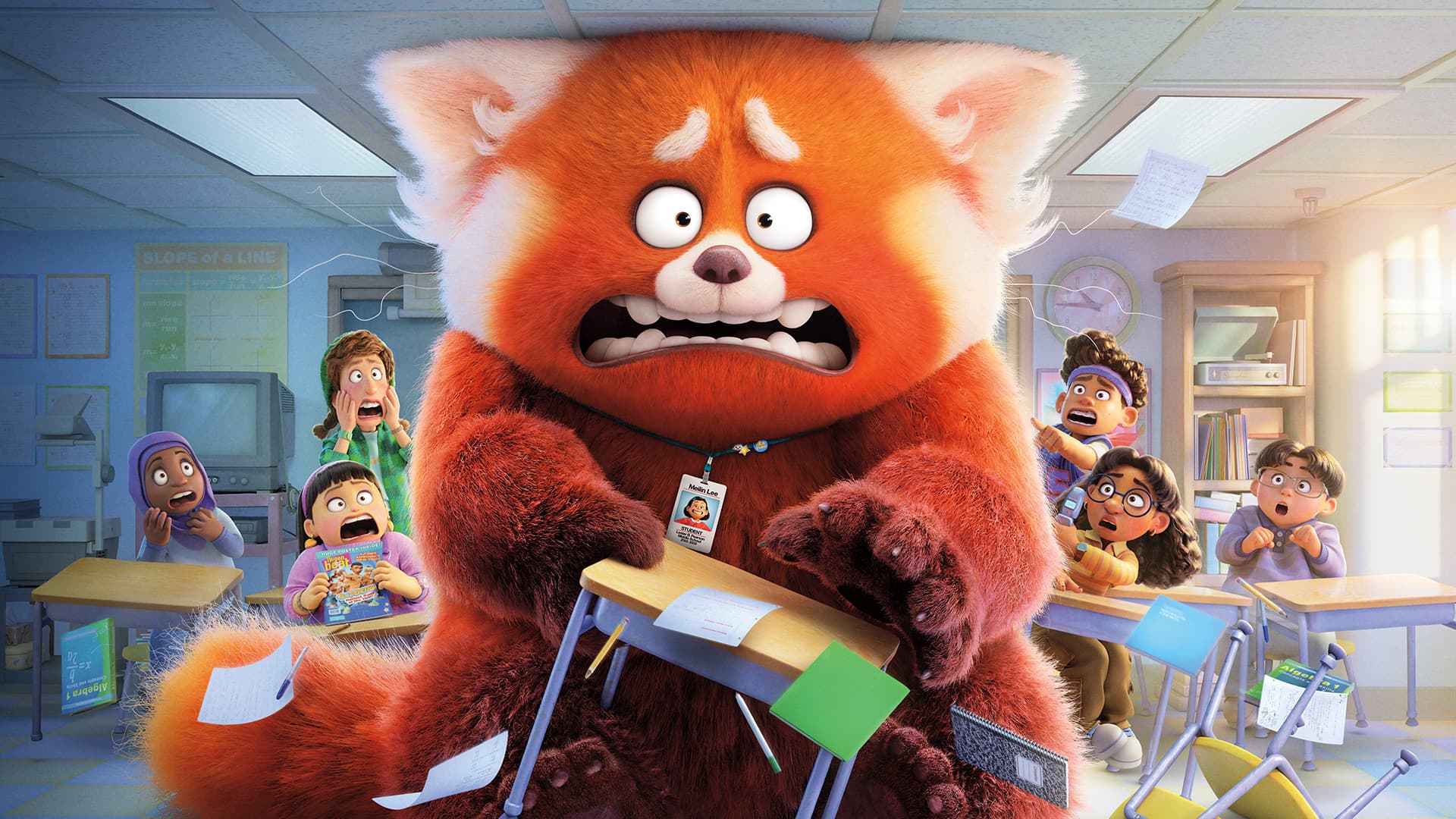
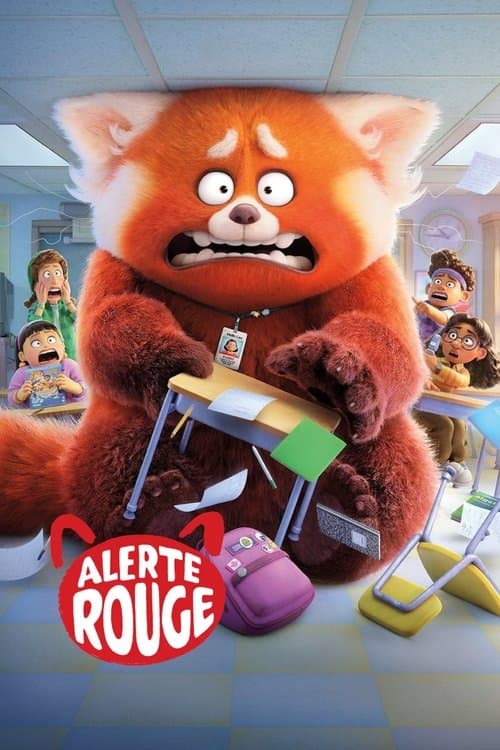
Turning Red is a bright and spirited fantasy comedy, driven by assured adolescent energy and colourful aesthetics. The plot follows Meilin, a thirteen-year-old girl who transforms into a giant red panda whenever she loses control of her emotions, a transparent metaphor for puberty and the passage into adulthood. The film primarily targets pre-teen and teenage girls, but its layer of commentary on intergenerational family dynamics clearly speaks to parents as well. It is a Pixar production, which carries the expectation of a certain narrative ambition, though the tone here is distinctly closer to middle school than the studio's usual universalism.
Underlying Values
The film's structural message is explicit and powerfully embodied: emotions, even intense or embarrassing ones, should not be repressed but accepted and integrated. The narrative values self-assertion in the face of family and cultural expectations, and presents unconditional obedience as a source of suffering passed from generation to generation. This positioning is nuanced: the film does not advocate for limitless individualism, but insists on the necessity of balance between fidelity to oneself and respect for bonds. That said, the scales tip clearly toward personal autonomy over parental authority, which may warrant a conversation with children about what it concretely means to find that balance, rather than simply rejecting adults' expectations.
Parental and Family Portrayals
The mother-daughter relationship is the emotional engine of the film. Meilin's mother is portrayed as overprotective, intrusive and unable to perceive her daughter as a person distinct from herself. The film takes care to humanise this character by revealing that this dynamic is itself inherited from a wound passed down by the grandmother, which avoids pure caricature. Yet the maternal figure remains antagonistic for much of the narrative, and it is indeed liberation from her grip that constitutes the film's central narrative victory. The father is gentle and understated, with no decisive role. For a child, this portrayal can foster useful reflection on forms of love that suffocate, provided the parent accompanies the viewing rather than letting the film decide alone.
Sex and Nudity
Puberty is addressed both directly and through metaphor. The transformation into a panda clearly functions as an allegory for first menstruation and bodily changes: the scene in which the mother arrives at school with sanitary pads is its most explicit illustration and most likely to embarrass a child or pre-teen in public. Characters express romantic feelings for members of a boys band and for a boy from the neighbourhood. Brief drawings with suggestive character are seen, made by Meilin depicting a male figure. A dance sequence includes a position evoking twerking. The whole remains within an assumed adolescent register, without nudity or explicit sexuality, but the film is not suitable for very young children precisely because it addresses these subjects frontally, with the intention of normalising them.
Discrimination
Meilin's mother embodies insistently the stereotype of the authoritarian and overprotective Asian mother. The film makes her its central conflictual character, and even though the narrative seeks to explain this attitude through transgenerational trauma, the portrayal remains pronounced and identifiable as caricature to an outside eye. The film has elicited contrasting reactions on this point: families of Asian origin have often expressed genuine feelings of recognition, whilst others have noted the risk of reinforcing an already widely circulating cliché. This is not a subject to ignore, and it can be the object of an interesting discussion with a child about the difference between authentic representation and stereotype.
Violence
Violence is light and of a comic or fantastical order. There are a few sequences in which the mother or Meilin, in panda form, causes damage or briefly attacks other characters, always in the exaggerated register typical of animated comedy. A nightmare scene involving red pandas may startle younger children. Nothing troubling for a pre-teen, but worth taking into account for children under eight.
Language
The film contains a few mild swearwords in English, some of which carry over into the French translation depending on the version watched. The terms flagged include minor insults such as "perv", "jerkwad" or "psycho", and a fleeting mention of drugs in a song. The register remains well below a standard teen film and does not constitute a notable concern for parents.
Strengths
Turning Red is one of the rare mainstream animated films to address female puberty without evasion and without condescension, which gives it genuine pedagogical value for pre-teens. The writing is lively, witty and precise in its rendering of the emotional intensity particular to adolescence. The construction of the mother-daughter relationship, despite its sometimes schematic quality, offers a convincing reading of how wounds from one generation are transmitted to the next. The film also manages to make its secondary characters engaging without reducing them to mere supporting roles, and friendship between girls is represented with genuine warmth. The whole offers material for conversation without ever becoming didactic.
Age recommendation and discussion points
The film is suitable from around ten years old for calm viewing, with parental accompaniment recommended for ten to twelve year-olds in order to contextualise the messages about family authority and puberty. Two angles of discussion deserve to be opened after viewing: first, what it concretely means to "listen to oneself" without ignoring the expectations of those who love us; second, how to distinguish an authentic cultural representation from a stereotype, and why that distinction matters.
Synopsis
Thirteen-year-old Mei is experiencing the awkwardness of being a teenager with a twist – when she gets too excited, she transforms into a giant red panda.
About this title
- Format
- Feature film
- Year
- 2022
- Runtime
- 1h 40m
- Countries
- United States of America
- Original language
- EN
- Studios
- Pixar
Content barometer
- Violence1/5Mild
- Fear2/5A few scenes
- Sexuality2/5Mild
- Language1/5Mild
- Narrative complexity2/5Moderate
- Adult themes0/5None
Watch-outs
- Ethnic or racial stereotypes
Values conveyed
- Friendship
- Acceptance of difference
- Autonomy
- self acceptance
- family
- emotions