
The Tunnel to Summer, the Exit of Goodbyes
夏へのトンネル、さよならの出口
The Tunnel to Summer, the Exit of Goodbyes
夏へのトンネル、さよならの出口
Your feedback improves this guide
Your feedback highlights guides that need a second look and keeps the rating trustworthy.
Does this age rating seem accurate to you?
Sign in to vote
Watch-outs
What this film brings
Content barometer
Violence
2/5
Moderate
Fear
2/5
A few scenes
Sexuality
1/5
Allusions
Language
1/5
Mild
Narrative complexity
2/5
Moderate
Adult themes
2/5
Present
Expert review
"The Tunnel to Summer, the Exit of Goodbyes" is a 2022 Japanese animated film with a distinctly melancholic and dreamlike tone, following two high school students connected by a supernatural tunnel that distorts time. Sensitive elements include the accidental death of the protagonist's younger sister, depicted in detail as a source of ongoing guilt and trauma, an alcoholic and verbally abusive father who at one point demands his son sacrifice his own life, a physical fight between classmates, and the heroine's abandonment by her parents. These themes are central and recur throughout the film with genuine emotional weight, though the visual treatment remains restrained and never gratuitous. Parents accompanying children under 12 are encouraged to be ready to discuss grief, guilt, parental failure, and self-sacrifice, subjects that require a degree of emotional maturity to fully process.
Synopsis
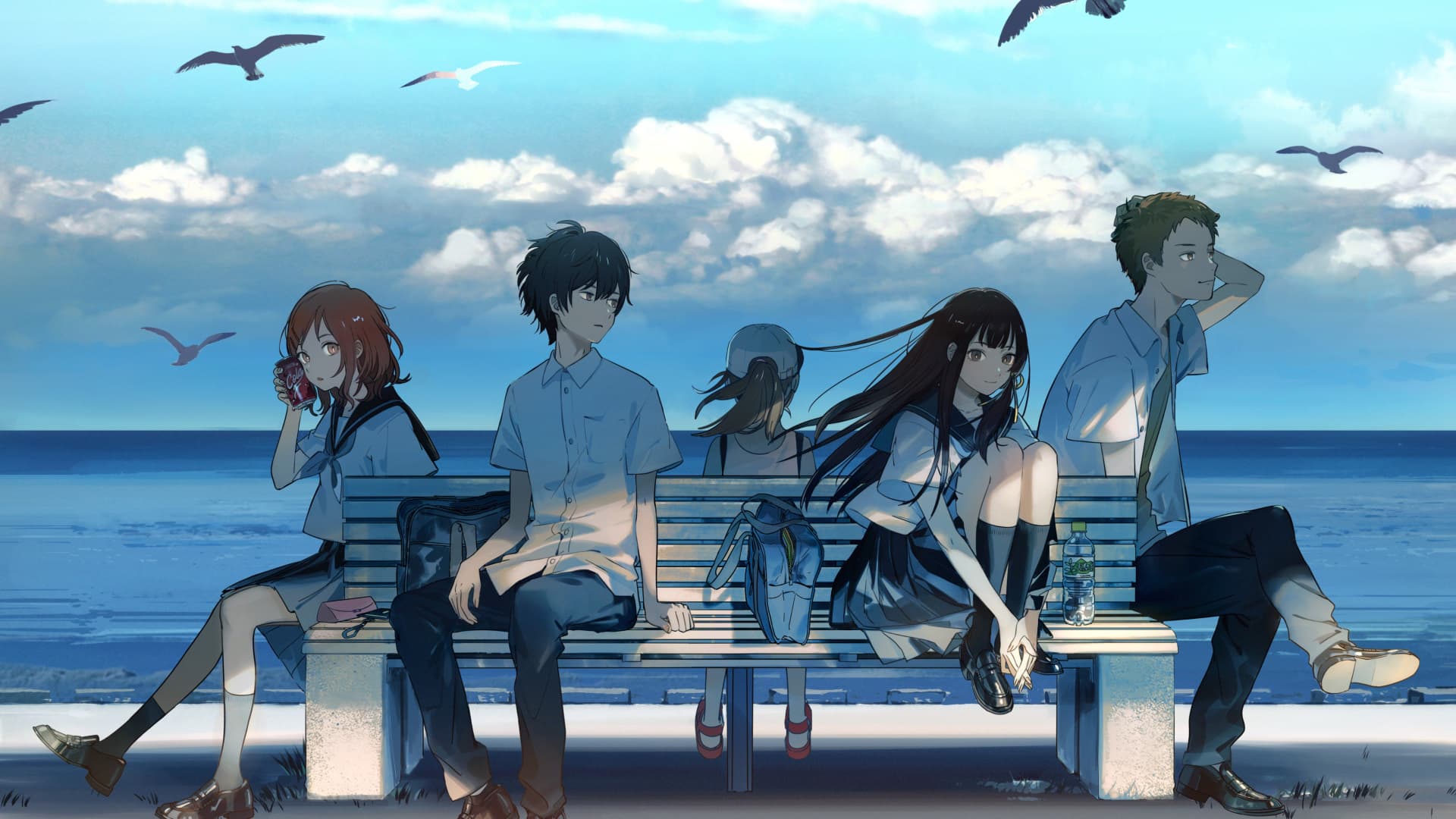
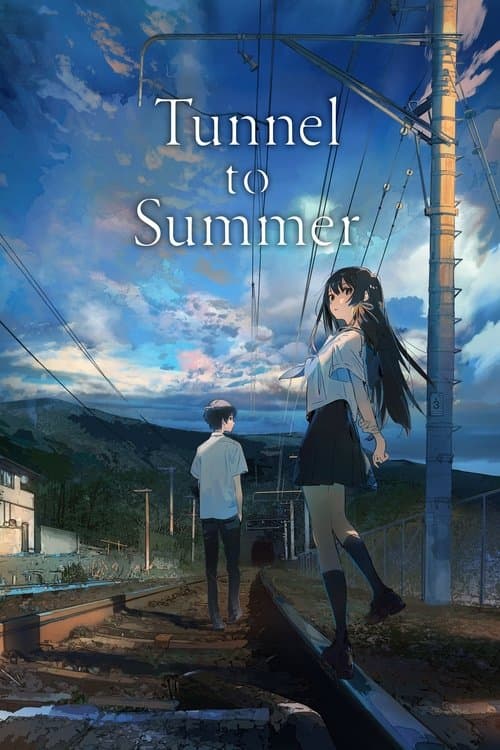
Urashima Tunnel – Once you enter that tunnel, you can get whatever you want, but at a price. Kaoru Tohno, who seems to have an elusive personality and traumatic past, and Anzu Hanashiro, who is struggling to reconcile her ideal image and true-to-heart attitude, team up to investigate the Urashima Tunnel and get what they want. This is an unforgettable summer story of nostalgia and sprinting in a remote countryside.
Difficult scenes
Kaoru's father, visibly drunk, verbally attacks his son and blames him for his sister Karen's death, then literally orders him to bring her back to life even at the cost of his own. This scene of intense psychological parental violence is brief but particularly unsettling, especially for children sensitive to the protective parental figure. The circumstances of Karen's death are gradually revealed throughout the film: she fell from a tree while trying to catch a beetle as a way to make up with her brother after an argument, and Kaoru carries deep guilt over this accident. This narrative of guilt tied to a child's death is emotionally heavy and remains central to the entire story. Anzu discloses that her parents abandoned both her and her grandfather after she expressed her wish to become a manga artist. This explicit parental rejection, presented without softening, may resonate painfully with children seeking family validation. A classmate harasses and provokes Anzu shortly after her arrival at school, which culminates in Anzu striking her in front of the entire class. The bullying scene and the physical retaliation are handled with a certain bluntness that may catch younger viewers off guard.
Where to watch
No verified platform for the US market yet. We keep this section updated as availability changes.
Availability checked on Apr 01, 2026
About this title
- Format
- Feature film
- Year
- 2022
- Runtime
- 1h 23m
- Countries
- Japan
- Original language
- JA
- Directed by
- Tomohisa Taguchi
- Main cast
- Ouji Suzuka, Marie Iitoyo, Tasuku Hatanaka, Arisa Komiya, Haruka Terui, Rikiya Koyama, Seiran Kobayashi, Chiko Mizumori, Hiroto Kazuki, Taiki Kurokawa
- Studios
- CLAP, Pony Canyon, Shogakukan, Sotsu, STUDIO MAUSU, Kansai Television
Content barometer
Violence
2/5
Moderate
Fear
2/5
A few scenes
Sexuality
1/5
Allusions
Language
1/5
Mild
Narrative complexity
2/5
Moderate
Adult themes
2/5
Present
Expert review
"The Tunnel to Summer, the Exit of Goodbyes" is a 2022 Japanese animated film with a distinctly melancholic and dreamlike tone, following two high school students connected by a supernatural tunnel that distorts time. Sensitive elements include the accidental death of the protagonist's younger sister, depicted in detail as a source of ongoing guilt and trauma, an alcoholic and verbally abusive father who at one point demands his son sacrifice his own life, a physical fight between classmates, and the heroine's abandonment by her parents. These themes are central and recur throughout the film with genuine emotional weight, though the visual treatment remains restrained and never gratuitous. Parents accompanying children under 12 are encouraged to be ready to discuss grief, guilt, parental failure, and self-sacrifice, subjects that require a degree of emotional maturity to fully process.
Synopsis
Urashima Tunnel – Once you enter that tunnel, you can get whatever you want, but at a price. Kaoru Tohno, who seems to have an elusive personality and traumatic past, and Anzu Hanashiro, who is struggling to reconcile her ideal image and true-to-heart attitude, team up to investigate the Urashima Tunnel and get what they want. This is an unforgettable summer story of nostalgia and sprinting in a remote countryside.
Difficult scenes
Kaoru's father, visibly drunk, verbally attacks his son and blames him for his sister Karen's death, then literally orders him to bring her back to life even at the cost of his own. This scene of intense psychological parental violence is brief but particularly unsettling, especially for children sensitive to the protective parental figure. The circumstances of Karen's death are gradually revealed throughout the film: she fell from a tree while trying to catch a beetle as a way to make up with her brother after an argument, and Kaoru carries deep guilt over this accident. This narrative of guilt tied to a child's death is emotionally heavy and remains central to the entire story. Anzu discloses that her parents abandoned both her and her grandfather after she expressed her wish to become a manga artist. This explicit parental rejection, presented without softening, may resonate painfully with children seeking family validation. A classmate harasses and provokes Anzu shortly after her arrival at school, which culminates in Anzu striking her in front of the entire class. The bullying scene and the physical retaliation are handled with a certain bluntness that may catch younger viewers off guard.