


Trick or Treaters
Die drei Räuber


Trick or Treaters
Die drei Räuber
Your feedback improves this guide
Your feedback highlights guides that need a second look and keeps the rating trustworthy.
Does this age rating seem accurate to you?
Sign in to vote
Watch-outs
What this film brings
Content barometer
Violence
1/5
Mild
Fear
2/5
A few scenes
Sexuality
0/5
None
Language
0/5
None
Narrative complexity
1/5
Accessible
Adult themes
0/5
None
Detailed parental analysis
ⓘ- Underlying Values
- Parental and Family Portrayals
- Violence
- Social Themes
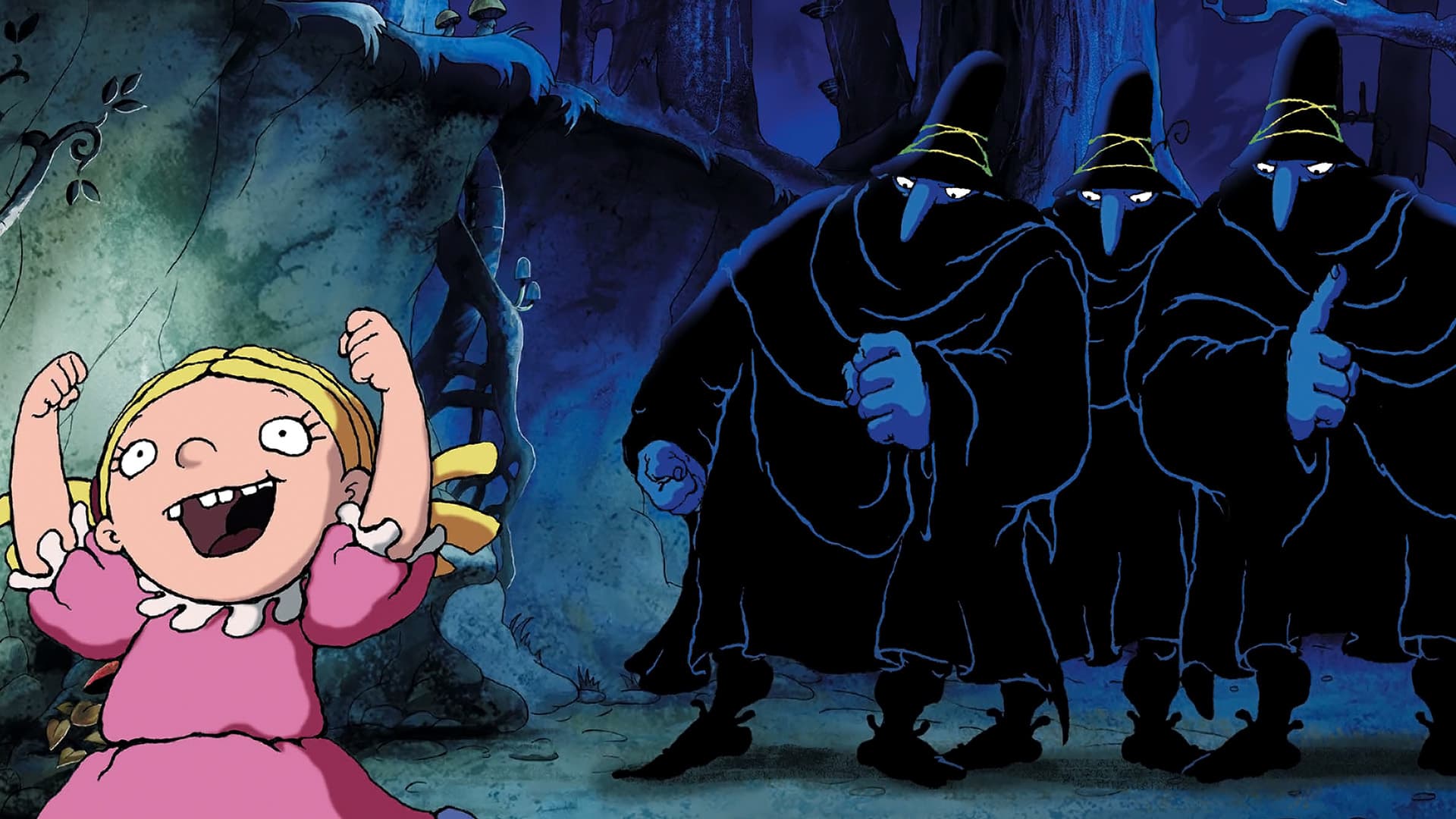
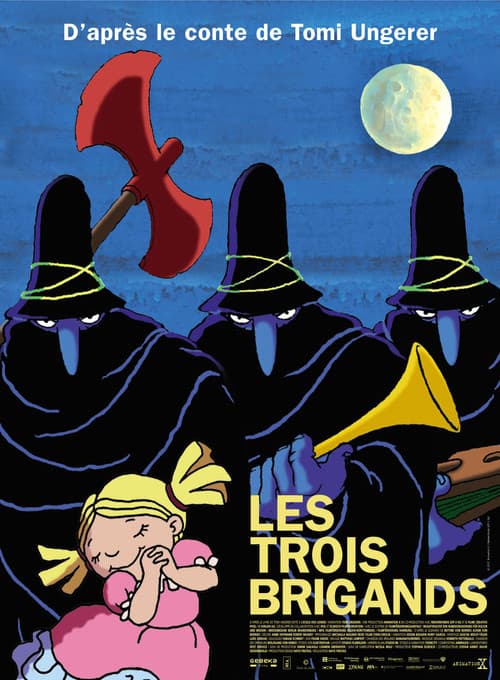
The Three Bandits is an animated film with a resolutely dark atmosphere, steeped in deep blacks and nocturnal blues, tempered by benevolent humour and a luminous conclusion. The plot follows three fearsome brigands whose lives are turned upside down the day they capture a resourceful young orphan girl, Tiffany. The film is primarily aimed at young children from five years old onwards, with a sensibility that can equally move the adults accompanying them.
Underlying Values
The film constructs a non-Manichean moral framework with genuine narrative coherence: the brigands, initially terrifying, prove capable of profound transformation under the influence of a child's love and trust. This redemption is neither swift nor magical; it is rooted in concrete acts of generosity and sharing. In parallel, the narrative critiques the oppressive authority embodied by the orphanage director, who exploits the children and denies them any joy. The film thus teaches that authority deserves to be questioned when it denies dignity and pleasure, and that kindness can emerge where it was least expected. These two messages articulated together provide rich material for discussion with a child.
Parental and Family Portrayals
Tiffany's parents have died before the story begins, and their absence is treated with touching sobriety: the little girl speaks to them in the cemetery, without excessive dramatisation but without sugar-coating either. The family is reconstructed here in an adoptive and collective form, the brigands gradually becoming parental figures through choice and love rather than by blood. This is a rare representation of blended family in animated cinema for young audiences, treated with disarming sincerity.
Violence
The stagecoach attacks constitute the film's most spectacular sequences: blunderbuss, axe and bellows are brandished with panache, but without any depiction of physical injury, blood or suffering. The violence remains entirely stylised, almost burlesque, and generates no lasting anxiety. The dark atmosphere of the nocturnal forest may nevertheless impress the most sensitive children under five years old, less through violence than through the general visual climate.
Social Themes
The exploitation of children in the orphanage, forced to work the land in an austere setting, constitutes an explicit social critique visually made clear. It is not treated as an abstraction but as a reality shown on screen, which may prompt questions in a child about children's rights, forced labour and abusive figures of authority. The film does not over-explain but opens the way to conversation.
Strengths
The film draws its strength from its faithfulness to the graphic universe of Tomi Ungerer's book, whose flat areas of dark colour and angular silhouettes create an immediately recognisable visual identity, visually coherent from beginning to end. The narrative dares to portray a child as an agent of her own situation: Tiffany is not a passive victim but an intelligent child who observes, understands and acts, which is rare enough to be remarked upon. The humour that permeates the narrative without ever fully defusing it allows the dark atmosphere to remain bearable for the youngest viewers. The narrator's voice, recognisable and singular in its accent, imparts to the film a literary warmth close to oral storytelling.
Age recommendation and discussion points
The film is suitable from five years old, with parental presence recommended for children of this age most sensitive to nocturnal atmospheres. Two angles of discussion merit exploration after viewing: why does Tiffany trust the brigands when they frighten her at first, and what makes someone truly bad or truly good? The question of the orphanage and forced labour can also be addressed simply: is an adult always right simply because they are an adult?
Synopsis
Three robbers pilfer from the countryside until they are charmed by a young orphan girl.
Where to watch
No verified platform for the US market yet. We keep this section updated as availability changes.
Availability checked on Apr 01, 2026
About this title
- Format
- Feature film
- Year
- 2007
- Runtime
- 1h 19m
- Countries
- Germany
- Original language
- DE
- Studios
- X Filme Creative Pool
Content barometer
Violence
1/5
Mild
Fear
2/5
A few scenes
Sexuality
0/5
None
Language
0/5
None
Narrative complexity
1/5
Accessible
Adult themes
0/5
None
Detailed parental analysis
ⓘ- Underlying Values
- Parental and Family Portrayals
- Violence
- Social Themes
The Three Bandits is an animated film with a resolutely dark atmosphere, steeped in deep blacks and nocturnal blues, tempered by benevolent humour and a luminous conclusion. The plot follows three fearsome brigands whose lives are turned upside down the day they capture a resourceful young orphan girl, Tiffany. The film is primarily aimed at young children from five years old onwards, with a sensibility that can equally move the adults accompanying them.
Underlying Values
The film constructs a non-Manichean moral framework with genuine narrative coherence: the brigands, initially terrifying, prove capable of profound transformation under the influence of a child's love and trust. This redemption is neither swift nor magical; it is rooted in concrete acts of generosity and sharing. In parallel, the narrative critiques the oppressive authority embodied by the orphanage director, who exploits the children and denies them any joy. The film thus teaches that authority deserves to be questioned when it denies dignity and pleasure, and that kindness can emerge where it was least expected. These two messages articulated together provide rich material for discussion with a child.
Parental and Family Portrayals
Tiffany's parents have died before the story begins, and their absence is treated with touching sobriety: the little girl speaks to them in the cemetery, without excessive dramatisation but without sugar-coating either. The family is reconstructed here in an adoptive and collective form, the brigands gradually becoming parental figures through choice and love rather than by blood. This is a rare representation of blended family in animated cinema for young audiences, treated with disarming sincerity.
Violence
The stagecoach attacks constitute the film's most spectacular sequences: blunderbuss, axe and bellows are brandished with panache, but without any depiction of physical injury, blood or suffering. The violence remains entirely stylised, almost burlesque, and generates no lasting anxiety. The dark atmosphere of the nocturnal forest may nevertheless impress the most sensitive children under five years old, less through violence than through the general visual climate.
Social Themes
The exploitation of children in the orphanage, forced to work the land in an austere setting, constitutes an explicit social critique visually made clear. It is not treated as an abstraction but as a reality shown on screen, which may prompt questions in a child about children's rights, forced labour and abusive figures of authority. The film does not over-explain but opens the way to conversation.
Strengths
The film draws its strength from its faithfulness to the graphic universe of Tomi Ungerer's book, whose flat areas of dark colour and angular silhouettes create an immediately recognisable visual identity, visually coherent from beginning to end. The narrative dares to portray a child as an agent of her own situation: Tiffany is not a passive victim but an intelligent child who observes, understands and acts, which is rare enough to be remarked upon. The humour that permeates the narrative without ever fully defusing it allows the dark atmosphere to remain bearable for the youngest viewers. The narrator's voice, recognisable and singular in its accent, imparts to the film a literary warmth close to oral storytelling.
Age recommendation and discussion points
The film is suitable from five years old, with parental presence recommended for children of this age most sensitive to nocturnal atmospheres. Two angles of discussion merit exploration after viewing: why does Tiffany trust the brigands when they frighten her at first, and what makes someone truly bad or truly good? The question of the orphanage and forced labour can also be addressed simply: is an adult always right simply because they are an adult?
Synopsis
Three robbers pilfer from the countryside until they are charmed by a young orphan girl.