Toy Story 3
Does this age rating seem accurate to you?
Detailed parental analysis
Toy Story 3 is an animated adventure film with an emotionally dense tone, darker and more intense than the two previous instalments in the Pixar franchise. The plot follows a group of toys who, abandoned on the eve of their owner's transition to adulthood, find themselves confronted with a hostile world and must find their way home. The film appears on the surface to be aimed at young children, but its true emotional depth and certain sequences speak more directly to pre-adolescents and nostalgic adults.
Violence
The film carries a strong structural message about accepting life's transitions: growing up means leaving behind things we love, and this loss is presented as inevitable and something to be experienced with grace. Loyalty and friendship are the cardinal values of the narrative, illustrated in concrete and non-moralising ways. The film avoids the trap of sentimental conformism by not offering a simple happy ending: the sense of belonging and collective identity of the toys is maintained, but their world as they knew it cannot be restored. It is a film that speaks openly about grief for the past without presenting it as a defeat.
Underlying Values
The film carries a strong structural message about accepting life's transitions: growing up means leaving behind things we love, and this loss is presented as inevitable and something to be experienced with grace. Loyalty and friendship are the cardinal values of the narrative, illustrated in concrete and non-moralising ways. The film avoids the trap of sentimental conformism by not offering a simple happy ending: the sense of belonging and collective identity of the toys is maintained, but their world as they knew it cannot be restored. It is a film that speaks openly about grief for the past without presenting it as a defeat.
Discrimination
Two elements merit attention from parents. The character of Ken is treated recurrently as a comic figure based on his effeminate nature, his concern with clothing and his relationship with high heels. The film ultimately values Ken for other reasons, but the jokes rest on a gender stereotype that can easily go unnoticed. Furthermore, the character of Big Baby is referred to using the term 'mongo', a derogatory term used to designate people with Down syndrome, without this usage ever being questioned within the narrative. These two points, discreet in the overall economy of the film, merit being named and discussed with a child.
Parental and Family Portrayals
The parental figure is virtually absent from the narrative in a direct sense, but the film rests entirely on the attachment relationship between Andy and his toys as a metaphor for the filial bond. Andy's mother appears briefly and plays a functional role in the narrative. What matters narratively is Andy's passage into adulthood and the way his toys, like loving parents, must learn to let him go. It is a subtle and rather powerful emotional reversal that may resonate differently depending on the age of the child viewer.
Strengths
Toy Story 3 is a film of rare narrative mastery within mainstream animated cinema. It addresses the end of childhood, grief and legacy with an emotional honesty that does not condescend to its young audience whilst deeply moving adults. The dramatic construction is rigorous, secondary characters are used with economy and efficiency, and the final sequence manages to be heartbreaking without being manipulative. From an educational standpoint, the film offers a concrete and sensitive entry point for discussing death, change, loss and loyalty in adversity with a child, without ever resorting to moralising discourse.
Age recommendation and discussion points
The film is not recommended for children under 6 years old due to the length and intensity of certain frightening sequences, and can be watched calmly from age 7 onwards with an available adult to accompany the emotions. Two angles are worth exploring after the film: asking the child what they think of Andy's choice to part with his toys, and what this evokes in their own life, and returning to the word used to designate Big Baby in order to explain why certain terms hurt real people.
Synopsis
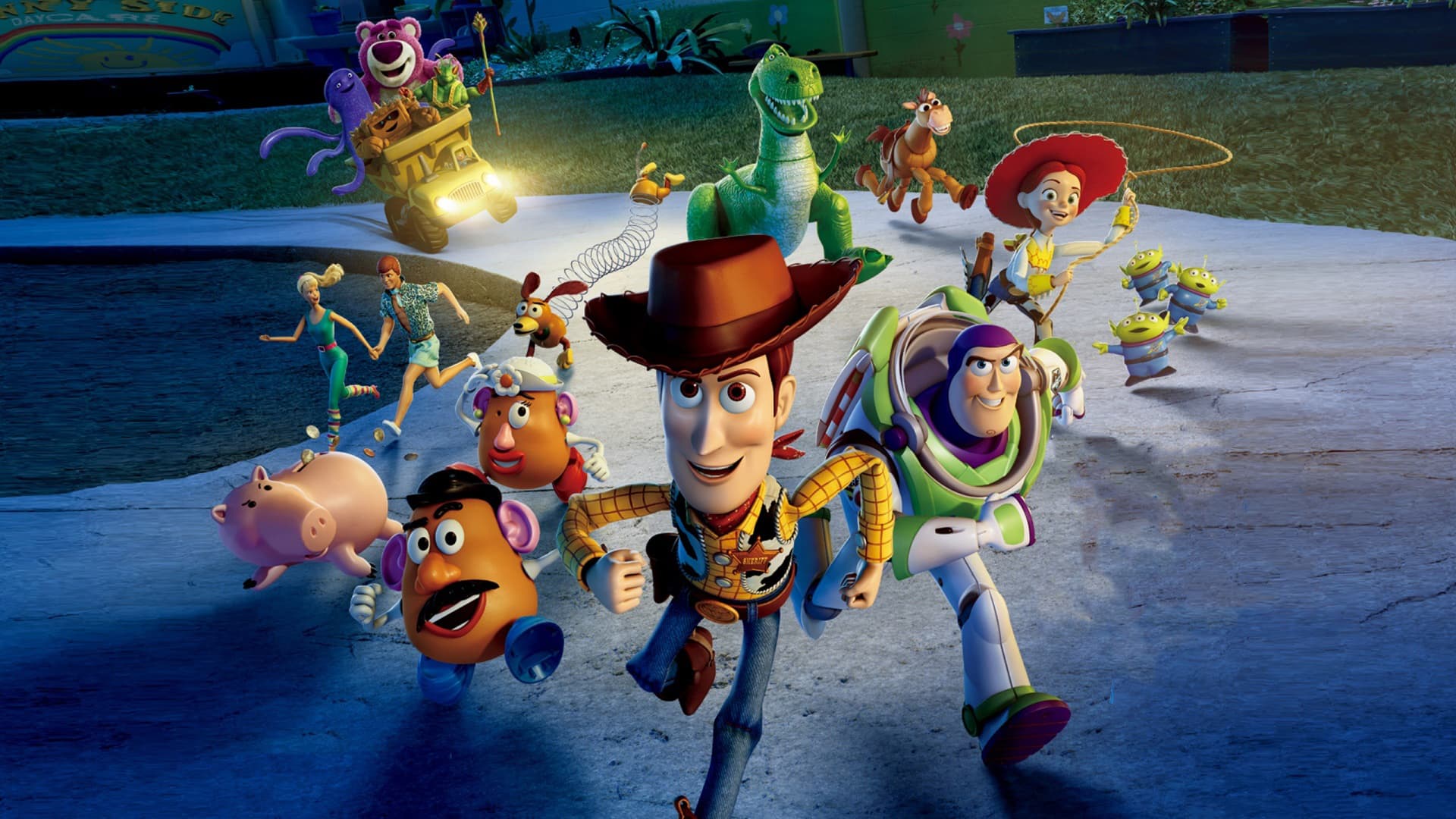
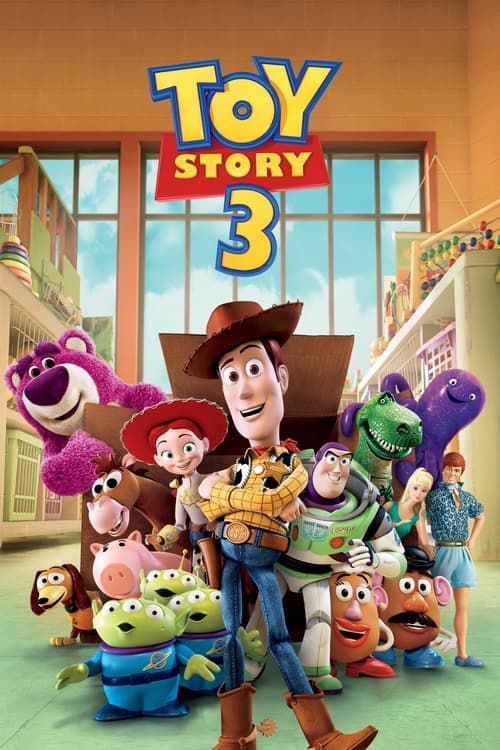
Woody, Buzz, and the rest of Andy's toys haven't been played with in years. With Andy about to go to college, the gang find themselves accidentally left at a nefarious day care center. The toys must band together to escape and return home to Andy.
About this title
- Format
- Feature film
- Year
- 2010
- Runtime
- 1h 43m
- Countries
- United States of America
- Original language
- EN
- Studios
- Pixar
Content barometer
- Violence3/5Notable
- Fear4/5Intense
- Sexuality0/5None
- Language1/5Mild
- Narrative complexity2/5Moderate
- Adult themes0/5None