
Toy Story
Does this age rating seem accurate to you?
Detailed parental analysis
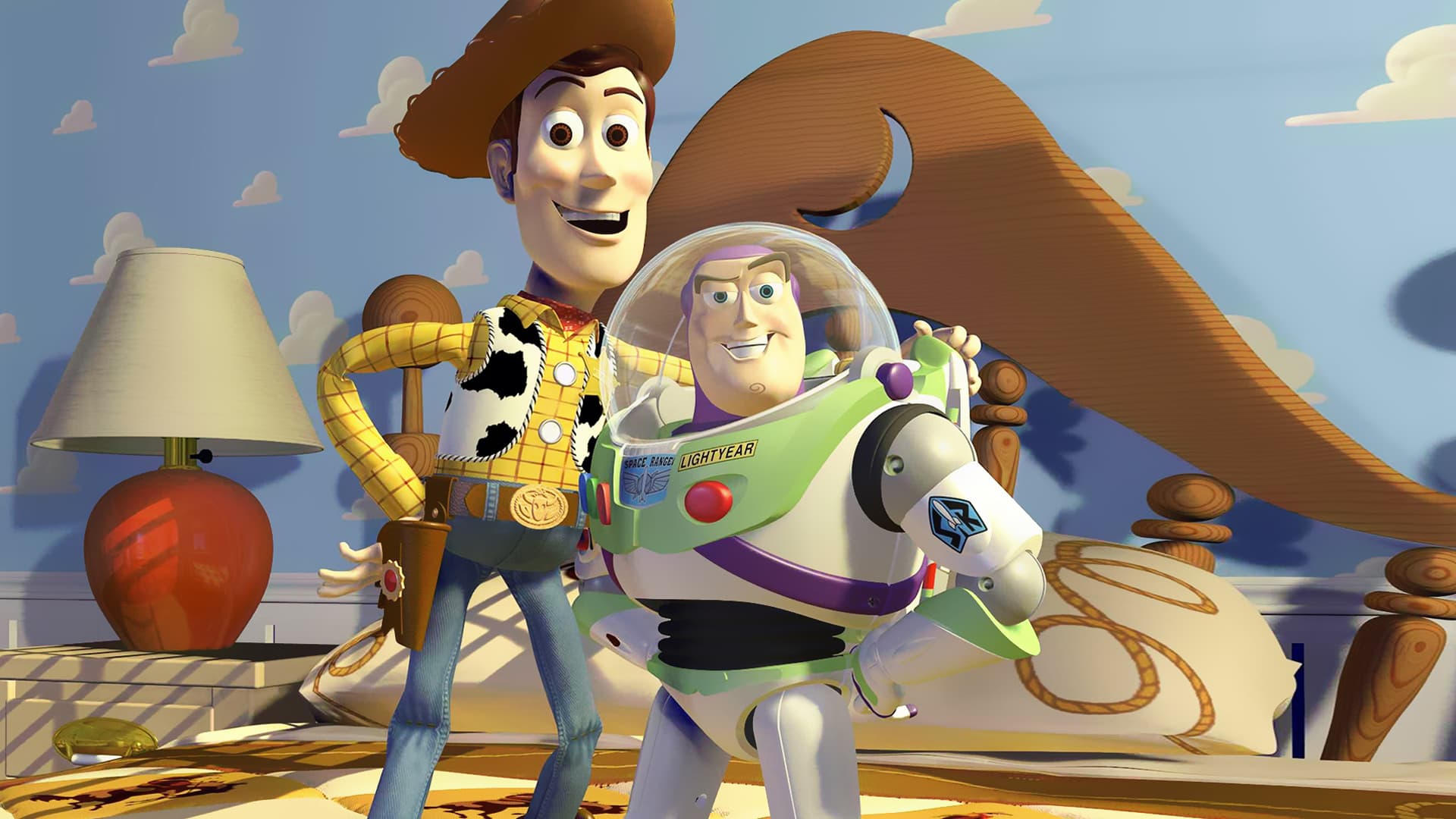
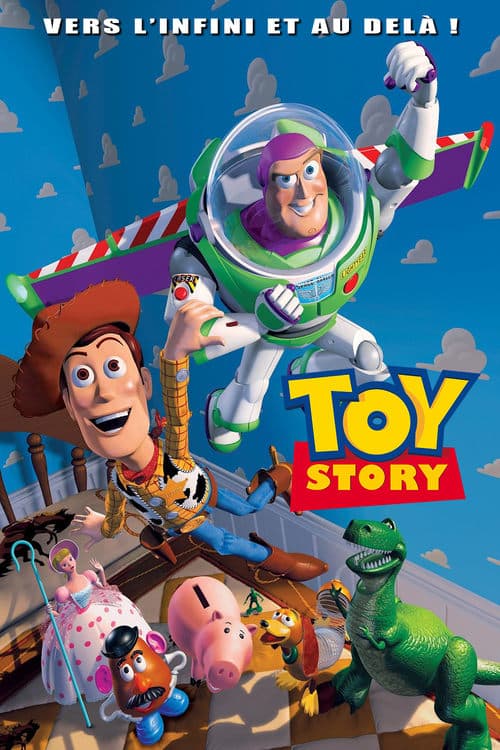
Toy Story is an adventure and comedy film with an overall joyful atmosphere, punctuated by sequences that are genuinely distressing for younger viewers. The story follows Woody, a child's favourite toy, whose place is threatened by the arrival of a new high-tech toy, Buzz Lightyear. The film is a Pixar production designed for school-age children, but its humour and themes resonate with adults as well.
Violence
The most notable violence in the film is concentrated in scenes involving Sid, a neighbour who mutilates, decapitates and grotesquely modifies toys, burns them with a magnifying glass or attaches them to rockets. These sequences, whilst lacking blood or realistic gore, carry genuine visual and emotional intensity that can deeply disturb children under five or six years of age. The hybrid and misshapen creatures that populate Sid's bedroom constitute some of the most striking imagery in the film. Tension is also sustained through chase scenes, falls and moments of peril for the main characters. The violence is neither glorified nor gratuitous: Sid is clearly presented as an antagonist whose behaviour is problematic, and the narrative resolution does not involve revenge but rather fear turned back against himself.
Underlying Values
The film constructs its narrative around an arc of jealousy and rivalry that progressively transforms into friendship and solidarity. The central message is sound: an individual's worth is not measured by technical prowess or novelty, and accepting one's own limitations is a form of maturity. Less overtly, the film reproduces a logic of competition for the affection of a single child, which may implicitly normalise the idea that love is a scarce resource to be conquered. This mechanism merits discussion with children who might take it at face value.
Discrimination
The toy cast is almost exclusively male. Bo Peep is the only female figure given a role with dialogue, and she is principally confined to a love interest function for Woody. This imbalance is not commented upon in the film and may pass unnoticed, but it reproduces a classic pattern worth noting, particularly with young children who are building their frame of reference through what they see.
Sex and Nudity
The film contains a few light allusions aimed more at adults than children: a reference to 'laser envy' (jealousy over another's equipment), a joke involving the word 'hooker' used in an innocent sense, and mild flirtation between Woody and Bo Peep. These elements do not constitute a serious concern but signal a dual-level writing style, typical of Pixar productions.
Substances
One scene briefly shows Andy's father asleep surrounded by beer cans. The image is fleeting and uncommented, but it constitutes a passive representation of alcohol consumption in a family context.
Language
The language remains generally mild, with occasional terms such as 'dirtbag', 'idiot' or 'shut up', and an allusion to a coarse word left unspoken. Nothing excessive for the genre and intended audience.
Parental and Family Portrayals
Andy's mother is present, caring and involved, which anchors the film in a reassuring family setting. The father appears only once, asleep and passive, which constitutes a discreet but notable representation. The absence of an active paternal figure is a characteristic of the film, without the narrative thematising or interrogating it.
Strengths
Toy Story remains a remarkably constructed work whose narrative effectiveness has not aged. The writing of the Woody-Buzz duo rests on genuine character psychology: each has coherent motivations, credible development, and the resolution of their conflict is earned, not given. The film manages to address adult subjects, such as jealousy, fear of obsolescence and sense of identity, at a level accessible to children without patronising them. Emotionally, it skilfully balances tension, humour and warmth, making it a fitting introduction for accustoming children to narratives that do not resolve without effort. Its place in popular culture also makes it an object of transmission between generations.
Age recommendation and discussion points
The film is suitable from age six onwards, with genuine caution recommended for children of five and under, who are sensitive to scenes of toy mutilation and the monstrous creatures in Sid's bedroom. For serene and unreserved viewing, seven years is a more appropriate age. Two angles of discussion merit exploration after viewing: ask the child why Woody reacts so badly to Buzz's arrival, and what this says about jealousy and the fear of no longer being loved; then consider together whether it is normal that there are almost no girl toys in this story.
Synopsis
Led by Woody, Andy's toys live happily in his room until Andy's birthday brings Buzz Lightyear onto the scene. Afraid of losing his place in Andy's heart, Woody plots against Buzz. But when circumstances separate Buzz and Woody from their owner, the duo eventually learns to put aside their differences.
Where to watch
Availability checked on Apr 04, 2026
About this title
- Format
- Feature film
- Year
- 1995
- Runtime
- 1h 21m
- Countries
- United States of America
- Original language
- EN
- Directed by
- John Lasseter
- Main cast
- Tom Hanks, Tim Allen, Don Rickles, Jim Varney, Wallace Shawn, John Ratzenberger, Annie Potts, John Morris, Erik von Detten, Laurie Metcalf
- Studios
- Pixar
Content barometer
- Violence3/5Notable
- Fear3/5Notable tension
- Sexuality1/5Allusions
- Language1/5Mild
- Narrative complexity1/5Accessible
- Adult themes1/5Mild
Watch-outs
- Gender stereotypes
- Abuse
Values conveyed
- Courage
- Friendship
- Acceptance of difference
- Loyalty
- cooperation
- overcoming jealousy
- self-confidence
- solidarity