
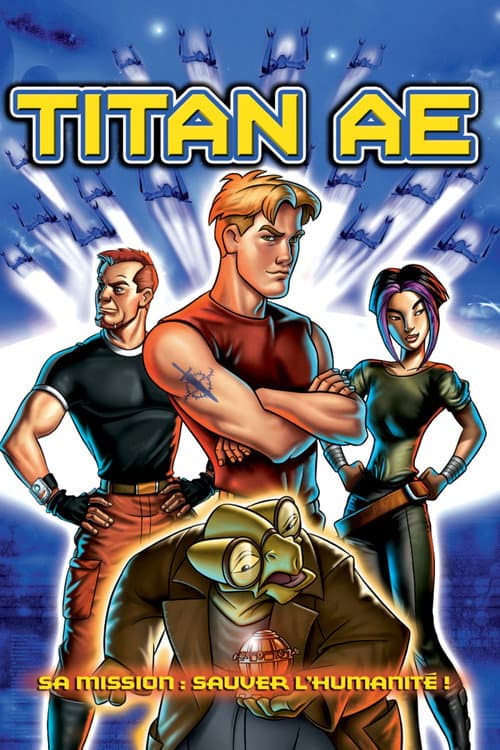
Titan A.E.
Does this age rating seem accurate to you?
Detailed parental analysis
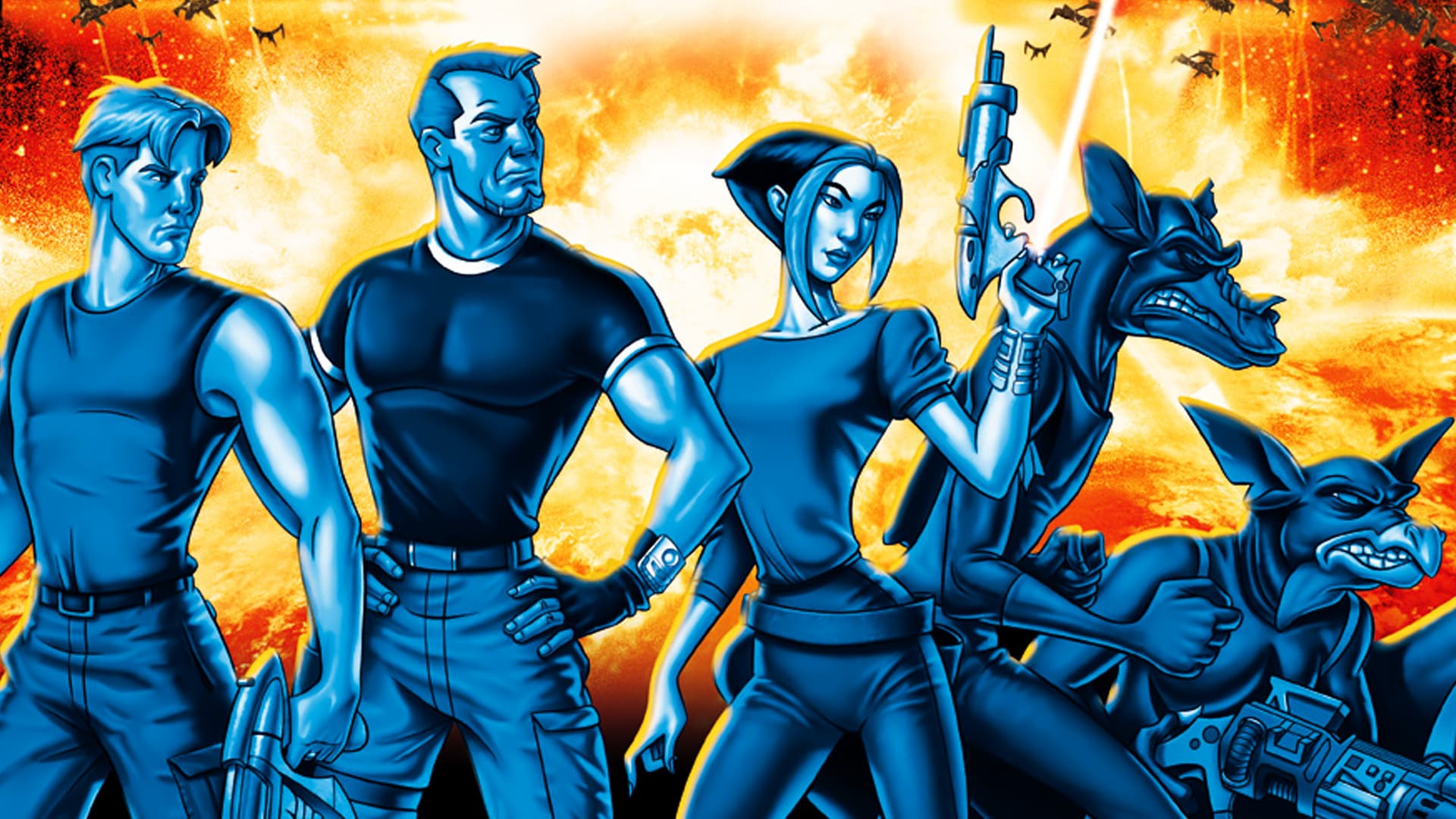
Titan A.E. is a science-fiction animated film with a post-apocalyptic atmosphere that is distinctly darker and more tense than the mainstream productions typically aimed at children. The plot follows a young man who, years after Earth's destruction by an alien race, discovers that he holds the key to rebuilding humanity. The film targets an audience of teenagers and young adults, not young children, despite its animated format.
Social Themes
The total destruction of Earth in the opening minutes establishes a resolutely post-apocalyptic register that never relents. Human survivors are reduced to wandering and enslaved conditions in a hostile universe, making forced migration, domination and extermination central, not peripheral themes. The film raises clearly the question of the relationship between power and destruction: those who dominate prefer to annihilate what threatens their supremacy rather than coexist. For a teenager, these images function as a concrete entry point into discussions about geopolitics, oppression and collective survival.
Violence
Violence is frequent and structural: space battles, hand-to-hand combat, laser fire, on-screen deaths. It is neither gratuitous nor indulgent, but its omnipresence creates sustained tension throughout the narrative. The film does not attempt to shield the viewer from the consequences of violence, which gives it an unusual emotional realism for an animated film. This approach is consistent with narrative intent but it effectively excludes young children who do not yet have the framework to process death and constant threat within a stable fictional context.
Underlying Values
The film constructs a solid redemption arc around its protagonist, a young man who is embittered and unmotivated but gradually rediscovers the purpose of a collective cause. Betrayal, sacrifice and forgiveness are treated with a certain maturity: a traitorous character redeems his actions at the cost of his life, without the narrative condemning or glorifying him excessively. The message about the importance of the group in the face of adversity is coherent and not preachy. As a counterpoint, the film presents a rather binary vision of power: the dominant are entirely evil, without nuance. This is a useful point to raise with a teenager to avoid an overly Manichean reading of the real world.
Parental and Family Portrayals
The traumatic separation of a five-year-old child from his father during Earth's evacuation opens the film with a major emotional wound that structures the entire psychology of the hero. The father is absent but idealised, his memory serving as the driving force of the protagonist's identity. This pattern of the missing father and the inheritance to be claimed is treated with enough depth to resonate with teenagers in the midst of building their identity, without falling into caricature.
Substances
Beverages whose alcoholic nature remains ambiguous appear in a few scenes. Their consumption is neither presented as a vice nor explicitly valorised; it forms part of the decor of the space universe without moral commentary. The impact is minimal, but the presence merits mention for parents most attentive to these signals.
Language
The language includes a few mild expletives and use of the English word corresponding to a common obscenity, pronounced mainly by alien characters in a humorous register. The presence remains rare and without significant narrative weight.
Strengths
The film offers an emotional narrative more demanding than the average animated production of its time: collective grief, shame at belonging to a defeated species and the rebuilding of meaning are integral parts of the story, not merely its backdrop. The psychological arc of the protagonist, who moves from passive bitterness to engagement, is traced with a coherence that sustains the entire film. On a narrative level, the treatment of betrayal and sacrifice avoids easy shortcuts and offers material for genuine moral reflection. This is an animated film that takes its audience seriously and which, for a teenager curious about science-fiction narratives, constitutes an entry into an adult register of storytelling.
Age recommendation and discussion points
The film is not recommended for under 11s due to its dark atmosphere, the unsparing treatment of Earth's destruction and recurring violence; it becomes fully accessible from age 12 or 13 for serene viewing. Two angles of discussion merit opening after the film: why do those who hold power sometimes prefer to destroy rather than share, and what makes one want to fight for a cause when everything has been lost.
Synopsis
A young man finds out that he holds the key to restoring hope and ensuring survival for the human race, while an alien species called the Drej are bent on mankind's destruction.
Where to watch
Availability checked on Apr 26, 2026
About this title
- Format
- Feature film
- Year
- 2000
- Runtime
- 1h 34m
- Countries
- United States of America
- Original language
- EN
- Directed by
- Don Bluth, Gary Goldman
- Main cast
- Matt Damon, Bill Pullman, Drew Barrymore, John Leguizamo, Nathan Lane, Janeane Garofalo, Jim Breuer, Ken Hudson Campbell, Thomas A. Chantler, Tsai Chin
- Studios
- David Kirschner Productions, Gary Goldman Productions, 20th Century Fox, 20th Century Fox Animation
Content barometer
- Violence3/5Notable
- Fear4/5Intense
- Sexuality1/5Allusions
- Language1/5Mild
- Narrative complexity1/5Accessible
- Adult themes1/5Mild
Values conveyed
- Courage
- Perseverance
- Forgiveness
- hope
- friendship
- resilience