Tiny Toon Adventures: How I Spent My Vacation
Does this age rating seem accurate to you?
Detailed parental analysis
Tiny Toons' Holiday is a comic and zany animated feature film, conceived in the spirit of classic cartoons but with a layer of parodic humour clearly aimed at adults as much as children. The film follows several groups of characters on school holiday adventures, each experiencing absurd and independent escapades that intersect towards the end of the narrative. Despite its appearance as a family cartoon, the film actually targets a mixed audience of school-age children and adults capable of grasping the cultural references and satire that constitute the essence of its humour.
Violence
Violence is omnipresent but entirely inscribed within the tradition of exaggerated cartoon violence: characters flattened, struck by lightning, hurled through the air, submerged, without ever the slightest lasting consequence. This register is familiar and legible to children accustomed to the genre's codes. One sequence stands out, however: a maniacal character armed with a chainsaw pursues the heroes in an explicit parody of a horror film, with an intensity that exceeds typical cartoon fare and may surprise or unsettle younger viewers. This scene is clearly parodic for an adult or teenager, but it is not necessarily decodable as such by a child under 7 or 8 years old.
Underlying Values
The film carries a biting satire of American consumer culture, notably through a parody of Disney World theme park and a critique of Warner Bros.' legal department, presented as a machine for grinding down individuals. The humour also targets pretentious artists and obsessive fans, with an ironic distance that presupposes a certain cultural maturity to be fully appreciated. One scene humorously illustrates rudeness at the cinema and the necessity of respecting other spectators, which constitutes one of the rare messages directly transmissible to a young child. The film as a whole implicitly values critical thinking and irony in the face of cultural and commercial institutions.
Sex and Nudity
The film contains a few elements of flirtation and features female characters with deliberately exaggerated forms, in a lightly suggestive register typical of 1990s cartoons aimed at a complicit adult audience. Nothing explicit, but the presence of these codes of gentle hypersexualisation merits being flagged for parents of young children, who may ask questions about these representations.
Language
The verbal register remains broadly accessible, without outright profanities. Scatological humour is, however, well present, with several scenes of belching and vomiting treated in a comic fashion. This type of humour is generally appreciated by primary school-age children, but may irritate parents who prefer to avoid it.
Strengths
The film is a delightful demonstration of dual-level humour, capable of making a child laugh at its visual gags and an adult at its cinematic references and institutional satires simultaneously. The parody of the THX logo, the critique of Disney World, or the nods to Deliverance constitute a form of playful cultural transmission, provided the parent is present to contextualise. The writing is lively, the pace brisk, and the film never takes itself seriously, which lends it genuine lightness despite the density of its references. It is an interesting object for introducing an older child or teenager to the culture of parody and irony.
Age recommendation and discussion points
The film is suitable from age 8 onwards for supervised viewing, and can be watched with ease from age 10 by a child accustomed to cartoons and capable of distinguishing parodic humour from real violence. Two angles of discussion are worth pursuing after viewing: why do certain scenes pretend to be frightening when they are actually funny, and what does the film say about theme parks and large corporations that sell dreams.
Synopsis
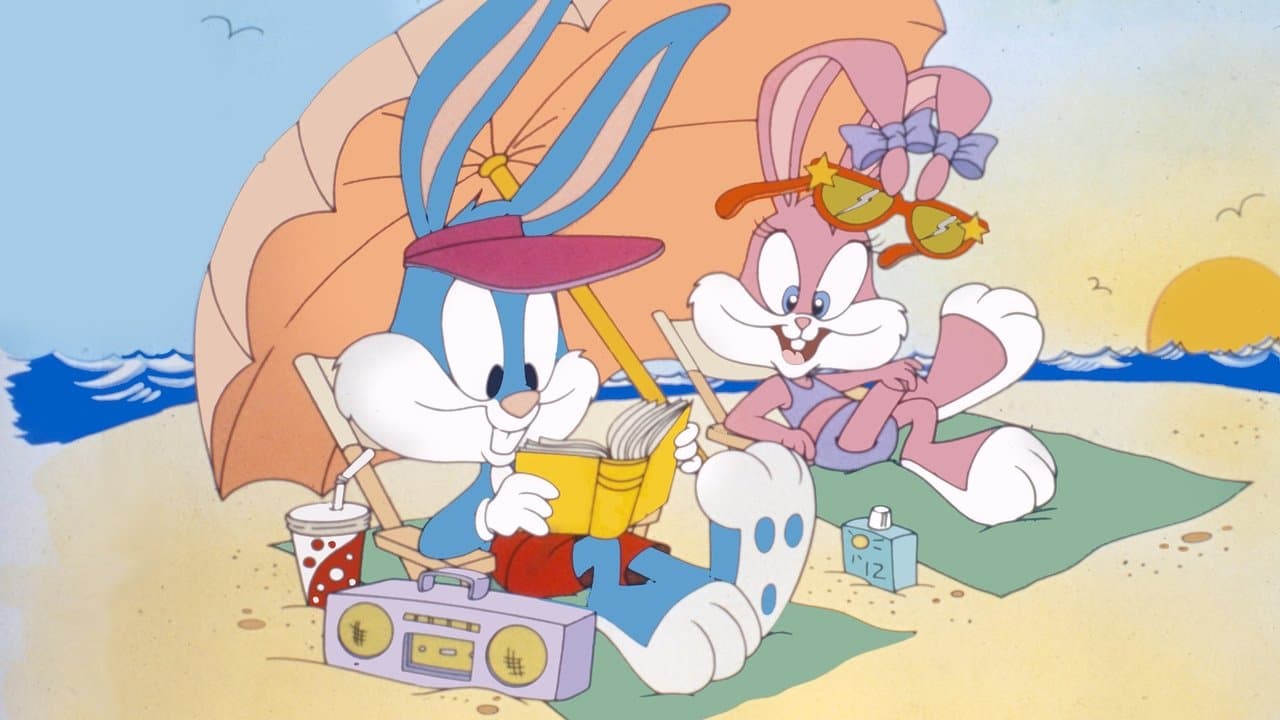
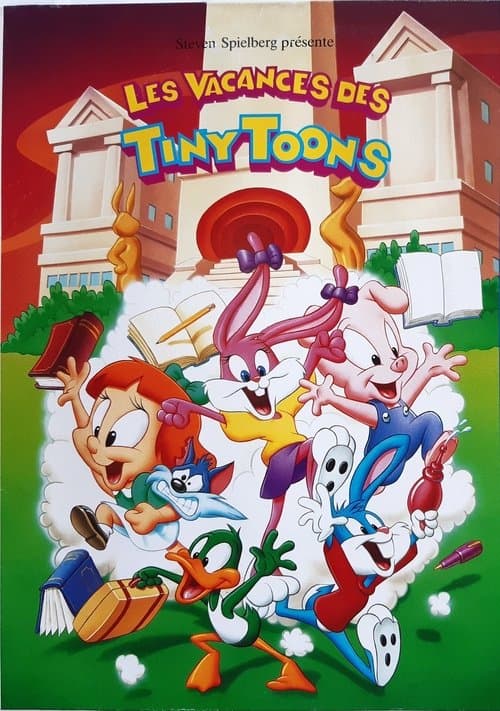
Term-time ends at Acme Looniversity and the Tiny Toon characters look forward to a summer filled with fun. Buster and Babs Bunny turn a water fight into a white-water rafting trip through the dangerous Deep South; Plucky Duck and Hamton Pig share the most impossibly awful car journey imaginable on the way to HappyWorldLand; Fifi's blind date becomes a "skunknophobic" nightmare; and a safari park is turned upside-down by Elmyra's search for "cute little kitties to hug and squeeze".
About this title
- Format
- Feature film
- Year
- 1992
- Runtime
- 1h 20m
- Countries
- United States of America
- Original language
- EN
- Directed by
- Rich Arons, Ken Boyer, Kent Butterworth, Barry Caldwell, Alfred Gimeno, Art Leonardi, Byron Vaughns
- Main cast
- Charlie Adler, Tress MacNeille, Joe Alaskey, Don Messick, Jonathan Winters, Edie McClurg, Frank Welker, Cree Summer, Sorrell Booke, Rob Paulsen
- Studios
- Warner Bros. Television, Amblin Entertainment, Warner Bros. Animation
Content barometer
- Violence2/5Moderate
- Fear2/5A few scenes
- Sexuality1/5Allusions
- Language1/5Mild
- Narrative complexity1/5Accessible
- Adult themes0/5None
Watch-outs
- Violence
- Gender stereotypes
Values conveyed
- Friendship
- teamwork
- humor
- adventure