
Theo the Water Tower

Theo the Water Tower
Your feedback improves this guide
Your feedback highlights guides that need a second look and keeps the rating trustworthy.
Does this age rating seem accurate to you?
Sign in to vote
Watch-outs
What this film brings
Content barometer
Violence
1/5
Mild
Fear
2/5
A few scenes
Sexuality
0/5
None
Language
0/5
None
Narrative complexity
0/5
Simple
Adult themes
0/5
None
Detailed parental analysis
ⓘ- Underlying Values
- Violence
- Discrimination
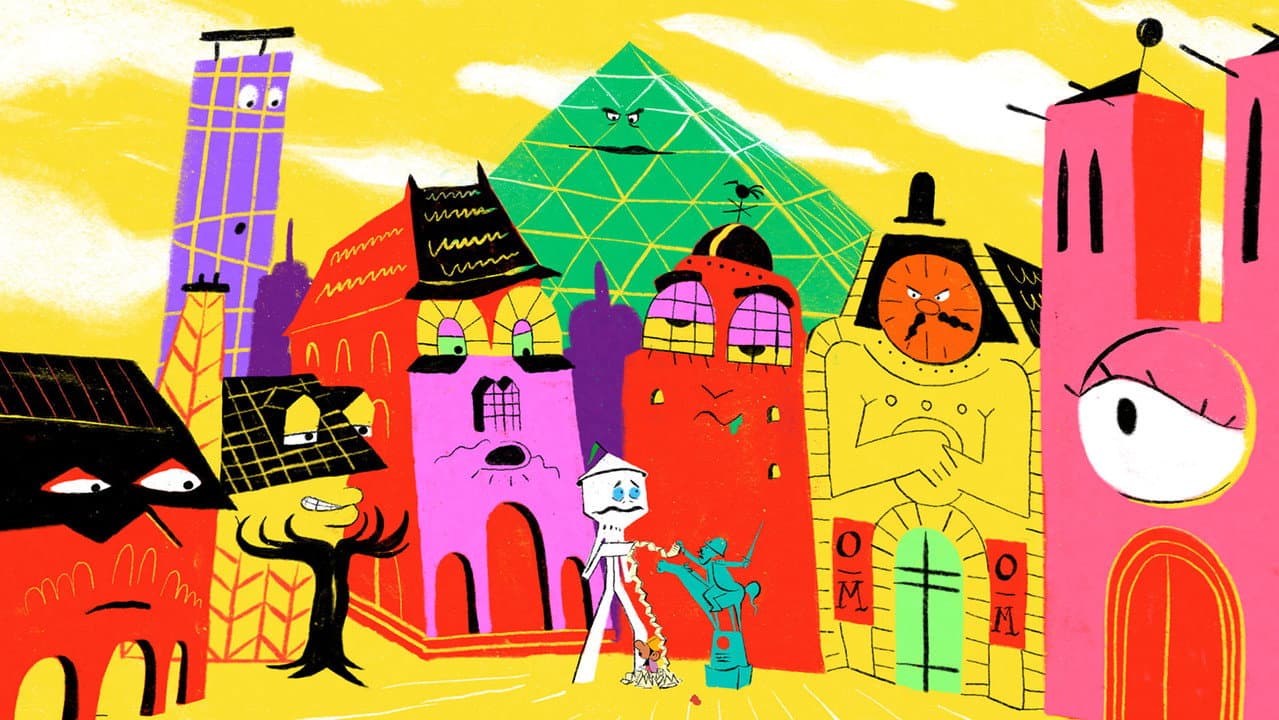
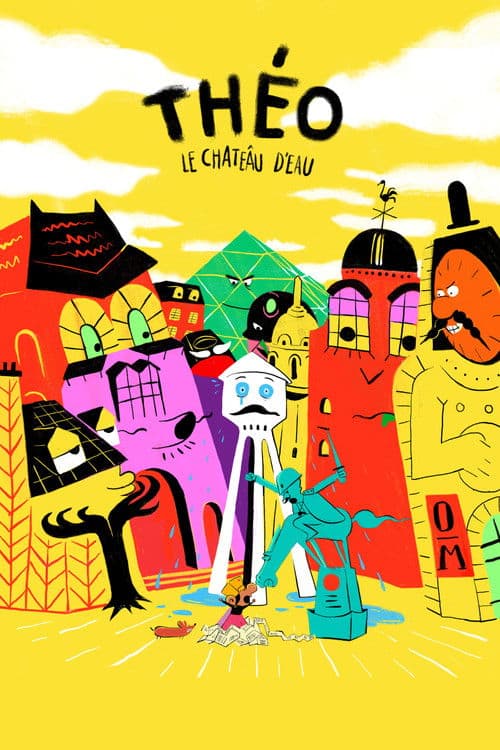
Théo the Water Tower is a poetic and musical children's animated film, populated by a whimsical world where buildings and trees are endowed with faces and emotions. The story follows a lonely water tower, mocked by other structures in the city, who will eventually find his place by revealing his usefulness during a crisis. The film is clearly aimed at young children, around 4 to 7 years old, with an overall gentle atmosphere punctuated by emotionally intense sequences.
Underlying Values
The narrative rests on a clear, structuring message: a being's worth lies in what he brings to others, not in the esteem that others spontaneously accord him. Théo's journey involves discovering his concrete usefulness, which is a solid pedagogical proposition but merits discussion with the child: a person's value cannot be reduced to their function. Moreover, the film values dialogue and connection as a means of conflict resolution, notably in the scene where the water tower communicates with the flames rather than combating them head-on. Individualism is absent from the film's message; it is instead solidarity and complementarity that are celebrated.
Violence
The fire sequence constitutes the most intense moment of the film: the city is ablaze, the flames are anthropomorphised and act as threatening characters. The visual intensity remains within the codes of animation for young children, without graphic violence or blood, but the image of buildings on fire may surprise the more sensitive viewers. The narrative resolution is clear and reassuring, which anchors the sequence in a pedagogical purpose rather than in the spectacle of destruction.
Discrimination
The collective mockery that Théo and the buildings that ridicule him endure is the central emotional drive of the film. The narrative does not trivialise this harassment: it shows the painful effects on the protagonist, who cries repeatedly and goes through visible moments of discouragement. This narrative choice is courageous for a film aimed at very young children and naturally opens a conversation about what one feels when excluded or mocked for what one is.
Strengths
The film takes the gamble of entirely musical narration and a coherent graphic universe where architectural anthropomorphism is treated with care and imagination. This formal choice, rare in animation for very young children, solicits the imagination rather than overstimulating it. The emotional intelligence of the narrative is genuine: Théo's inner states are legible without being over-explained, which respects the child's capacity to read emotions for themselves. The resolution of conflict through dialogue and discovery of the other rather than through confrontation is a rare narrative choice and well executed.
Age recommendation and discussion points
The film is suitable from age 4 onwards, with parental accompaniment recommended for children aged 4 to 6 to navigate the fire sequences and moments of Théo's distress smoothly. Two angles of discussion naturally emerge after viewing: asking the child how he thinks Théo felt when the others mocked him, and exploring together whether a person has worth even when they are not yet useful.
Synopsis
Théo, the village's water tower, is crying his eyes out. To try and understand why he's sad, Robert, a nine-year-old boy, tries to talk to him but Théo takes fright and runs away. He turns up in town, where he gets taunted by the museum, some houses and the church, who don't consider him a real building. But when the town is set ablaze, they all ask for his help!
Where to watch
No verified platform for the US market yet. We keep this section updated as availability changes.
Availability checked on Apr 01, 2026
About this title
- Format
- Short film
- Year
- 2022
- Runtime
- 9m
- Original language
- FR
Content barometer
Violence
1/5
Mild
Fear
2/5
A few scenes
Sexuality
0/5
None
Language
0/5
None
Narrative complexity
0/5
Simple
Adult themes
0/5
None
Detailed parental analysis
ⓘ- Underlying Values
- Violence
- Discrimination
Théo the Water Tower is a poetic and musical children's animated film, populated by a whimsical world where buildings and trees are endowed with faces and emotions. The story follows a lonely water tower, mocked by other structures in the city, who will eventually find his place by revealing his usefulness during a crisis. The film is clearly aimed at young children, around 4 to 7 years old, with an overall gentle atmosphere punctuated by emotionally intense sequences.
Underlying Values
The narrative rests on a clear, structuring message: a being's worth lies in what he brings to others, not in the esteem that others spontaneously accord him. Théo's journey involves discovering his concrete usefulness, which is a solid pedagogical proposition but merits discussion with the child: a person's value cannot be reduced to their function. Moreover, the film values dialogue and connection as a means of conflict resolution, notably in the scene where the water tower communicates with the flames rather than combating them head-on. Individualism is absent from the film's message; it is instead solidarity and complementarity that are celebrated.
Violence
The fire sequence constitutes the most intense moment of the film: the city is ablaze, the flames are anthropomorphised and act as threatening characters. The visual intensity remains within the codes of animation for young children, without graphic violence or blood, but the image of buildings on fire may surprise the more sensitive viewers. The narrative resolution is clear and reassuring, which anchors the sequence in a pedagogical purpose rather than in the spectacle of destruction.
Discrimination
The collective mockery that Théo and the buildings that ridicule him endure is the central emotional drive of the film. The narrative does not trivialise this harassment: it shows the painful effects on the protagonist, who cries repeatedly and goes through visible moments of discouragement. This narrative choice is courageous for a film aimed at very young children and naturally opens a conversation about what one feels when excluded or mocked for what one is.
Strengths
The film takes the gamble of entirely musical narration and a coherent graphic universe where architectural anthropomorphism is treated with care and imagination. This formal choice, rare in animation for very young children, solicits the imagination rather than overstimulating it. The emotional intelligence of the narrative is genuine: Théo's inner states are legible without being over-explained, which respects the child's capacity to read emotions for themselves. The resolution of conflict through dialogue and discovery of the other rather than through confrontation is a rare narrative choice and well executed.
Age recommendation and discussion points
The film is suitable from age 4 onwards, with parental accompaniment recommended for children aged 4 to 6 to navigate the fire sequences and moments of Théo's distress smoothly. Two angles of discussion naturally emerge after viewing: asking the child how he thinks Théo felt when the others mocked him, and exploring together whether a person has worth even when they are not yet useful.
Synopsis
Théo, the village's water tower, is crying his eyes out. To try and understand why he's sad, Robert, a nine-year-old boy, tries to talk to him but Théo takes fright and runs away. He turns up in town, where he gets taunted by the museum, some houses and the church, who don't consider him a real building. But when the town is set ablaze, they all ask for his help!