Thelma the Unicorn
Does this age rating seem accurate to you?
Detailed parental analysis
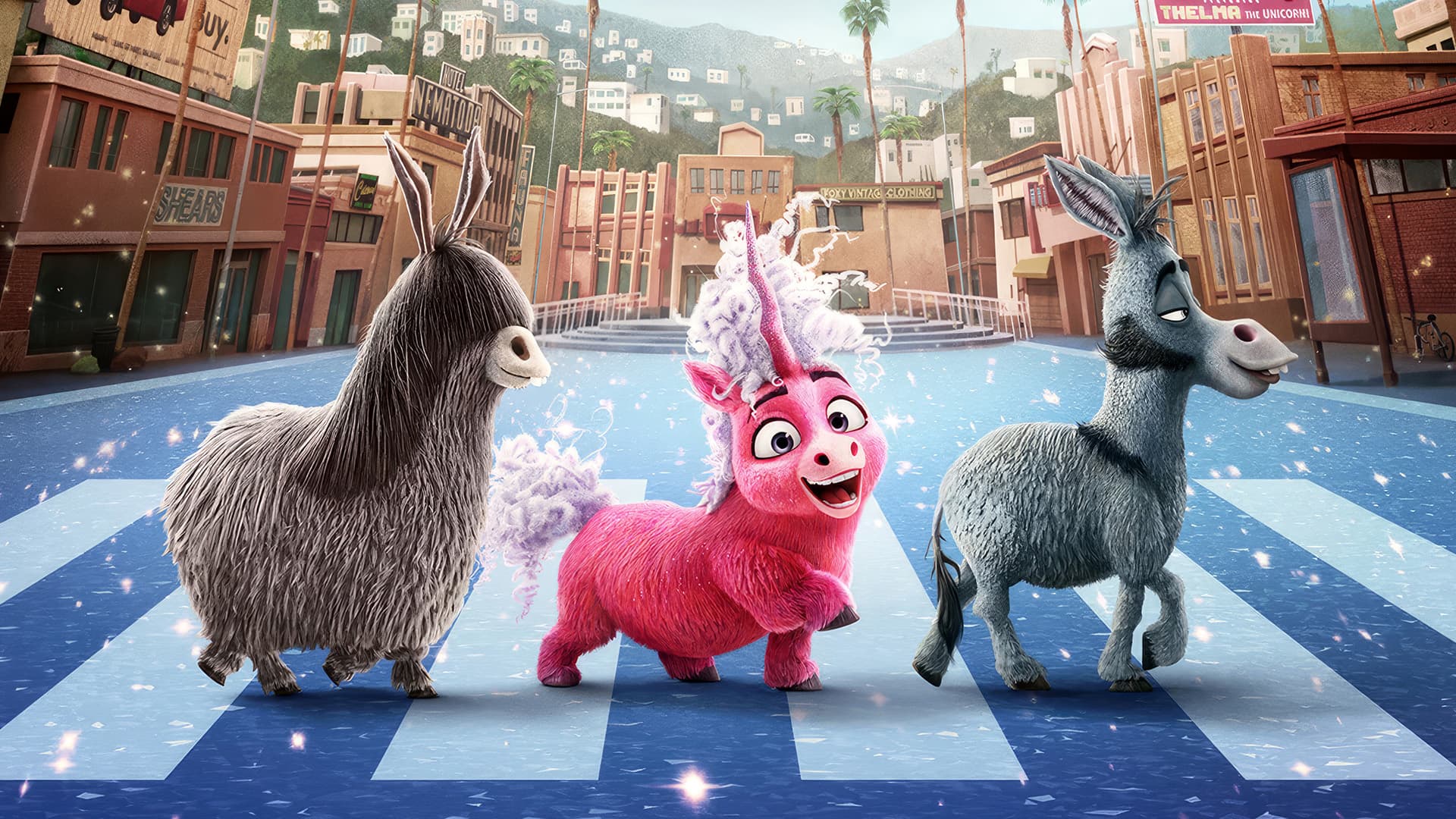
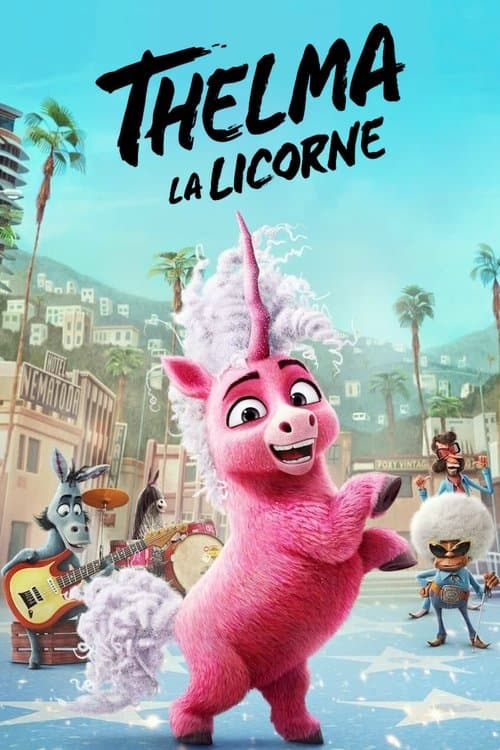
Thelma the Unicorn is a colourful and cheerful animated musical film, adapted from an illustrated children's book. The plot follows an ordinary pony who realises her dream of becoming a music star after an accidental transformation into a unicorn, and discovers the price she must pay. The film is aimed primarily at young children, but its humour and themes about the entertainment industry also speak to parents watching alongside them.
Underlying Values
The film builds its entire narrative around a critique of the music industry: commercial exploitation, manufactured image, pressure to conform to a marketable character rather than remain oneself. This message is coherent and well articulated for a film aimed at young children. As a counterpoint, the narrative values faithful friendship, genuine artistic merit and the ability to renounce fame in order to recover one's integrity. A blind character, who appreciates Thelma solely for her music and not for her spectacular appearance, embodies this idea with a certain subtlety. These structural values are solid and offer a useful basis for discussion, even if they are conveyed with sometimes heavy-handed insistence.
Sex and Nudity
The film contains a sequence of male dancers in tight clothing with suggestive movements, including a close-up of a man in tight trousers moving his buttocks. These elements are clearly intended as adult humour and are out of place in a film presented as children's animation. They fit no narrative logic and constitute the most discordant content point in the film.
Violence
The violence is slapstick in nature and remains without real consequence: a dynamite explosion in a toilet, a tractor that nearly crushes Thelma, manure dumped on a character. These gags are in the tradition of comic animation and present no particular risk for children from age 6 onwards. A blackmail scene in which a character threatens Thelma to force her to give up music introduces more genuine tension, but it is resolved satisfactorily within the narrative.
Language
The film multiplies scatological references, with repeated vocabulary around excrement and buttocks, including invented formulations such as 'dank-poopy-butt'. Mild insults such as 'moron' or 'dumb' also appear. This register is omnipresent rather than occasional, which can tire parents as much as it amuses children.
Substances
A horse is briefly shown holding a glass of champagne with a straw. The scene is incidental and treated as a visual gag, without valorising alcohol consumption.
Discrimination
Several secondary characters are defined and mocked primarily by their physical appearance: a portly manager with false teeth, a shifty-looking driver, a vomiting horse. These caricatures remain within slapstick conventions, but they merit being flagged because they systematically associate ridicule with physical traits, which can reinforce reflexes of appearance-based judgement in young viewers.
Strengths
The film offers a catchy original soundtrack which constitutes its main asset and explains children's enthusiasm for watching it. The critique of the music industry, whilst simplified, is concrete enough to open genuine conversation with a child about what it means to 'sell one's image' and the difference between fame and talent. The blind character who judges Thelma on her music rather than her appearance is a well-conceived narrative idea, rare in this type of film. Beyond these elements, the narrative remains conventional and omnipresent scatological humour serves as filler where more careful writing could have deepened the characters.
Age recommendation and discussion points
The film is accessible from age 6 for supervised viewing, with particular mention of the suggestive dancers sequence which parents of young children should anticipate. From age 8 onwards, viewing is more straightforward. Two angles of discussion are worth pursuing after the film: why did Thelma agree to change who she was in order to become famous, and what makes a friendship truly reliable when going through a difficult period?
Synopsis
Thelma dreams of being a glamorous unicorn. Then in a rare pink and glitter-filled moment of fate, Thelma's wish comes true. She rises to instant international stardom, but at an unexpected cost. After a while, Thelma realizes that she was happier as her ordinary, sparkle-free self. So she ditches her horn, scrubs off her sparkles, and returns home, where her best friend is waiting for her with a hug.
About this title
- Format
- Feature film
- Year
- 2024
- Runtime
- 1h 33m
- Countries
- United States of America
- Original language
- EN
- Directed by
- Lynn Wang, Jared Hess
- Main cast
- Brittany Howard, Will Forte, Jemaine Clement, Edi Patterson, Maliaka Mitchell, Ally Dixon, Fred Armisen, Zach Galifianakis, Jon Heder, Kristen Schaal
- Studios
- Netflix
Content barometer
- Violence1/5Mild
- Fear1/5Mild
- Sexuality2/5Mild
- Language2/5Moderate
- Narrative complexity1/5Accessible
- Adult themes1/5Mild
Watch-outs
- Alcohol
- Strong language
- Sexuality
Values conveyed
- Friendship
- Acceptance of difference
- Loyalty
- Autonomy
- authenticity
- perseverance
- self acceptance