The White Planet
La planète blanche
Does this age rating seem accurate to you?
Detailed parental analysis
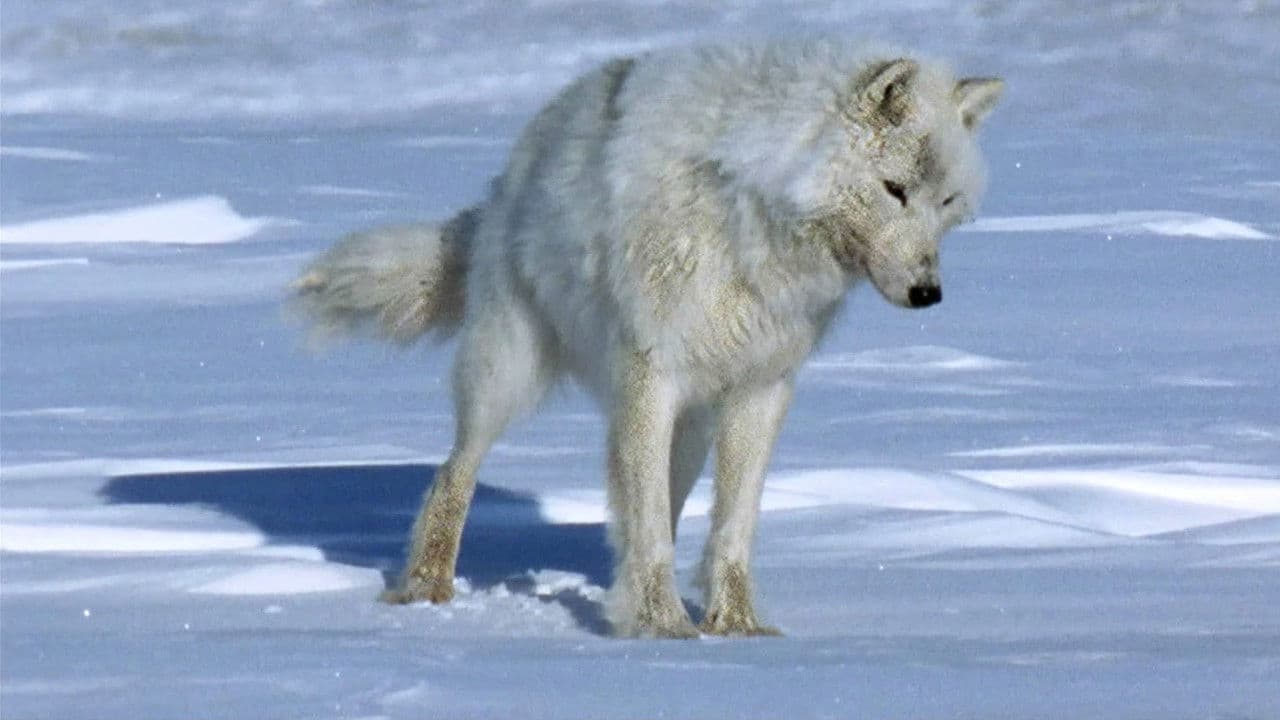
The White Planet is a contemplative and mesmerising documentary devoted to the vast Arctic expanses and their animal inhabitants. The film follows the lives of several emblematic species of the Far North across the seasons, from polar bears to bowhead whales and caribou, in an environment as magnificent as it is hostile. It is primarily aimed at children from a certain age onwards and at families with a sensitivity to wild nature, with an overall gentle and majestic atmosphere punctuated by sequences of tension linked to survival.
Violence
The film contains several sequences of predation and survival that may be distressing for younger viewers. The most striking scene shows a female polar bear cub attempting to capture a baby seal, with tense music and visible blood on the bears' muzzles. Other moments show young caribou struggling against a violent current, or a bowhead whale desperately seeking an opening to breathe under the ice sheet. These sequences are neither gratuitous nor self-indulgent: they follow a documentary logic that shows the reality of animal survival without softening it. The tension is real but always in service of an understanding of living things, which makes it a good starting point for talking with a child about death and the food chain.
Social Themes
Climate change is addressed in the final minutes of the film, notably through the scene of a polar bear crawling on an ice sheet that gives way beneath its weight. The treatment is sober and contemplative, without alarmist discourse or heavy-handed ideological charge. The message about the fragility of Arctic ecosystems emerges naturally from observation, which makes it all the more effective. It is a gentle and concrete introduction to environmental issues, particularly well suited to starting a conversation with a child about climate change without causing excessive anxiety.
Underlying Values
The film celebrates the beauty of the natural world and the dignity of animals in their daily struggle to survive. There is no manichaeism: neither predators nor prey are moralised. This benevolent neutrality invites respect for nature as it is, without projecting it into a human framework of good and evil. Contemplation is presented as a form of intelligence and respect, which constitutes a discreet but solid structural message.
Strengths
The film offers images of exceptional beauty, particularly the underwater sequences that reveal an Arctic world rarely filmed with such fluidity and intimacy. The narration is carried by a sober voice that allows the images to breathe, without over-explanation or sentimentality. The seasonal structure gives the film a natural and pedagogical rhythm, which allows children to intuitively understand the cycles of life. The quality of observation of animal behaviour is remarkable and gives the film genuine documentary value beyond visual spectacle.
Age recommendation and discussion points
The film is suitable from around 5 or 6 years old for supervised viewing, as the predation and tension sequences may worry younger children. Two angles of discussion are worth exploring after viewing: why animals hunt each other and how this fits into a natural balance, and what the scene of the melting ice sheet says about what humans are doing to this environment.
Synopsis
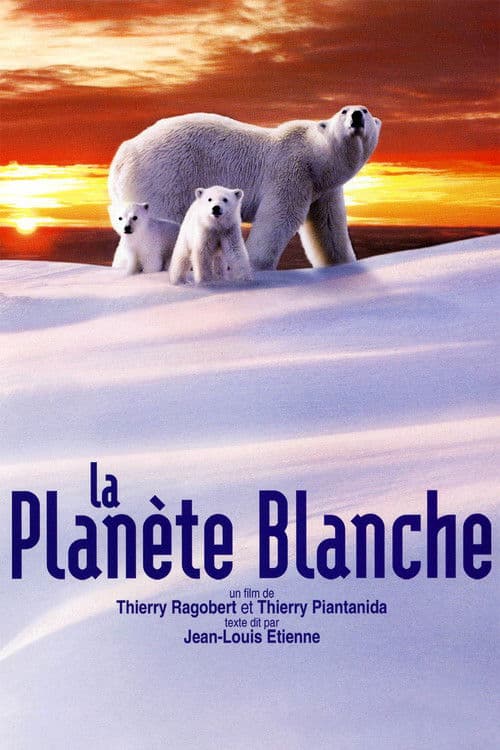
The White Planet or in French, La Planète Blanche, is a 2006 documentary about the wildlife of the Arctic. It shows interactions between marine animals, birds and land animals, especially the polar bear, over a one year period. The fragility of the Arctic is hinted at as a reason to prevent climate change. It was nominated for the Documentary category in the 27th Genie Awards in 2007.
About this title
- Format
- Feature film
- Year
- 2006
- Runtime
- 1h 26m
- Countries
- Canada, France
- Original language
- FR
- Directed by
- Thierry Piantanida, Jean Lemire, Thierry Ragobert
- Main cast
- Jean-Louis Étienne
- Studios
- Gedeon Programmes, Bac Films, France 2 Cinéma, Glacialis Productions, ONF | NFB
Content barometer
- Violence2/5Moderate
- Fear2/5A few scenes
- Sexuality0/5None
- Language0/5None
- Narrative complexity1/5Accessible
- Adult themes0/5None
Watch-outs
Values conveyed
- Courage
- Perseverance
- Compassion
- nature
- curiosity
- resilience
- family