

The Water Horse
Does this age rating seem accurate to you?
Detailed parental analysis
The Sea Dragon is a family adventure film with an atmosphere blending wonder and tension, carried by a misty Scottish setting and an emotional tone heavier than it first appears. The plot follows a young boy who discovers and secretly raises a mysterious creature in a lake, at the heart of the Second World War. The film targets school-age children, but its content makes it unsuitable for younger viewers.
Violence
Violence is the most striking aspect of the film for parents. Scenes of military bombardment are lengthy, loud and visually intense, with cannons and rifles fired directly at the creature. The creature itself is presented as threatening on several occasions: it snaps its jaws, hurls men with force, and a dog is implicitly devoured off-screen. One scene suggests that a child has drowned, which constitutes a moment of strong tension even though the outcome is reassuring. A dead deer is shown on screen. No blood or gore aggravates these sequences, and the violence remains functional to the narrative rather than gratuitous, but the sound and visual intensity of the military scenes far exceeds what one would expect from a children's adventure film.
Parental and Family Portrayals
The father is absent, presumed dead in the war, and this absence structures the entire emotional dimension of the film. The mother's unresolved grief, the boy's loneliness and the substitute figure represented by the Scottish gardener compose a family portrait marked by loss and absence. The film treats this subject with a certain emotional honesty: the pain is not softened, and the boy's attachment to the creature is clearly read as an emotional displacement linked to paternal absence. This is a strong angle for discussion after viewing, but it can also affect children who have experienced similar situations.
Underlying Values
The film values letting go, acceptance of loss and the ability to love without possessing. The central narrative arc pushes the young protagonist to understand that certain beings cannot be kept, which constitutes an emotionally mature and well-constructed message. The figure of the gardener embodies a quiet honesty and nobility, in contrast with military authority presented as brutal and obtuse. This contrast is somewhat schematic but readable for a child.
Discrimination
The film systematically opposes British military personnel, depicted as arrogant and violent, to local Scots, presented as dignified and sensible. This dichotomy is sufficiently marked to warrant mention: it amounts to a simplified national stereotype that can be discussed with a child curious about cultural representations.
Substances
Tobacco and alcohol are present recurrently in the film: pub scenes, meals with alcohol consumption, characters drinking from flasks. These representations are not explicitly glorified, but they are frequent and normalised in the everyday setting of adults. Tobacco is also visible on several occasions. For a young child, this normalisation deserves to be noted.
Language
The language contains a few measured departures: several uses of God's name in vain, two instances of a mild English expletive, and three uses of the word 'bloody' typical of popular British register. Nothing shocking for a child of 9 years and older, but worth noting for families sensitive to this type of language.
Social Themes
The Second World War constitutes the setting of the film and is not merely a backdrop: bombardments, military presence and the anxiety of losing a father at the front are active narrative elements. The film does not treat war in a pedagogical or documentary manner, but it restores its atmosphere of worry and grief with a certain accuracy. It is a possible entry point for addressing this historical context with a child.
Strengths
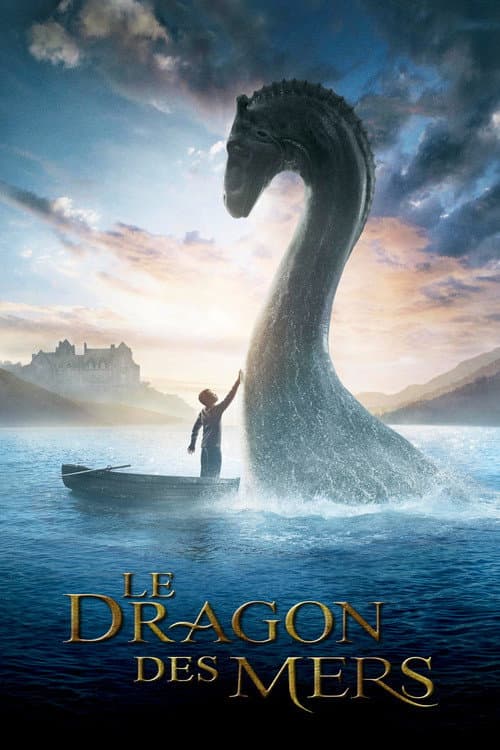
The film succeeds in weaving a credible relationship of attachment between the child and the creature, avoiding easy sentimentality. The emotional dimension linked to grief and paternal absence is treated with unusual depth for the genre. The Scottish landscapes are beautifully used to create an atmosphere of living legend, and the creature itself benefits from a convincing visual design that gives it both majesty and danger. The film poses a genuine question about love and separation, which gives it lasting emotional value beyond simple adventure spectacle.
Age recommendation and discussion points
The film is not recommended before age 8 due to the intensity of military scenes and the emotional tension linked to death and grief. From age 9 or 10 onwards, it can be viewed peacefully by an accompanied child. Two angles of discussion naturally emerge after the film: why does the boy become so attached to this creature, and what does this say about what he feels regarding his absent father? And also: can one truly keep someone or something one loves, or must one sometimes accept letting them go?
Synopsis
A lonely boy discovers a mysterious egg that hatches a sea creature of Scottish legend.
Where to watch
Availability checked on Apr 29, 2026
About this title
- Format
- Feature film
- Year
- 2007
- Runtime
- 1h 52m
- Countries
- United States of America, United Kingdom, Australia
- Original language
- EN
- Directed by
- Jay Russell
- Main cast
- Alex Etel, Emily Watson, Ben Chaplin, David Morrissey, Priyanka Xi, Craig Hall, Brian Cox, Erroll Shand, Joel Tobeck, Bruce Allpress
- Studios
- Revolution Studios, Walden Media, Beacon Pictures, Ecosse Films
Content barometer
- Violence3/5Notable
- Fear3/5Notable tension
- Sexuality0/5None
- Language1/5Mild
- Narrative complexity2/5Moderate
- Adult themes2/5Present
Values conveyed
- Acceptance of difference
- Loyalty
- Forgiveness
- friendship
- courage
- grief and acceptance
- bond with nature
- family
- responsibility