The Ugly Duckling and Me!
Does this age rating seem accurate to you?
Detailed parental analysis
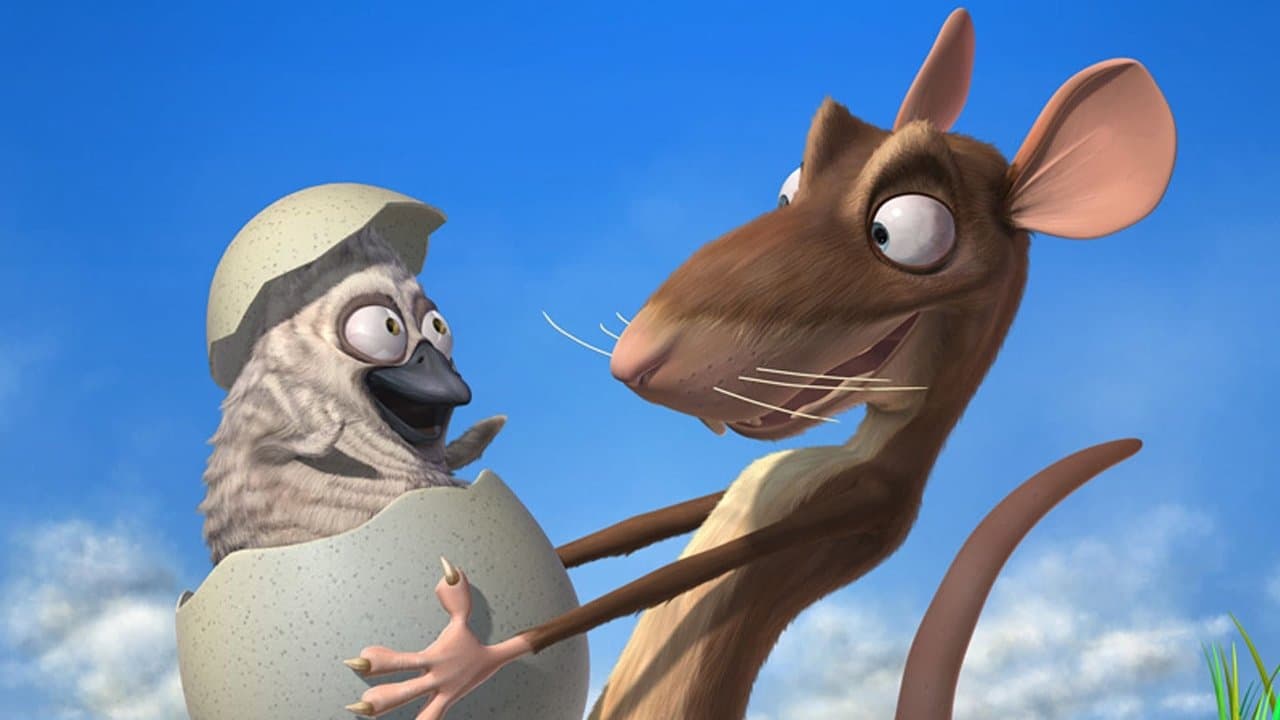
The Ugly Duckling and Me is a family animated film with a deliberately irreverent and sometimes caustic tone, loosely inspired by Andersen's tale. The story follows Ratso, an opportunistic rat who reluctantly takes in an ungainly duckling and attempts to exploit it to revive his career as a street performer. The film targets school-age children and upwards, with adolescent humour that may leave younger viewers out in the cold.
Underlying Values
This is the film's problematic heart. Ratso is a fundamentally selfish substitute father, willing to instrumentalise the duckling to serve his own ambitions. The narrative eventually redeems him, but the trajectory is long and the message ambiguous: acceptance of the other only arrives after the duckling has proved useful or transformed, which undermines the moral weight of the conclusion. More troubling still, the film presents the audience's laughter as a value in itself, without always distinguishing between kindly laughter and mocking laughter. The adolescent language that runs through the film establishes a culture of contempt and derision that the narrative never truly questions.
Parental and Family Portrayals
The paternal figure is at the centre of the film and it is deliberately flawed. Ratso embodies an immature, calculating and unreliable adult, whose transformation remains partial and belated. This is an intentional narrative choice, but it deserves to be named explicitly with a child: the film shows an adult who puts his own interests before those of a vulnerable being in his care, and does so for the greater part of the story.
Discrimination
The film draws on the mechanics of the original tale, where physical difference is a source of collective rejection and mockery. Groups of animals behave in an almost punitive manner towards the duckling, reflecting recognisable dynamics of group bullying. The resolution poses a fundamental problem: the final acceptance seems conditional on the duckling's transformation into a swan, which suggests that difference is tolerated only when it disappears or reveals itself to be a hidden quality. This is an angle that deserves to be unpacked explicitly with a child.
Violence
Violence remains within the codes of family animation, but a few scenes stand out. One sequence shows a duck apparently dead in a predator's jaws, with visible bones in its lair, which may surprise or frighten younger children. Other moments of physical pain, such as a character stepping on a nail, are treated in a comic mode that may be disconcerting. These elements are not gratuitous, but they anchor the film in a rougher register than the average production aimed at young children.
Language
The film contains at least one audible swear word, innocently repeated by the duckling in a scene intended for comic effect. The overall register is that of adolescent humour, readily sarcastic and mocking, which normalises a certain form of derision. This is not vulgar language in the strict sense, but the tone contributes to an atmosphere of mild contempt that permeates the film.
Strengths
The film has the merit of not entirely softening the darkness of the original tale: social cruelty is represented with a certain frankness, which gives it more bite than many smooth adaptations. The relationship between Ratso and the duckling, despite its moral ambiguities, generates real narrative tension and a few moments of genuine emotion. For a child old enough to receive it, the film can open a useful conversation about difference, rejection and the real motivations of those who claim to help us.
Age recommendation and discussion points
The film is best reserved for children aged 7 and above, accompanied by an adult available for discussion. Two angles deserve to be addressed after viewing: why does Ratso help the duckling, and is that enough to make him a good friend or a good parent? And above all: is the duckling truly accepted for what it is, or only because it changes?
Synopsis
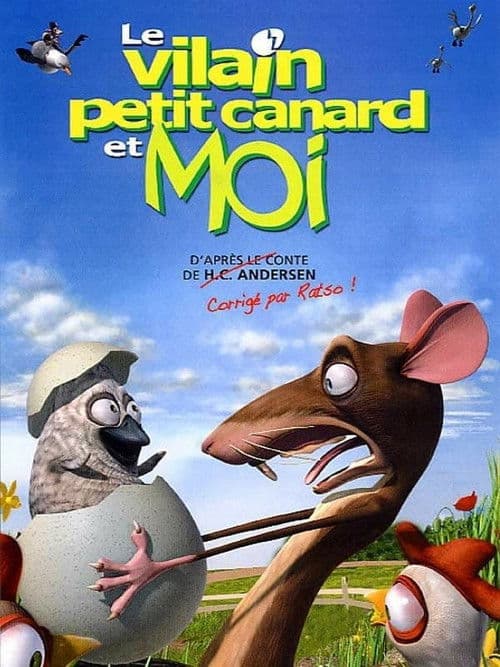
The Hans Christian Anderson tale gets a new treatment, this time with a rat trying to exploit the talents of a little ugly duckling for profit.
About this title
- Format
- Feature film
- Year
- 2006
- Runtime
- 1h 25m
- Countries
- Belgium, Denmark, France, Germany, Ireland
- Original language
- EN
- Directed by
- Michael Hegner, Karsten Kiilerich
- Main cast
- Morgan C. Jones, Paul Tylak, Anna Nugent, Gary Hetzler, Danna Davis, Barbara Bergin, Michelle Read, Hilary Cahill, Kim Larney, Hillary Kavanagh
- Studios
- A. Film Production, Futurikon, Eurimages, Ulysses Filmproduktion, TPS Star, Fís Éireann/Screen Ireland, Magma Films, CNC, MEDIA Programme of the European Union, The Danish Film Institute, SND, Gébéka Films
Content barometer
- Violence2/5Moderate
- Fear2/5A few scenes
- Sexuality0/5None
- Language2/5Moderate
- Narrative complexity1/5Accessible
- Adult themes0/5None
Watch-outs
- Death
- Bullying
- Strong language
- Mockery
- Gender stereotypes
Values conveyed
- Acceptance of difference
- friendship
- self acceptance
- courage
- forgiveness