The Twits
Does this age rating seem accurate to you?
Detailed parental analysis
The Witches is a family comedy with a deliberately excessive and carnival-like atmosphere, adapted from Roald Dahl's novel. The plot follows two children who attempt to foil the cruel plans of a couple of selfish monsters exploiting magical creatures to fuel a dubious amusement park. The film is theoretically aimed at children aged 7 to 10, but its unstable blend of scatological humour, political satire and unbridled slapstick creates a difficult object to pin down that fails to fully satisfy any age group.
Violence
Violence is omnipresent in the form of slapstick: characters struck by objects, falls from heights, immersions in sticky substances, and a spectacular explosion of liquefied minced meat that floods an entire city. This violence remains cartoonish and without realistic physical consequences, which is in keeping with the tradition of the source material. It is sustained throughout the film, however, and may tire or desensitise younger viewers. Verbal threats directed at the children, notably the promise to 'bake them in a pâté', add a tone of intimidation that some sensitive children will find disturbing even if they are never carried out.
Underlying Values
The film carries a legible moral message: empathy, friendship and courage triumph over cruelty and selfishness, and family is defined by love rather than blood. These values are sound but presented in a binary fashion, without nuance or ambiguity: the villains are entirely bad, the good characters entirely likeable. In parallel, the film incorporates political satire targeting populist rhetoric and autocrats who manipulate voters through crude lies. This dual reading creates genuine tension in the film: children receive a simplified moral tale, while adults are engaged by a political reading explicitly intended for them. These two levels coexist without really reinforcing each other, which weakens both.
Parental and Family Portrayals
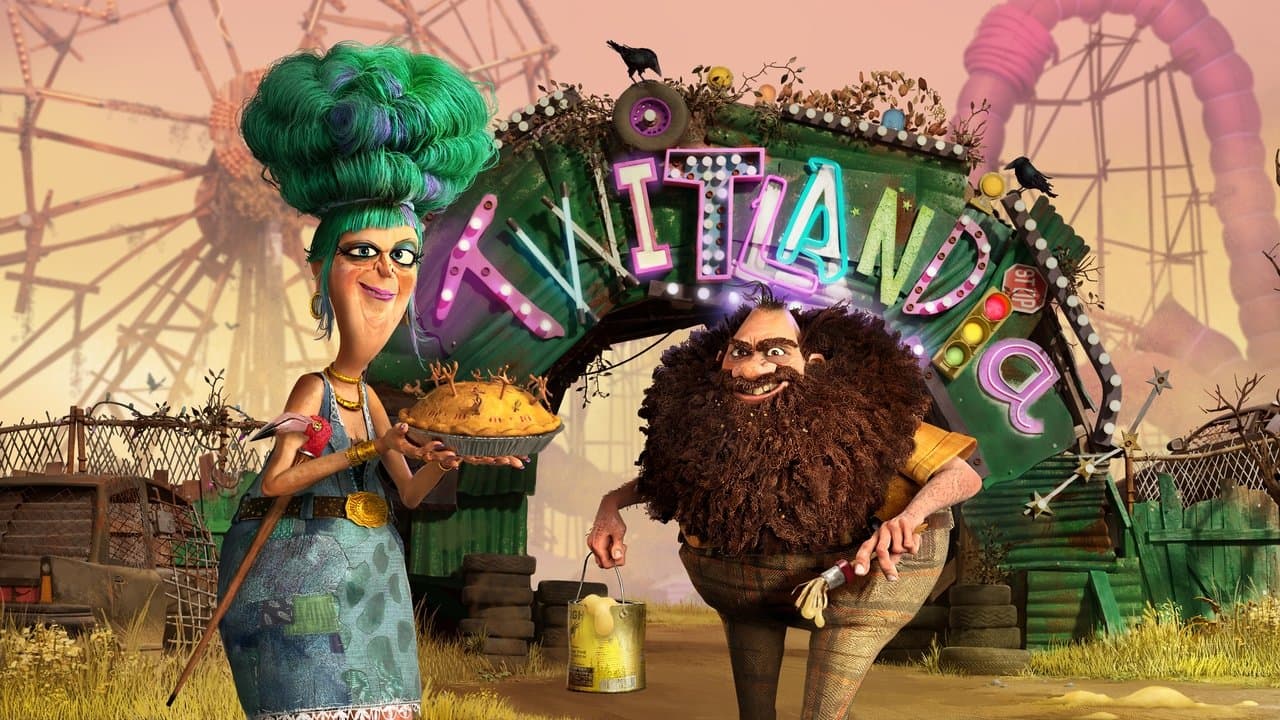
Adult authority figures are systematically caricatured or inadequate: the villainous couple embodies toxic parenting founded on domination and exploitation, and the orphanage director is presented as a grotesque character publicly humiliated. The absence of solid protective adult figures places children in the position of autonomous agents who must solve problems themselves, which is consistent with Dahl's tradition but deserves to be flagged to parents whose children are sensitive to abandonment or the absence of reliable adult recourse.
Social Themes
The political satire is explicit and recurrent: the film portrays a populist autocrat who openly lies to his voters and relies on their credulity to retain power. This criticism is legible enough to be identified by children from age 9-10 onwards, but its treatment assumes a familiarity with contemporary political debate that belongs more to the adult world. For a parent wishing to initiate a conversation about democracy, propaganda or attitudes towards public authority, the film provides a concrete entry point, provided you do not expect the film to develop these themes with coherence.
Language
The verbal register oscillates between the familiar and the frankly coarse for a mainstream film: mild insults, references to bottoms, flatulence and diarrhoea, and phrases like 'shut up' or 'good God' recur regularly. Nothing that amounts to severe vulgarity, but it is an assumed stylistic choice that reflects the spirit of the original book. For parents sensitive to this register, it is an element to anticipate.
Sex and Nudity
One scene shows the orphanage director stripped down to his underwear by the two protagonists. The scene plays on comic humiliation rather than sensitive nudity, but it may surprise parents who are not expecting it.
Strengths
The film deserves credit for not softening the ugliness of the main characters, remaining faithful to the repellent aesthetic intended by Dahl, even if the result is divisive. The political satire, when it works, offers parents a rare opportunity to discuss with older children the mechanisms of collective manipulation. The treatment of exploited magical creatures introduces a reflection on injustice and resistance that young viewers sensitive to animal or environmental issues can grasp intuitively. Outside these moments, the film struggles to find a coherent narrative voice and falls short of what Dahl's work has produced best on screen.
Age recommendation and discussion points
The film is suitable from age 7 for children who are not sensitive to cartoonish violence and scatological humour, but it will be better appreciated and better understood from age 9 onwards, when children can also begin to perceive the satirical dimension. After viewing, two angles of discussion merit being opened: why do the villains manage to convince people to support them despite their obvious cruelty, and what is it that allows a group of friends to succeed where a single adult would fail.
Synopsis
When the meanest, nastiest villains pull a trick to take over their town, two brave children team up with a family of magical animals to bring them down.
About this title
- Format
- Feature film
- Year
- 2025
- Runtime
- 1h 39m
- Countries
- United Kingdom, United States of America
- Original language
- EN
- Directed by
- Phil Johnston
- Main cast
- Margo Martindale, Johnny Vegas, Maitreyi Ramakrishnan, Ryan Anderson Lopez, Emilia Clarke, Natalie Portman, Timothy Simons, Nicole Byer, Jason Mantzoukas, Alan Tudyk
- Studios
- Jellyfish Pictures, The Roald Dahl Story Company, Netflix Animation Studios
Content barometer
- Violence2/5Moderate
- Fear2/5A few scenes
- Sexuality1/5Allusions
- Language2/5Moderate
- Narrative complexity1/5Accessible
- Adult themes0/5None
Watch-outs
- Strong language
- Abuse
- Violence
Values conveyed
- Courage
- Friendship
- Compassion
- Autonomy
- teamwork
- freedom