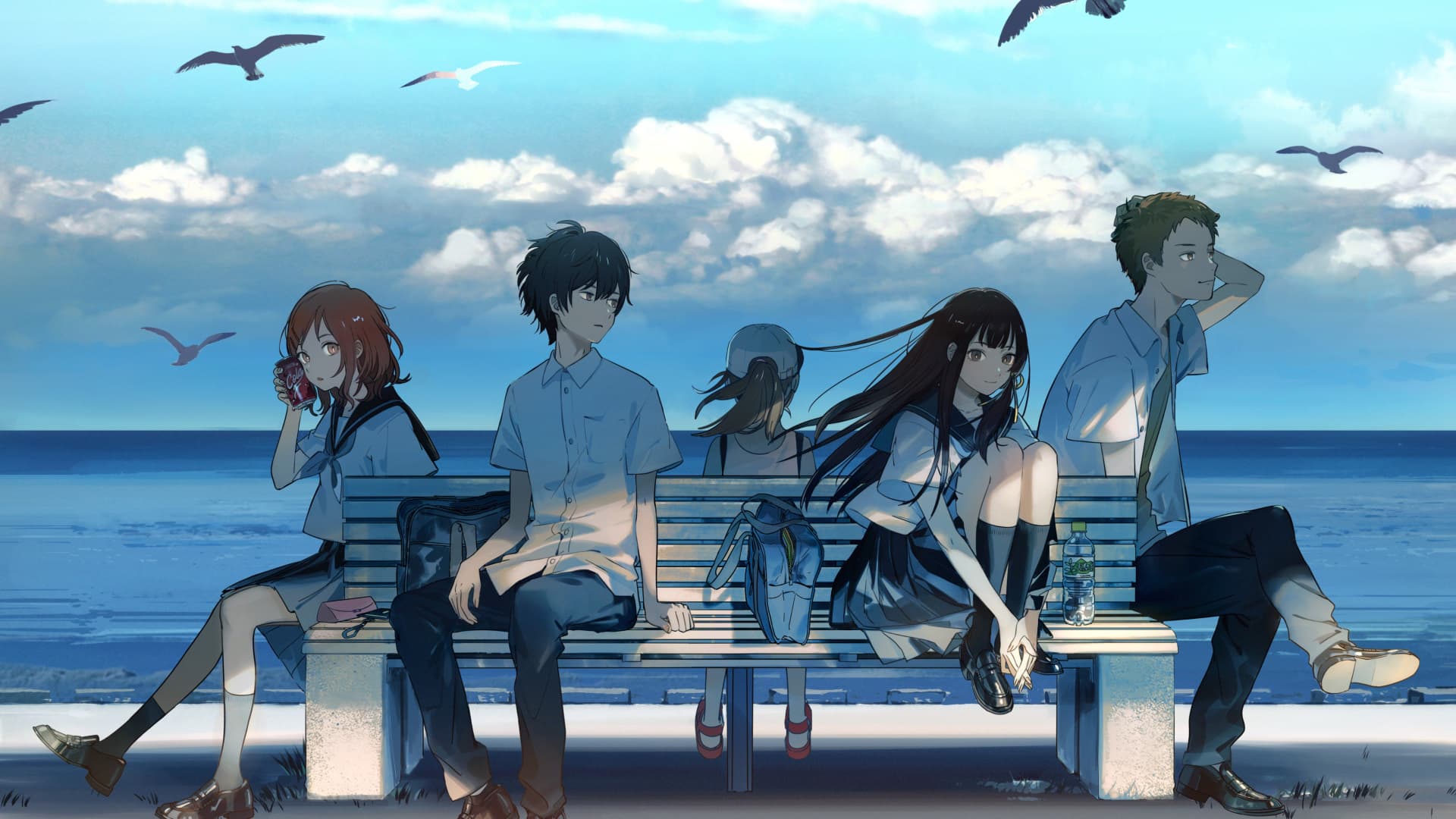

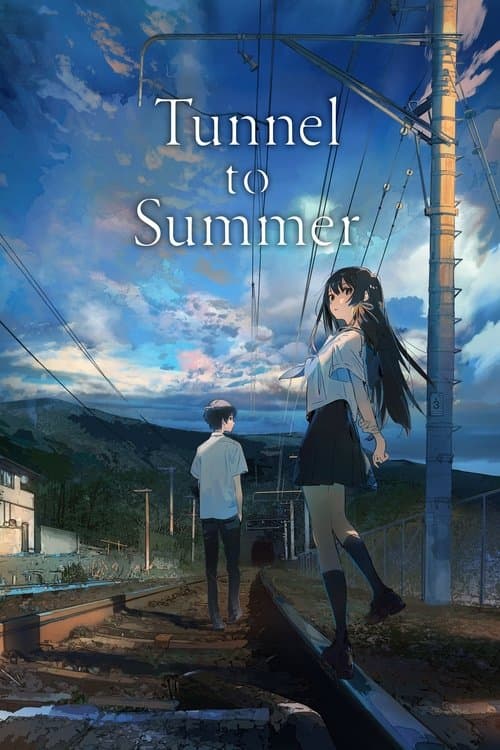
The Tunnel to Summer, the Exit of Goodbyes
夏へのトンネル、さよならの出口
Does this age rating seem accurate to you?
Detailed parental analysis
The Tunnel to Summer, the Exit of Goodbyes is a Japanese animated film with a melancholic and contemplative atmosphere, marked by a suspended sense of mourning. The plot follows a teenager haunted by his sister's death who discovers a mysterious tunnel capable of granting wishes at the cost of the tunnel visitor's lifespan. The film is primarily aimed at teenagers and young adults, with an emotional sensitivity that requires a certain level of maturity to be fully received.
Parental and Family Portrayals
Parental figures are uniformly dysfunctional, and this dysfunction is a pillar of the narrative, not a minor detail. The protagonist's father is an alcoholic who becomes violent when drunk: he attacks his son physically, blaming him for having survived the accident that killed his daughter. This domestic violence is shown unambiguously as a wound inflicted by a suffering adult who pours his guilt onto his child. For her part, the young female protagonist has been rejected by her own parents. The hero's mother abandoned the household. These absences and acts of violence are not normalised, but they form a heavy backdrop that teenagers sensitive to these themes may experience very directly.
Underlying Values
The film progressively constructs a strong message about accepting grief and the importance of anchoring oneself in the present rather than attempting to repair the past. The tunnel represents the temptation to escape into an impossible desire, and the narrative shows that this refuge ultimately costs more than it gives. The protagonist ultimately chooses present love and the building of a future over frozen nostalgia, which gives the film a clear and balanced moral direction. This reflection on grief as a process, rather than as a problem to be solved, is one of the narrative's most substantial contributions.
Violence
Physical violence appears at two distinct moments. A student strikes a classmate in the face with visible bleeding, in a school setting. The drunk father physically attacks his son in a scene with strong emotional weight. These sequences are neither aestheticised nor gratuitous: they serve to ground the characters' suffering in something concrete. The intensity remains measured, but their emotional impact is real, particularly the scene of parental violence.
Substances
The father's alcoholism is a central narrative element and not an incidental presence. It is directly linked to domestic violence and family breakdown. Alcohol consumption is presented as destructive, without the slightest valorisation: it is the vehicle of suffering that turns against loved ones. It is a useful angle to explore with a teenager to discuss how addiction affects family dynamics.
Strengths
The film succeeds in treating grief and loss with genuine emotional restraint, without dramatic excess or easy resolution. The fantastical device of the tunnel functions as a concrete metaphor for denial and obsession, and the narrative exploits it coherently through to its conclusion. The characterisation of the two main characters avoids the usual genre archetypes: their relationship builds on shared vulnerability rather than on a stereotyped dynamic of seduction. For a teenager experiencing his or her first encounters with loss or family breakdown, the film offers a narrative framework to articulate emotions that are difficult to put into words.
Age recommendation and discussion points
The film is not recommended before age 13 due to domestic violence, parental alcoholism and the emotional density of the themes addressed. From age 14 onwards, it can be shared with a teenager provided that space for discussion is created after viewing. Two angles of discussion are worth opening: why is the protagonist tempted to go backwards rather than move forwards, and how to recognise that a suffering adult remains responsible for his or her actions towards their children.
Synopsis
Urashima Tunnel – Once you enter that tunnel, you can get whatever you want, but at a price. Kaoru Tohno, who seems to have an elusive personality and traumatic past, and Anzu Hanashiro, who is struggling to reconcile her ideal image and true-to-heart attitude, team up to investigate the Urashima Tunnel and get what they want. This is an unforgettable summer story of nostalgia and sprinting in a remote countryside.
About this title
- Format
- Feature film
- Year
- 2022
- Runtime
- 1h 23m
- Countries
- Japan
- Original language
- JA
- Directed by
- Tomohisa Taguchi
- Main cast
- Ouji Suzuka, Marie Iitoyo, Tasuku Hatanaka, Arisa Komiya, Haruka Terui, Rikiya Koyama, Seiran Kobayashi, Chiko Mizumori, Hiroto Kazuki, Taiki Kurokawa
- Studios
- CLAP, Pony Canyon, Shogakukan, Sotsu, STUDIO MAUSU, Kansai Television
Content barometer
- Violence2/5Moderate
- Fear2/5A few scenes
- Sexuality0/5None
- Language1/5Mild
- Narrative complexity2/5Moderate
- Adult themes3/5Marked
Values conveyed
- Acceptance of difference
- Compassion
- Forgiveness
- grief and reconciliation
- genuine friendship
- artistic perseverance
- acceptance of the past
- mutual support