
The Triplets of Belleville
Does this age rating seem accurate to you?
Detailed parental analysis
Belleville Rendez-vous is a poetic animated film with a resolutely melancholic atmosphere, sometimes surreal, whose visual and emotional tone owes much to the world of cabaret and jazz from the 1930s. The story follows a determined grandmother who crosses the Atlantic to find her young cyclist grandson, kidnapped by gangsters. Despite its animated format, the film is not aimed at young children: it targets an aware family audience of teenagers and adults, sensitive to absurd humour and narration without dialogue.
Parental and Family Portrayals
The film is constructed almost entirely around parental grief and the figure of substitution. Champion, the young cyclist, is an orphan and his initial melancholy forms the emotional foundation of the entire narrative. Grandmother Souza embodies a substitute parental figure of absolute tenacity, capable of crossing an ocean on a pedalo to save her grandson. This relationship is the heart of the film and its emotional sincerity is genuine, but the portrayal of a withdrawn orphaned child in a visually heavy universe may be distressing for younger viewers who do not yet have the tools to process loss and grief.
Underlying Values
Perseverance and solidarity between middle-aged women constitute the central values of the narrative, never explicitly stated. The figure of physical performance is treated with biting irony: cyclists are portrayed as quasi-dehumanised bodies, bloated by manic training, treated like racehorses rather than human beings. This critical view of sports spectacle and the exploitation of the body is subtle but real. The film also values a form of humble popular resourcefulness, far removed from any logic of wealth or prestige.
Violence
Violence remains contained but present at specific moments. A cyclist is shot dead by a gangster, off-screen, and the threat hanging over the kidnapped characters is maintained throughout the narrative. A frog-hunting scene involves the use of a grenade which triggers an unexpected detonation, treated with displaced dark humour. These elements do not amount to graphic violence but may surprise or worry a child under ten who does not anticipate this level of darkness in an animated film.
Sex and Nudity
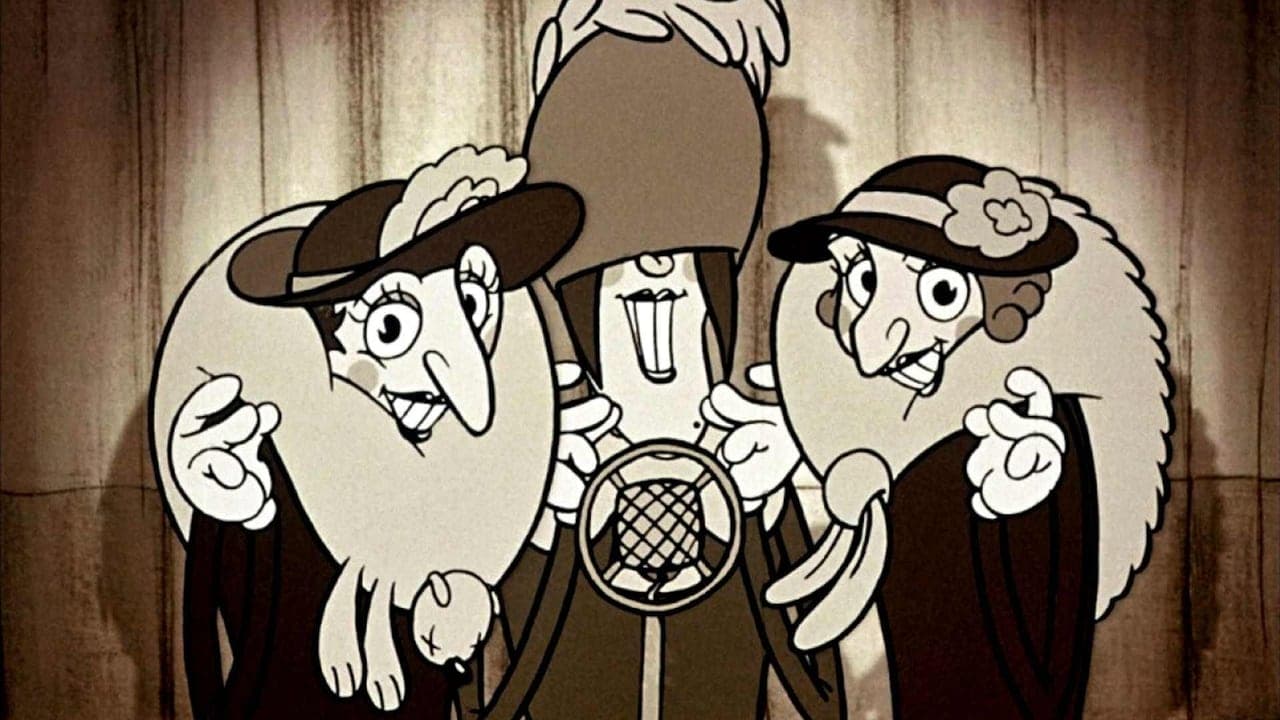
The opening music-hall sequence evokes a stylised Josephine Baker whose breasts are set in motion in a deliberately burlesque and caricatural manner. Nudity is treated in a grotesque and satirical mode, without constructed erotic intent, but it remains visible and potentially unsettling for a young child. This is an element to anticipate before viewing.
Social Themes
The film casts a discreet satirical eye on the capitalism of sports spectacle and on the figure of the fantasised great American city, represented here as an obese, industrial and soulless universe. The crossing of the Atlantic on a pedalo condenses in itself a vision of migration through distress and tenacity, even if the film never theorises these subjects. These interpretations remain accessible to a curious teenager and can nourish rich conversation after viewing.
Strengths
The film is an author's work of rare formal originality in animation: almost devoid of dialogue, it tells its story through movement, music and gesture. The manouche jazz soundtrack, visual references to the 1930s and 1950s, and the grotesque treatment of bodies constitute a coherent and inventive aesthetic universe. For a teenager or adult, it is a concrete introduction to what an uncompromising animated film can be, nourished by French and American popular culture. The relationship between grandmother and grandson, silent and poignant, offers material for reflection on what it means to love without words.
Age recommendation and discussion points
The film is not recommended for children under ten due to its melancholic atmosphere, scenes of mild violence and its opening burlesque nudity sequence. From ten or eleven years old, it can be seen as a family viewing, ideally with adult accompaniment. Two discussion angles are worth exploring after viewing: what does the film say about the bodies of athletes and the way sports spectacle treats athletes, and how can a story be so moving with almost no dialogue.
Synopsis
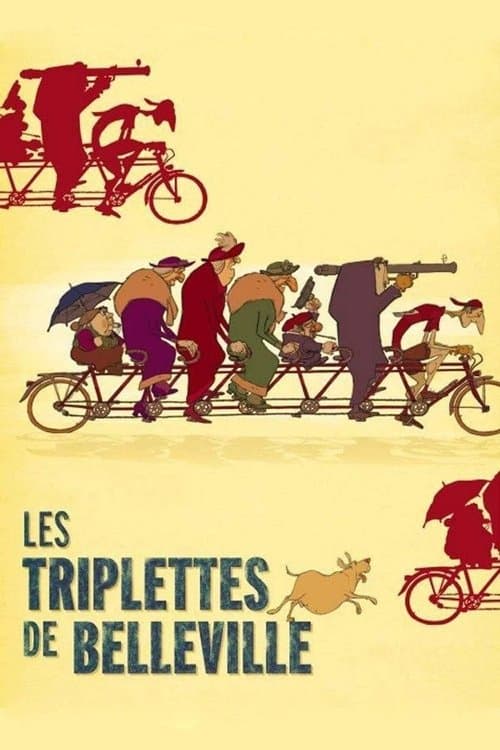
When her grandson is kidnapped during the Tour de France, Madame Souza and her beloved pooch Bruno team up with the Belleville Sisters—an aged song-and-dance team from the days of Fred Astaire—to rescue him.
Where to watch
Availability checked on Apr 03, 2026
About this title
- Format
- Feature film
- Year
- 2003
- Runtime
- 1h 18m
- Countries
- France, Belgium, Canada, United Kingdom
- Original language
- FR
- Directed by
- Sylvain Chomet
- Main cast
- Suzy Falk, Lina Boudreau, Betty Bonifassi, Michèle Caucheteux, Jean-Claude Donda, Mari-Lou Gauthier, Charles Linton, Monica Viegas, Michel Robin
- Studios
- Les Armateurs, Production Champion, Vivi Film, France 3 Cinéma, RGP France, BBC Bristol Productions, BBC Worldwide Productions
Content barometer
- Violence2/5Moderate
- Fear2/5A few scenes
- Sexuality1/5Allusions
- Language0/5None
- Narrative complexity2/5Moderate
- Adult themes0/5None
Values conveyed
- Perseverance
- family love
- solidarity
- resourcefulness
- courage